The Rhodes Municipality Employees Association had originally called for a peaceful demonstration at the island’s old commercial port on Monday, 28 July, to oppose what it described as the genocidal policies of the Netanyahu government. The initiative was approved by a majority of the Association’s board on 23 July and explicitly linked the Palestinian struggle to Greece’s own history of displacement and occupation.
“Our collective memory is inextricably linked to refugeehood,” one statement read. “Today it is Palestine. Tomorrow it could be us.”
But in the days that followed, the protest came under intense attack from local political and business forces. A joint statement by several tourism and trade associations warned that the mobilisation could damage the island’s image and economy. Protesters were accused of “targeting visitors based on nationality” and of playing “petty political games” that threatened “social cohesion.”
“Rhodes is not an island of fanaticism,” they wrote, insisting that tourism must not become a platform for “low-level foreign policy.”
The backlash intensified when Minister of Citizen Protection Michalis Chrysochoidis threatened arrests for anyone attempting to block the entry of third-country nationals – invoking the country’s anti-racism law. Amid these pressures, and citing “explicit threats of violence from dissenting citizens,” the union cancelled the protest on 26 July.
Protest faction denounces cancellation as invalid
The withdrawal prompted internal revolt. A faction of union members operating under the name Labour Pioneer of the Municipality of Rhodes denounced the cancellation as procedurally illegitimate and the result of political interference.
In a sharply worded statement, they accused the union’s leadership of capitulating to “local bosses” and “business-political interests,” insisting that the vote to protest remained valid and binding. They called on civil servants, trade unions, and the broader public to join them in a symbolic act of resistance at the port.
“They are afraid even of our symbolic mobilisations,” the statement read. “Above the profits of the elite – hoteliers, MPs, big businessmen – we must place the right of all peoples to live freely, without occupation, hunger, and war.”
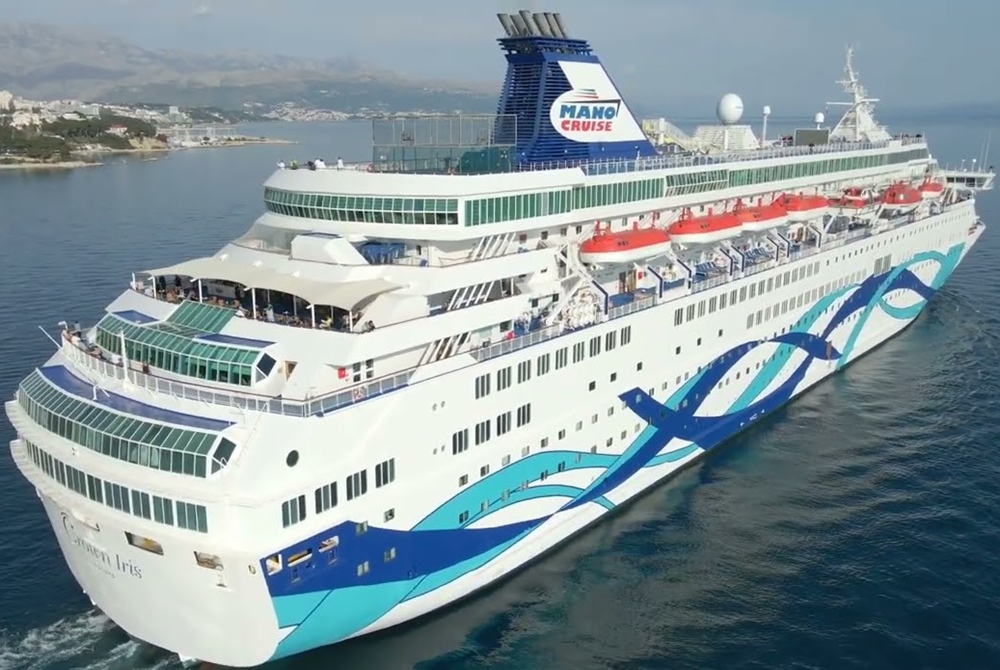
Citing the example of Syros, where protesters successfully blocked the Crown Iris from docking, the group reaffirmed its commitment to stand with Palestine, quoting poet Tassos Livaditis: “If you want to be called a human being…”
Nonetheless, the original union board reiterated its decision on Sunday, 27 July, confirming that the rally was officially cancelled.
“Convenient objectors” and “fanatics”: the rhetoric of backlash
The pushback from local officials has been fierce. The Deputy Governor of the South Aegean, Apostolos Asprakis, dismissed protesters as “Olympic champions of whining,” while pledging that local authorities and “productive classes” would welcome Israeli tourists “as normal.” The regional governor, Giorgos Hadjimarkos, declared that such actions “violate the identity of the island” and risk destabilising “social and economic cohesion.”
Meanwhile, the Rhodes Peace Committee has declared 6 August, the anniversary of Hiroshima, a “Day of Action and Solidarity for the Struggling Palestinian People.” In a powerful statement, the committee criticised attempts to conflate the Israeli state with its people, highlighting the existence of Israeli voices opposing the war and denouncing the repression they face.
“The forces that erase this reality bear great responsibility. They undermine the common struggle of peoples,” the statement read.
From blocked ports to cancelled protests, the story of the Crown Iris is no longer just about a cruise ship. It’s about who gets to define public space – and what solidarity looks like under pressure.
All eyes are now on the people of Rhodes. It remains to be seen whether, despite threats, cancellations and political intimidation, anyone will take a stand when the Crown Iris docks.
______________________________________________
Are you seeking news from Greece presented from a progressive, non-mainstream perspective? Subscribe monthly or annually to support TPP International in delivering independent reporting in English. Don’t let Greek progressive voices fade.
Make sure to reference “TPP International” and your order number as the reason for payment.