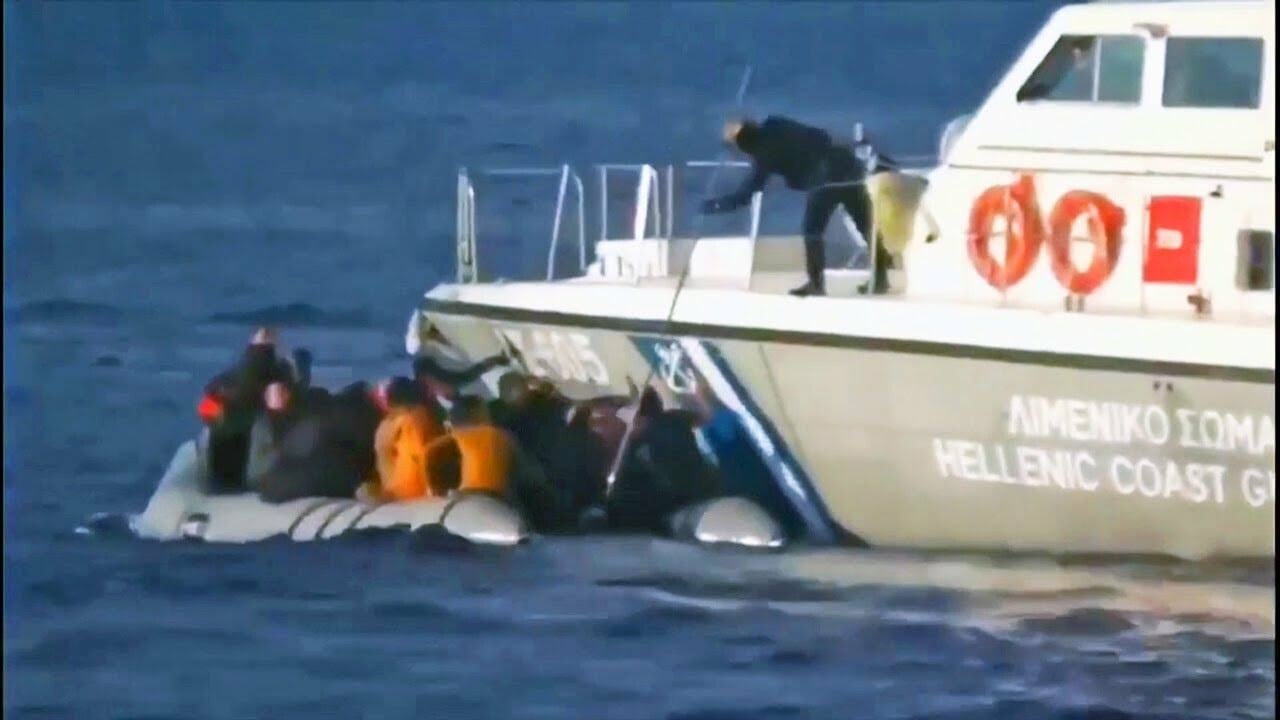
The report describes the Coast Guard’s practices as ‘extremely dangerous’, citing the arbitrary use of weapons, the abandonment of refugees on unmanned inflatable rafts, the towing of boats with ropes that create waves and collisions, the destruction of engines and confiscation of fuel, and systematic illegal pushbacks.
The criminal investigations into such incidents, RSA notes, are riddled with flaws: port authorities conducting preliminary interrogations of their own personnel, failure to examine witnesses and suspects, delays in autopsies and forensic reports, and the disappearance of digital evidence. Official declarations denying illegal practices, it warns, often mask the reality.
The organisation also identifies structural problems in search and rescue operations, including delayed activation, unclear classification of danger phases, gaps in communication at the Unified Search and Rescue Coordination Centre (EKSED), lack of interpreters and absence of recorded communications, as well as inadequate equipment and digital tracking of vessel movements.
Four convictions by the European Court of Human Rights
RSA’s report, submitted to the Committee of Ministers of the Council of Europe, highlights that these failures have already led to Greece’s condemnation by the European Court of Human Rights (ECHR) in four separate cases: Safi v. Greece (Farmakonisi, 2014), Alkhatib v. Greece (Pserimos, 2014), Almukhlas v. Greece (Symi, 2015) and FM v. Greece (Agathonisi, 2018).
These cases concerned operations involving unseaworthy refugee vessels in which the Coast Guard failed to safeguard life at sea, resulting in deaths by drowning (Safi, FM) or by gunfire (Alkhatib, Almukhlas). The ECHR also found that the subsequent investigations by Greek authorities were inadequate. RSA and PRO ASYL supported the victims in all four cases, whose implementation is currently monitored by the Council of Europe’s Committee of Ministers.
Ongoing and systemic problems
RSA stresses that these are not isolated incidents but part of an enduring, systemic pattern that continues to this day — as illustrated by the 2023 Pylos shipwreck. The report identifies three key areas of concern:
1. Deficiencies in search and rescue operations
-
Lack of interpreters and unrecorded communications at EKSED.
-
Unclear definition of risk phases and delays in initiating rescue operations.
-
Inadequate rescue equipment on Coast Guard vessels.
-
Absence of digital recording of vessel movements.
2. Dangerous and unlawful practices
-
Arbitrary use of weapons during border operations.
-
Abandonment of people on unmanned rafts.
-
Destruction of engines and seizure of fuel.
-
Towing of refugee boats with ropes, causing collisions.
-
Evidence of systematic illegal refoulement, as also recognised by the ECHR.
3. Ineffective criminal investigation
-
Lack of independence, as port officers investigate their own service.
-
Failure to question witnesses or suspects.
-
Chronic delays in forensic work.
-
Missing or deleted digital evidence.
-
Official denials of wrongdoing despite ECHR rulings.
RSA concludes that the failures in coordination, execution and accountability within the Coast Guard’s operations represent a systemic challenge to the protection of human rights at Greece’s maritime borders. Deaths and violations, it warns, continue to occur in current operations.
You can find the full report here.
______________________________________________
Are you seeking news from Greece presented from a progressive, non-mainstream perspective? Subscribe monthly or annually to support TPP International in delivering independent reporting in English. Don’t let Greek progressive voices fade.
Make sure to reference “TPP International” and your order number as the reason for payment.