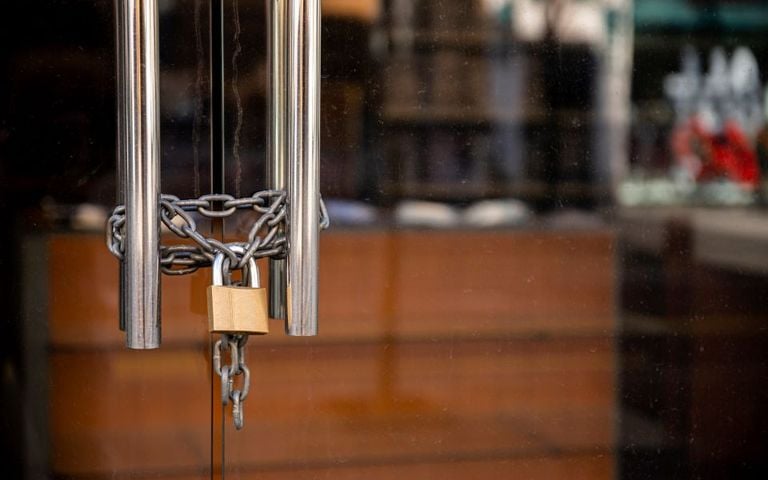
The Eurostat figures show that Greece holds a double negative record at European level on bankruptcies: it has the fastest quarterly increase in the EU in the third quarter of 2025 and the steepest overall rise since 2021.
In the third quarter of 2025 alone, business closures rose by 47.8% compared with the second quarter. Poland and the Czech Republic follow at a distance, with increases of 17.3% and 17.2% respectively.
By contrast, Cyprus recorded a 50% decrease in business closures in the third quarter of 2025 compared with the previous quarter, while Romania and Estonia saw falls of 45.9% and 21% respectively. However, in small countries such as Cyprus, the absolute number of bankruptcies each quarter is very low, which can distort the rates.
More bankruptcies but also more new businesses
Despite the spike in bankruptcies, Greece also saw an increase in new business registrations. New starts rose by 6.8% on a quarterly basis and by 53.7% compared with 2021.
Other EU countries recorded even stronger growth in new businesses over the same period: Ireland saw an 82% increase, Luxembourg 44.4% and Romania 32.3%. Across the EU as a whole, new business creation in the third quarter of 2025 rose by 4%, reaching its highest level since the first quarter of 2019.
The picture also varies significantly by sector. The biggest increase in new businesses was in communications (up 6%), followed by construction and transport, with rises of 5.9% and 5.5% respectively.
At the same time, the largest increases in bankruptcies were recorded in accommodation and food services (up 20.7%), transport (18.7%) and financial services (14.1%).
Four-year deterioration and ‘zombie’ companies
The most alarming element is the trend for Greece over the past four years. Business bankruptcies have increased by 572.6% compared with 2021, rising to 672.6 in the third quarter of 2025. Over the same period, the new business index has climbed to 153.7.
In absolute terms, the number of bankruptcies in Greece still remains relatively low. This, however, reflects the persistent problem of so-called ‘zombie’ companies – firms with large volumes of non-performing loans that struggle to service their debts without fresh capital.
These companies remain active in the Greek economy, tying up capital, equipment and labour without producing real results. The situation underscores the need for more effective use of the bankruptcy legal framework, either to restructure and rehabilitate distressed firms or to give them a genuine second chance, thereby freeing up resources and strengthening the wider economy.
______________________________________________
Are you seeking news from Greece presented from a progressive, non-mainstream perspective? Subscribe monthly or annually to support TPP International in delivering independent reporting in English. Don’t let Greek progressive voices fade.
Make sure to reference “TPP International” and your order number as the reason for payment.