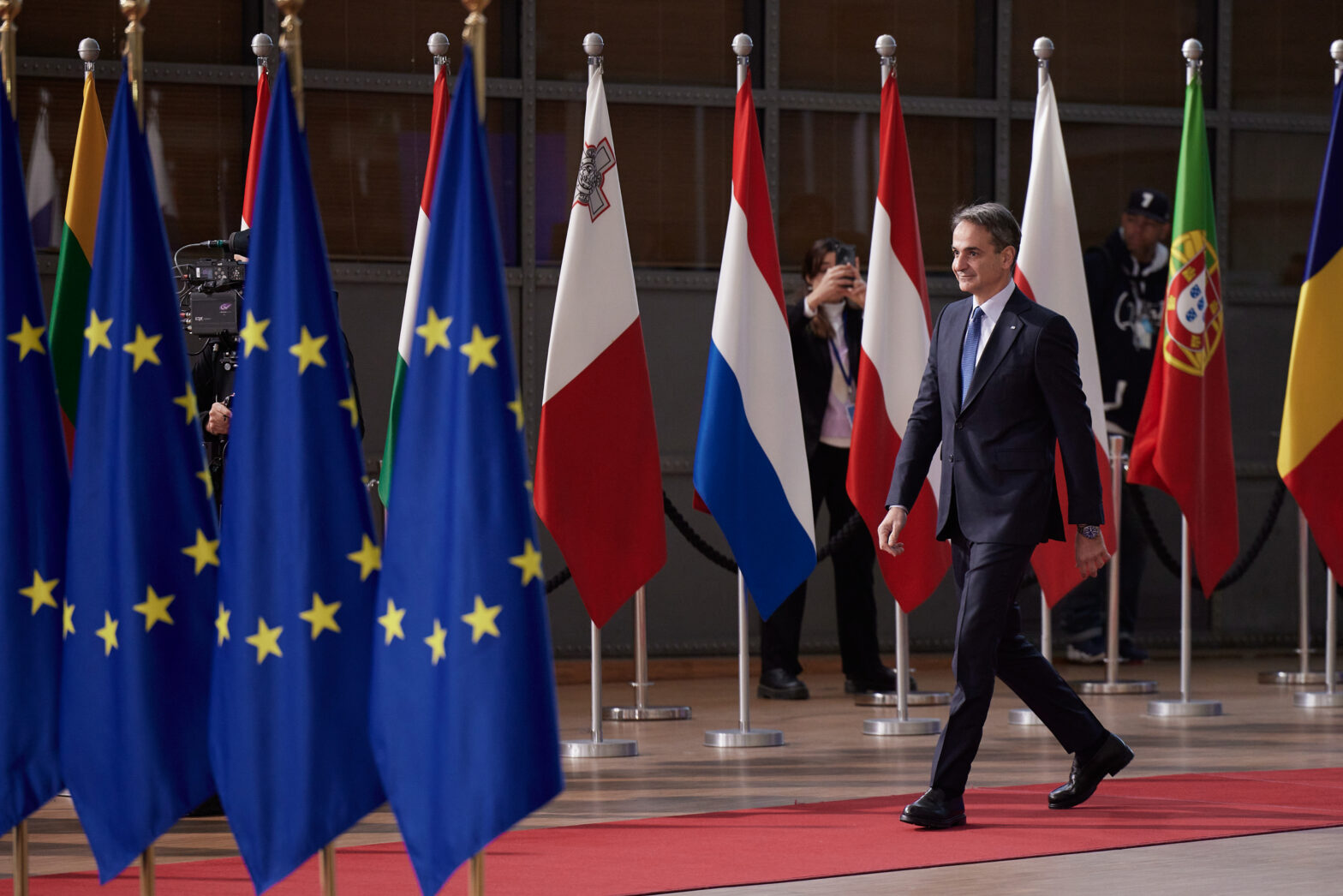
According to the summit conclusions released after the marathon meeting, “the European Council agrees to provide Ukraine with a loan of 90 billion euros for the years 2026–2027, through EU borrowing”. Ukraine will repay the loan only after war reparations are collected from Russia, while the text notes that Russian assets will remain frozen and that the EU “reserves its right to use them to repay the loan, in full compliance with EU and international law”.
European Commission President Ursula von der Leyen stated that the 27 member states will grant Kyiv an interest-free loan financed by the EU budget, to be repaid only if Russia pays compensation.
Mitsotakis said: “There was a very extensive discussion that examined both financing options for Ukraine proposed by the European Commission. I believe that the solution that was preferred, namely a loan from the margin of the European budget, which means that this has practically no budgetary consequences for any European country, was the appropriate solution.”
He added that while the use of frozen Russian assets faces legal complexity, the possibility “was not ruled out” and remains under consideration. “In any case, the message sent by the European Council is that Ukraine can cover its financial needs for the immediate future and that Europe is standing by Ukraine’s side in practice,” he said.
Asked about the multiannual financial framework and the risk that funding for defence and Ukraine could reduce other spending, Mitsotakis replied that discussions were only beginning. He said a “critical mass” of countries would not accept cuts to cohesion funds or the Common Agricultural Policy, but estimated that negotiations would be “complex and difficult”. He noted that the Cypriot presidency, taking office in twelve days, is expected to present its initial proposals on resource allocations.
In response to a question about agricultural mobilisations, Mitsotakis said that “some farmers feel the need to disagree with the proposals that have been made by the government”. The government, he said, “remains open to dialogue”, adding: “We say ‘yes’ to dialogue, but we say ‘no’ – in every way and in every tone – to the unnecessary suffering of society and the effects that a potential prolonged blockade will have on the functioning of the economy.”
He said Christmas travel and the functioning of winter destinations would be affected by prolonged blockades, adding that the government had addressed “many of the justified requests”.
He warned against “maximalism that takes us out of the European framework”, and reiterated the government’s commitment to integrating OPEKEPE into AADE. For this reform, due to be voted by roll call, he said: “They must support this reform and not become ostriches and hide their heads in the sand. This reform has already led to savings in resources. Resources that will be redistributed… to our livestock farmers… to the producers… to the cotton growers.”
______________________________________________
Are you seeking news from Greece presented from a progressive, non-mainstream perspective? Subscribe monthly or annually to support TPP International in delivering independent reporting in English. Don’t let Greek progressive voices fade.
Make sure to reference “TPP International” and your order number as the reason for payment.