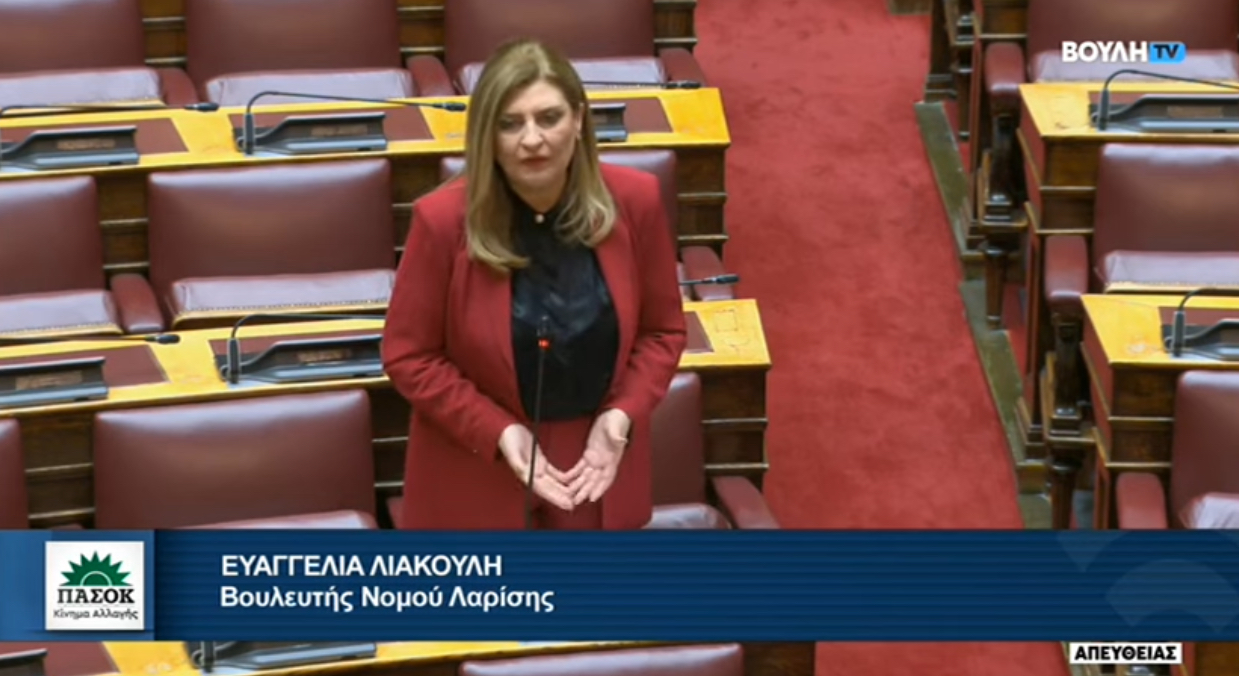
Liakouli, head of justice, institutions and transparency for PASOK, said the letter characterises vaccination against sheep and goat pox as ‘necessary and mandatory’ under European law. She also announced that she is seeking the intervention of the public prosecutor.
According to Liakouli, the letter was sent on 6 October 2025 by the European commissioner for animal health and welfare, Oliver Várhelyi, to the Greek minister of rural development and food. In it, the commissioner states that, due to what he describes as an uncontrolled epidemiological situation in Greece, vaccination constitutes a mandatory additional measure. The letter says there is ‘irrefutable evidence’ that measures applied in Greece for more than a year have failed to halt the spread of the disease or reduce the number of animals culled due to epizootic disease.
Liakouli said the European Commission’s letter makes a series of serious findings, including that the measures taken by the Greek authorities had failed, that the disease had been spreading uncontrollably for over a year, and that more than 285,000 animals had been culled across more than 1,100 outbreaks. She added that the Commission described Greece as a negative exception within the European Union.
She further highlighted that the commissioner explicitly warned of possible European sanctions if vaccination continued to be delayed or refused. These included the extension of bans on animal movements, broader restrictions on products of animal origin and potential EU intervention due to what the letter describes as inadequate crisis management.
According to Liakouli, despite these warnings, the government did not disclose the letter, established a scientific committee with a delay of around 18 months and continued to publicly oppose vaccination. She said this approach contributed to confusion, insecurity and significant financial losses in the primary sector, with livestock farmers seeing herds lost and production collapse, while the country faced the risk of European isolation.
In an urgent parliamentary question, Liakouli called on the government to confirm whether the leaked letter is authentic and, if so, who was responsible for concealing it and why. She also asked what measures, if any, were taken after its receipt, who bears political responsibility for the continuation of the crisis and how the government intends to avert the sanctions outlined by the European Commission.
She pointed in particular to a warning in the letter that continued spread of the disease could lead to restrictions on dairy products, stating that this contradicts arguments by the agriculture ministry that vaccination would harm feta production.
Liakouli said she has submitted an urgent question to the minister of rural development and food and will also forward the letter to the Larissa public prosecutor’s office, in the context of a preliminary investigation already under way following a complaint she filed in August 2025. She said she would request that responsible officials be called to account over the content of the letter, citing concerns of public health and public order.
______________________________________________
Are you seeking news from Greece presented from a progressive, non-mainstream perspective? Subscribe monthly or annually to support TPP International in delivering independent reporting in English. Don’t let Greek progressive voices fade.
Make sure to reference “TPP International” and your order number as the reason for payment.