Report: Nektaria Psaraki
A sticker, an arrest, and a case built on spectacle
The scene that ignited the prosecution was almost absurd in its simplicity.
It was 2018. In the Katia area of Mytilene, 20-year-old Irish volunteer Sean Binder and Syrian refugee Sara Mardini were on shift with Emergency Response Centre International (ERCI), watching the sea through binoculars from a silver Cherokee SUV in case a boat appeared in distress.
A Mytilene Security vehicle arrived, inspected the SUV, and officers reportedly ‘discovered’ a sticker bearing the army’s coat of arms placed under the licence plates. Binder and Mardini were arrested on the spot for forgery, accused of trying to pass the vehicle off as official.
The defence later pointed to the obvious contradiction: the Cherokee was visibly marked as an organisation vehicle, with ERCI branding across its doors and bonnet. Still, the arrest became the gateway to something far larger.
A preliminary investigation followed. Another 22 humanitarians were called in. Then came felony charges: forgery, money laundering, formation of a criminal organisation, espionage, migrant smuggling and facilitating migrants’ entry into Greece.
Among those pulled into the case were Sara Mardini, whose story became globally known through the film The Swimmers; Sean Binder; and ERCI coordinator Nasos Karakitsos. Some of them, the report notes, crossed the threshold of Korydallos prison.
From ‘police thriller’ to courtroom parody
As the case grew, so did the public narrative around it.
Police and what the report calls ‘willing media’ circulated claims of a dismantled smuggling ring operating through encrypted communications and ‘wireless spying’. The 24 defendants faced the prospect of sentences exceeding 20 years.
The stated effect, the report argues, was chilling. Civil society sea rescue operations retreated from the field. The Coast Guard remained alone at sea, while complaints of abuses against refugees, including pushbacks, multiplied.
Three years ago, the misdemeanour charges collapsed. The felony case remained, hanging over lives that could not move on.
Until now.
After an 11-hour hearing, the prosecution’s central ‘evidence’ was laid out in the light and, the defence argued, dissolved into ordinary realities of rescue work:
-
‘Wireless spying’ amounted to listening to public VHF channels 12 and 16, which vessels are required to monitor.
-
‘Encrypted messages’ were WhatsApp group chats with hundreds of participants coordinating blankets, dry clothes, first aid, medical help, and reports of boats in distress.
-
‘Facilitating entry’ referred to the sharing of photos and sightings, including material already circulating publicly, such as posts from Aegean Boat Report and Facebook groups.
-
‘Money laundering’ referred to ERCI donations.
-
‘Migrant smuggling’ collapsed into what one defence lawyer described as sheer incoherence, including the claim that Karakitsos was a ‘boat driver’ bringing people from Turkey, an allegation she said she could not even explain to her client.
Despite the quality of the indictment, the defendants’ lawyers presented witnesses and extensive documentation to contest each allegation, including the insinuation that humanitarians possessed ‘mysterious’ advance information from Turkey.
‘There was a need for self-organisation’
Rescuer Jason Apostolopoulos offered the court the wider picture of 2015–2016: thousands arriving daily, boats appearing in clusters along the horizon, and an island with only two or three ambulances.
In that environment, he argued, coordination was not a luxury but a condition of survival.
He described how locals, fishermen and volunteers built informal networks to relay basic, time-sensitive needs: a doctor here, blankets there, first aid supplies somewhere else. WhatsApp groups, he said, were not smuggling tools but emergency coordination in a setting where ‘time was the only enemy’.
On the question of advance intelligence, Apostolopoulos said there was no operational information ‘from the other side’. Sightings came from binocular surveillance, public alerts, and refugees themselves, such as relatives reporting, ‘my brother is on a boat’. Some unknown individuals occasionally posted locations from Turkish waters, but he described that as both unverifiable and operationally unusable given the lack of jurisdiction.
He also rejected the idea that the 24 were helping refugees evade authorities.
He said that at the time there was close coordination with the Coast Guard, which sometimes requested assistance directly, and there were no reports of pushbacks then. He noted that international bodies and, later, even state actors were present in shared coordination spaces. He described it as shocking that ERCI was accused, given its reputation for close working relations with the Coast Guard.
‘When I came as a refugee, the Coast Guard told us to go back’
Sara Mardini testified as a refugee who returned to Greece to help others endure what she had endured.
She recounted arriving in Lesvos in 2015 and calling the Coast Guard, who, she said, told them to return. She later came back in 2016 and joined ERCI, working primarily as an Arabic interpreter on the coast and in the camp. The groups cited in the case, she told the court, were about shifts, distress sightings and practical needs.
Her closing words carried the weight of personal cost: the trafficking charge, she said, destroyed her life. She called it unacceptable that someone who had fled war could be accused of smuggling. She also spoke of the solidarity of the other defendants who, she said, had helped her.
‘If we informed the Coast Guard about every rumour, we would become the lying shepherd’
Sean Binder described joining ERCI in 2017 as a trained rescuer who felt compelled to help. His core duty was long hours of sea monitoring with binoculars and responding when a dinghy appeared.
When questioned on why the organisation did not forward every fragment of incoming information to the Coast Guard, he said they avoided flooding authorities with unconfirmed claims. Some alerts proved false. Others were real, but needed verification. If they called in everything, he argued, they would lose credibility, like the shepherd who cried wolf.
‘It is inconceivable how that sticker was found’
Nasos Karakitsos testified that he came to Lesvos for 15 days in January 2016 and stayed for two years.
He said he contacted the authorities early, shared his speedboat licence, and coordinated operations amid arrivals involving children, pregnant women, disabled people, and severe injuries. He described how volunteers from across the world joined, sometimes treating the work as part of university placements.
He said much information flowed from Tomy Olsen, founder of Aegean Boat Report, and that he had ongoing contact with Coast Guard officials. On VHF communications, he said ERCI communicated with both the Coast Guard and its own captains. He insisted they never took people on board without request or necessity, including cases where Frontex had no capacity.
On the central trigger of the case, the sticker under the licence plates, he described it as inexplicable and senseless: the army was not involved in rescue work, and he could not understand why officers would even unscrew the plates to search underneath.
‘As long as they’re volounteers’
As the hearing moved through the remaining defendants, the report describes a chain of ordinary lives dragged into an extraordinary accusation: a lawyer who briefly signed authorisations; a Palestinian volunteer linked to Doctors Without Borders who shared an Alarm Phone screenshot; volunteers distributing soap; a passer-by who handed refugees water, food and a towel; a Dutch pensioner shaped by grief and a family history of refuge; women who saw the absence of women helping women and stepped forward; and a young woman, Alexou, whose LinkedIn title ‘Project Manager’ was presented as evidence against her.
At one point, Alexou, in tears, pleaded for an ending: she said she had tried to live with integrity and asked the court to help bring the ordeal to a close.
Acquittal, at last, and a demand to return to the sea
The prosecutor concluded that none of the alleged crimes had been proven and proposed acquittal. The judges agreed.
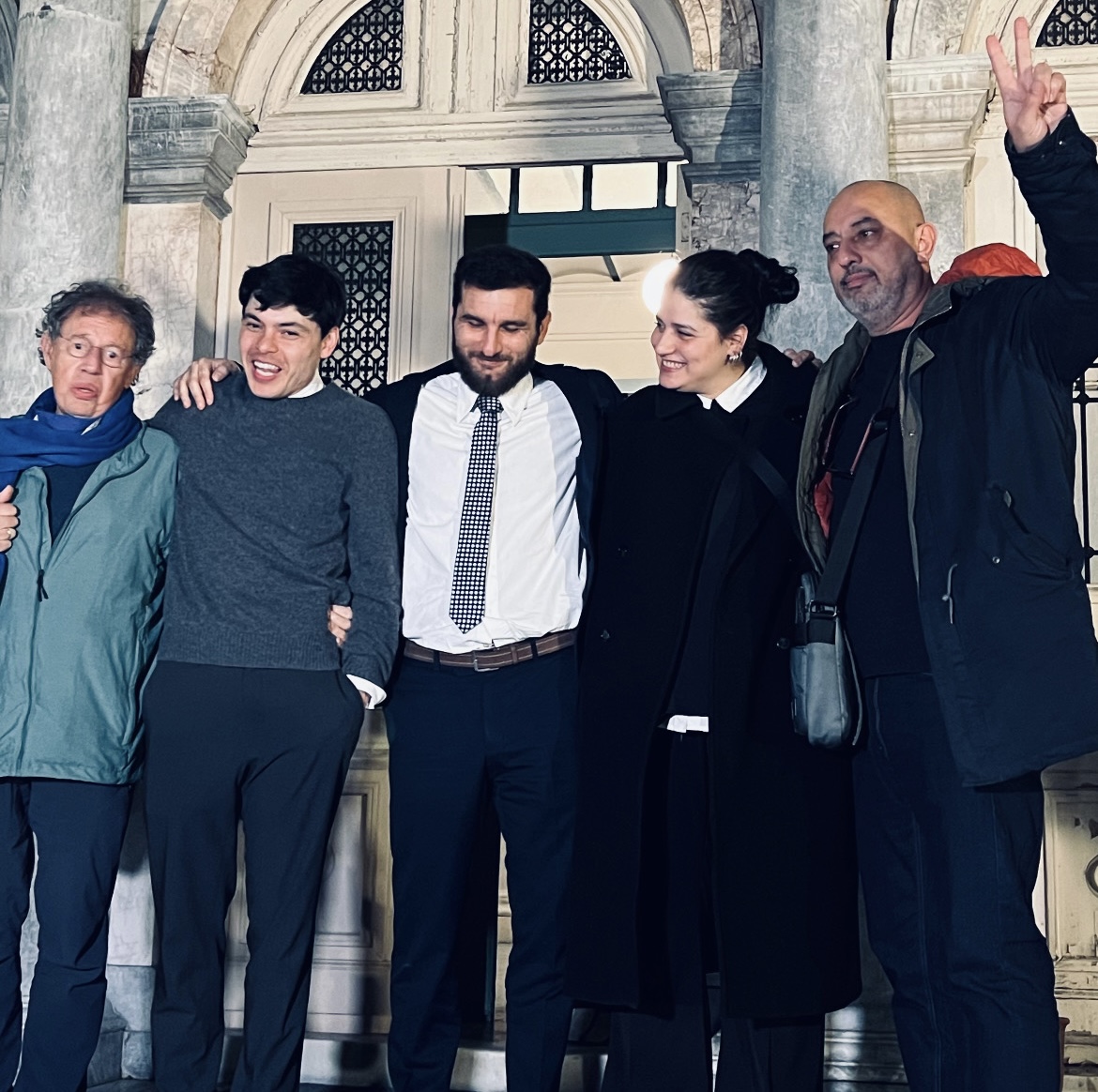
The courtroom erupted in relief: hugs, smiles, tears, a release that comes only when a long-held pressure finally breaks.
Outside, the defendants thanked those who supported them through eight years and called for civil society to return to the coasts.
Δείτε αυτή τη δημοσίευση στο Instagram.
Sara Mardini put it starkly:
‘If helping people is a crime, then we are all criminals.’
Apostolopoulos, reflecting on the broader stakes, argued that those who help refugees face decades in prison while those who let them drown walk free, and called the ruling a signal to return to the sea to help, to bear witness, and to document state crimes.
And then, on the shore where so much began, they fulfilled a promise Sean Binder had made publicly:
‘If we win, we swim.’
Free and definitively acquitted, the 24 celebrated with a winter swim off the coast of Mytilene, surrounded by the solidarity community that never stopped insisting on the obvious: solidarity is not a crime.
______________________________________________
Are you seeking news from Greece presented from a progressive, non-mainstream perspective? Subscribe monthly or annually to support TPP International in delivering independent reporting in English. Don’t let Greek progressive voices fade.
Make sure to reference “TPP International” and your order number as the reason for payment.