Labour Inspectorate staff rebut government claims: ‘Just 233 inspectors for workplaces nationwide’
Workers at Greece’s Labour Inspectorate have issued a sharp response to what they describe as government “lies” about workplace accidents, arguing that deaths and injuries are being normalised while inspection services remain dangerously understaffed.
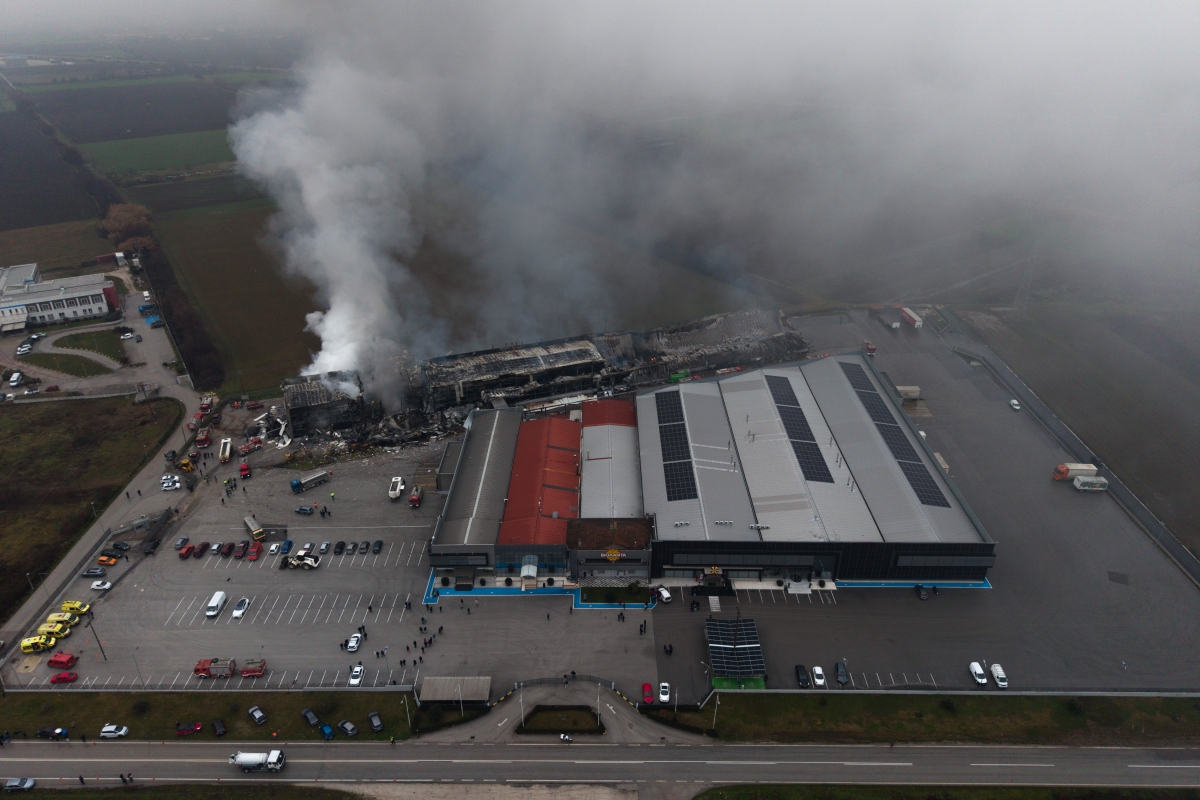
Thanasis Kaliakoudas / SOOC
In a statement, the Association of Workers in the Labour Inspectorate says “the reality in the workplace is not measured by communication statements, but by human lives, injuries and families that pay the cost of the lack of effective prevention”, adding that it is speaking “in memory of these women”.
The association cites 2025 as a “dark year” for occupational health and safety. Referring to data it attributes to OSETEE, it says 201 workers were killed at work and 332 were seriously injured.
It also argues that the official picture is incomplete. Citing Eurostat, the statement claims that only 30 to 40 per cent of workplace accidents are recorded in Greece, because large groups of workers are excluded from registration, including farmers, sailors, quarry workers and marble workers.
“This means that for every reported occupational accident, there are at least two that are never reported,” it says.
The association accuses the Ministry of Labour of attempting to downplay the figures, claiming it has limited the number of fatal workplace accidents to 48 and attributes many of them to the self-employed. It notes that these figures were, it says, confirmed at a recent event by the deputy governor of the Labour Inspectorate, Charalambos Vourtsis. The statement questions how many of those classified as “self-employed” are in fact carrying out dependent work, paid through payroll as a way of concealing employer liability.
It adds that occupational diseases remain largely invisible in official records. Citing the International Labour Office, it says that for every fatal workplace accident there are six deaths from occupational diseases directly linked to work, a factor it says is not recorded at all in Greece.
The association links the rise in deaths and injuries to what it calls anti-labour policy choices, pointing to 13-hour working days, intensified workloads driven by profit logic, exhaustion, and the “conscious choice of the state to turn control into an exception”.
It stresses the scale of understaffing.
“It is characteristic that the health and safety measures of thousands of businesses across the country are controlled by only 233 labour inspectors,” the statement says. It gives the example of Trikala and Karditsa, where more than 12,000 businesses are overseen by a regional health and safety inspection unit with only four inspectors, based on ERGANI data and excluding construction sites. With around 600 inspections per year, it says, “it takes decades to inspect businesses even once”.
The association calls for full staffing of labour inspectorates to enable continuous, comprehensive and preventive oversight, a full investigation into the latest workplace tragedy and accountability for those responsible, the repeal of anti-labour laws that extend working hours and increase risk, and collective labour agreements and humane working conditions.
It concludes that workplace deaths are not “isolated events” but the result of political choices, understaffed control mechanisms and the systematic weakening of labour protections. It expresses support for the mobilisations announced by the Trikala Labour Centre, and says worker safety cannot be treated as a matter of communications management but as a fundamental duty of the state and a non-negotiable right of workers to return home safely.
______________________________________________
Are you seeking news from Greece presented from a progressive, non-mainstream perspective? Subscribe monthly or annually to support TPP International in delivering independent reporting in English. Don’t let Greek progressive voices fade.
Make sure to reference “TPP International” and your order number as the reason for payment.
Σε χρειαζόμαστε
Το ThePressProject είναι το μοναδικό μέσο ανεξάρτητης, ερευνητικής και αποκαλυπτικής δημοσιογραφίας που στηρίζεται αποκλειστικά στις μικρο-δωρεές των επισκεπτών του. Πιστεύουμε ότι η πληροφορία πρέπει να είναι διαθέσιμη σε όλους και για αυτό δεν κλειδώνουμε κανένα κομμάτι της ύλης αλλά για να παραχθεί το πρωτογενές υλικό που θα βρείτε εδώ χρειαζόμαστε την υποστήριξή σου. Αν δεν πληρώσουμε εμείς για την ενημέρωσή μας, θα την πληρώσει κάποιος άλλος (και αν δεν είσαι ο Μαρινάκης μάλλον δεν έχεις τα ίδια συμφέροντα). Μάθε πώς
Σχόλια
- Κάνε κλικ για να σχολιάσεις
Πολιτική Σχολιασμού