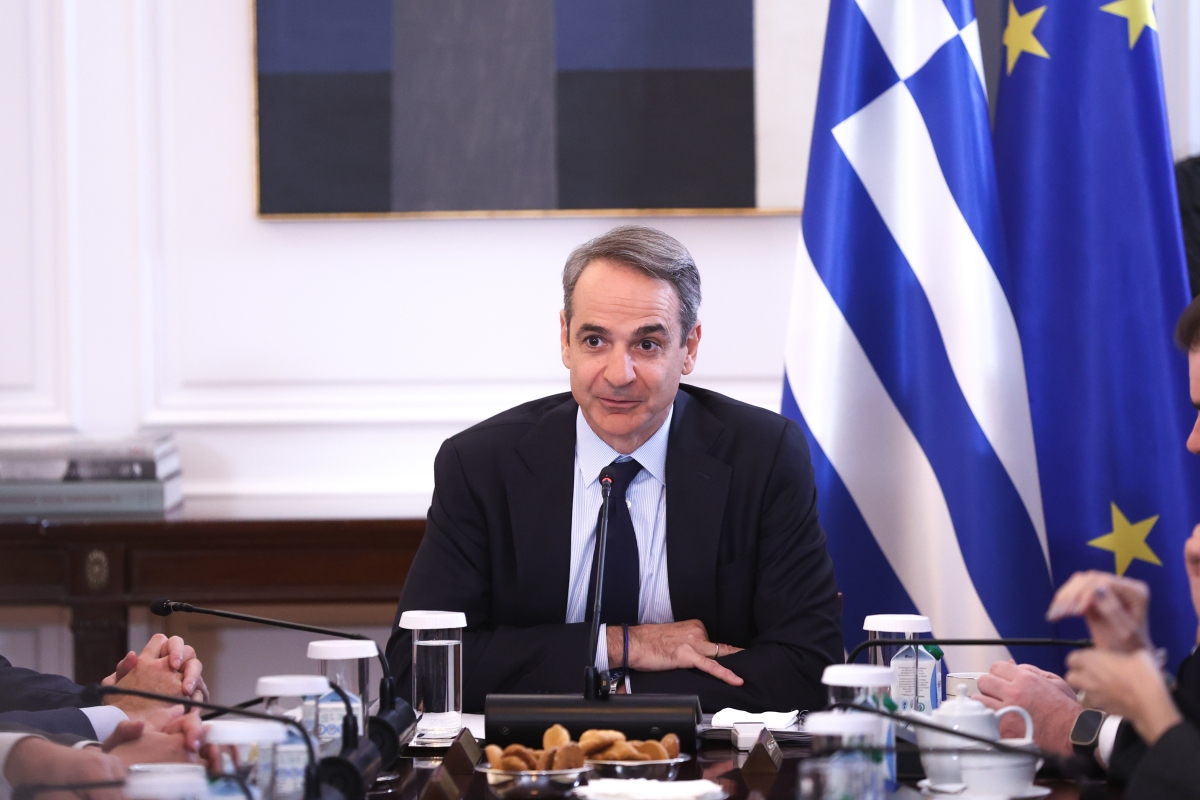
The government is again targeting Article 16, which prohibits the establishment of private universities, despite the fact that the government and the Council of State managed to circumvent the clear provisions. Mitsotakis also announced a proposal to change Article 86 on ministers’ responsibility, as well as the article on the selection of the leadership of the judiciary. Finally, as emerges from his letter to New Democracy MPs, he wants to abolish permanence in the state and constitutionalise austerity, with ‘controls that will guarantee permanent fiscal balance’.
The constitutional revision process is carried out by two successive parliaments. The first, the one sitting today, decides which articles to propose for revision and the next decides on their amendment. If a proposal to change an article receives a three-fifths majority (180 votes), then in the next parliament an absolute majority (151 votes) will be required for final approval. If the proposal receives an absolute majority (151 votes) but not three-fifths, then in the next parliament a three-fifths majority (180 votes) will be required for approval.
‘Today we open the dialogue on the Constitutional Revision, putting into practice yet another of our institutional commitments. As President of New Democracy, I wanted to first have the views of our Parliamentary Group. Thus, I am writing to its members, so that their positions can be incorporated into our final proposal in March. This is, after all, an issue that concerns public life as a whole, but, ultimately, also each citizen individually,’ the prime minister said.
He added: ‘It is true that for 50 years the 1975 Constitution ensured normality and political stability. It is a “living” text. However, it does not cease to belong to the 20th century. Therefore, it is time to dare to make major cuts that will strengthen the prestige of institutions and the trust of citizens, introducing regulations for the better functioning of the system in the face of the great challenges of the era and keeping pace with new data, such as artificial intelligence and the climate crisis.’
On Article 86, which concerns ministers’ criminal liability, he said: ‘It is known that I deeply believe in the more decisive participation of regular judges in cases of possible criminal liability of Ministers while they are exercising their duties. I have been defending the change to Article 86, after all, for 20 years,’ despite the fact that New Democracy arbitrarily ‘acquitted’ Voridis and Avgenakis in parliament over the OPEKEPE scandal.
He also said he had supported ‘the lifting of the anachronistic monopoly on higher education, with the establishment of non-state universities’, as well as ‘the protection of the institution of the President of the Republic, with the establishment of a single six-year term’. The government has already passed a law on private universities and is now moving to change the relevant constitutional provision.
In his letter to New Democracy MPs, the prime minister argues that ‘although it has become possible, in light of EU law, to establish branches of non-state universities, the overall possibility of establishing them requires a revision of the Constitution’.
‘I repeat that our intention is a brave, a bold Constitutional Revision, which will respond to the needs of developments. Therefore, it must, in any case, also provide for controls that will guarantee permanent fiscal balance, consistent government action, but also the correctness of party promises, so that the country never again slips into the dangerous paths of populism. Those that hide the disastrous consequences they cause. Something that, unfortunately, we have paid dearly for,’ he added.
He concluded: ‘I therefore share with you these first thoughts, calling on parties and citizens to engage in constructive reflection. With positive proposals and a sense of shared responsibility towards the homeland and the future. A request from society itself, which seeks broader consensus. With substantive arguments beyond party expediencies and aiming for a modern European democracy. A dynamic step forward that we must and can all take together. Moreover, the Constitution itself requires us to seek consensus if we really want to achieve the major changes that our constitutional charter requires. I hope that the Constitutional Revision process will constitute an answer to the toxicity and sterile partisan entrenchment that characterises our political system.’
______________________________________________
Are you seeking news from Greece presented from a progressive, non-mainstream perspective? Subscribe monthly or annually to support TPP International in delivering independent reporting in English. Don’t let Greek progressive voices fade.
Make sure to reference “TPP International” and your order number as the reason for payment.