Evros on red alert as four embankments fail and river stays near peak
The situation in Evros remains precarious after four embankments broke, pushing water levels higher as authorities struggle to shore up defences. More than 150,000 acres have been flooded and farmers are already counting severe losses.
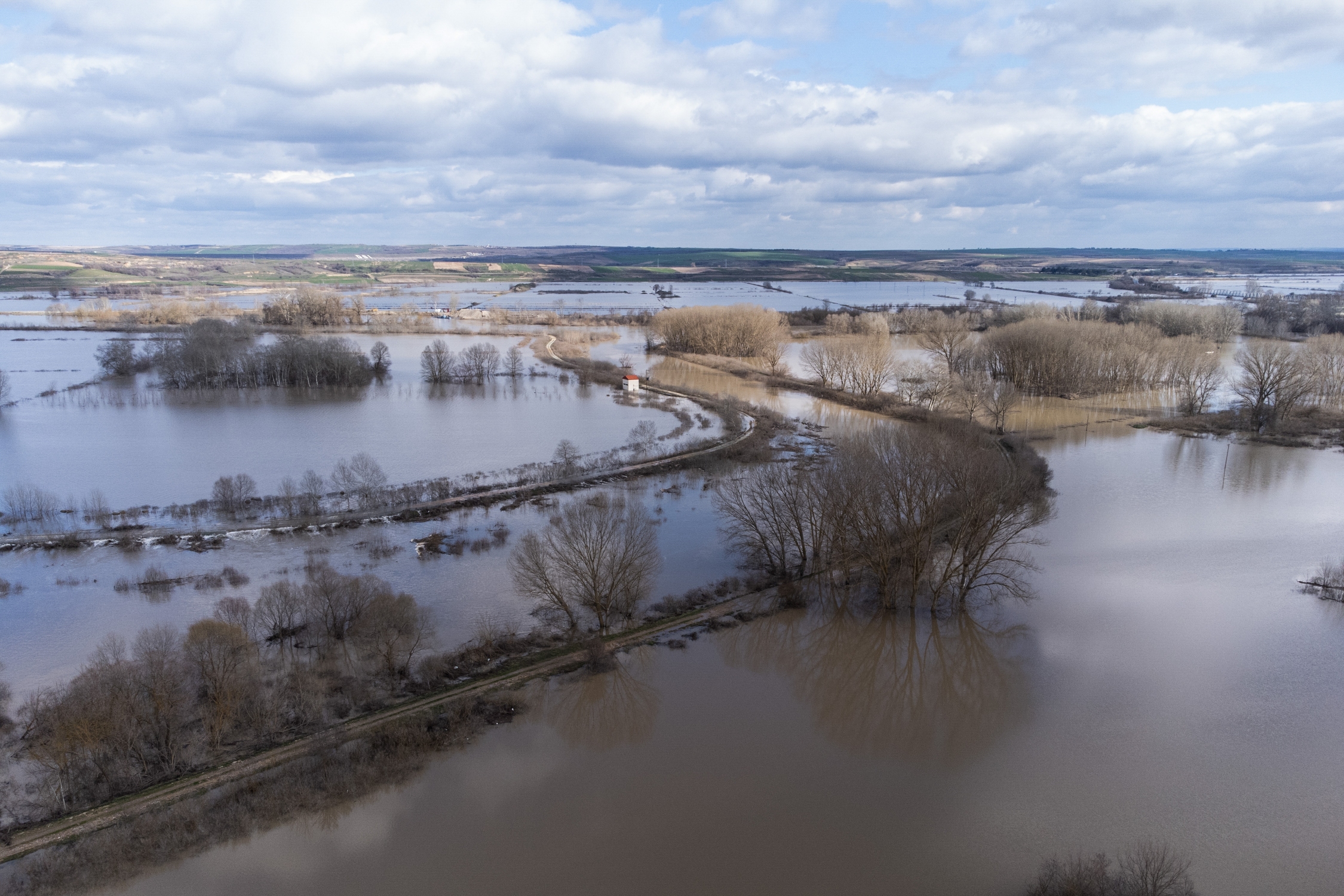
Credit: Giorgos Kalkanidis / SOOC
Alarm was raised after embankments failed in the areas of Kornofolia, Mandra, Amorio and Fylachto. The coming hours are considered particularly critical for the municipality of Soufli, while Lavara is also on alert after floodwaters reached the settlement, rising to six metres in some places.
In Lavara, the situation appears stable for now, with no further rise in the level, a development attributed to reduced inflow from Bulgaria. Even so, the situation remains on a knife-edge and pumping operations are continuing without interruption.
Particular concern centres on the southern part of the municipality of Soufli, where the embankment at Tychero is under intense pressure. The focus of the authorities has shifted there, with the regional administration, civil protection and construction machinery operating in the area. Military assistance is also expected to reinforce the embankment with sandbags.
If that embankment gives way, officials estimate that a further 40,000 acres of high-value crops could be flooded, dramatically worsening an already serious situation.
Over the past two nights, homes have been evacuated as water reached residents’ yards. While the immediate protection of settlements is currently considered manageable, farmers say they are deeply worried about their crops.
According to estimates, it will take at least two months to drain water from the fields, while a full assessment of damage will only be possible once water levels recede. Pumping stations and agricultural machinery have already suffered serious damage, and the impact on the local economy is expected to be significant.
Water levels are showing a small but steady rise, with the next 24 hours considered critical, especially for Soufli, where an increase of six centimetres has been recorded.
Speaking to ERTnews, Giorgos Mathioudakis, a farmer and president of the local land improvement organisation, said the river had overflowed and advanced at least one kilometre, reaching the yards of houses in several villages.
In Lavara, the level has stabilised at six metres, but the situation will remain dangerous until the water begins to fall substantially. In the municipality of Soufli, officials estimate that more than 15,000 acres have been flooded. Across the wider Evros region, flooded areas exceed 15,000 acres.
According to reports, a dam in a village in Bulgaria broke, easing pressure in a neighbouring area and reducing the volume of water directed towards Greece.
Draining the fields is expected to require at least two months of continuous pumping, followed by about a month for soils to dry out before farmers can return to cultivation.
In Lavara, the first homes encountered problems and were evacuated two nights ago. Last night passed more calmly, but the region and the municipality remain on heightened alert.
The Evros flood protection project, which acts as a stable embankment where it has been completed, appears to be playing a decisive role. The breaches have occurred in areas where the work has not been finished.
Experts say the Evros river is at a critical level, warning that any further rise could create new problems for riverside villages.
As Konstantinos Vouvalidis, a professor of geomorphology at the Aristotle University of Thessaloniki, told ERTnews and the programme Connections, the rise began around 29 May, when the measuring station recorded 3.25 metres. A few days ago, the river reached a maximum of 7.7 metres. Since yesterday there has been a slight drop of about 10 centimetres, but in the past 24 hours a rise of 4–5 centimetres has been recorded again.
Vouvalidis said the key point is that the river is already at its highest possible level and any further increase could place additional pressure on settlements near the banks.
On the question of Bulgaria’s potential responsibility, he noted that hydroelectric dams there are operated under private management. Electricity generation involves controlled releases of water into the river. Heavy rainfall in recent weeks has filled the dams, making it necessary to discharge water either through energy production or via overflow. He also recalled that hydroelectric dams have been used for energy production on the Greek side in the past.
On the flooded farmland, winter crops are considered lost, causing immediate economic damage to producers. From a geological perspective, however, he noted that floodwaters mainly carry fine-grained silt rather than large amounts of sand or gravel that could destroy the soil layer. On the contrary, he said, river silt can act as a natural fertiliser, enriching soil with nutrients.
The services of the Evros regional unit are closely monitoring developments, with the next few days considered decisive for water levels and the prevention of further damage.
______________________________________________
Are you seeking news from Greece presented from a progressive, non-mainstream perspective? Subscribe monthly or annually to support TPP International in delivering independent reporting in English. Don’t let Greek progressive voices fade.
Make sure to reference “TPP International” and your order number as the reason for payment.
Σε χρειαζόμαστε
Το ThePressProject είναι το μοναδικό μέσο ανεξάρτητης, ερευνητικής και αποκαλυπτικής δημοσιογραφίας που στηρίζεται αποκλειστικά στις μικρο-δωρεές των επισκεπτών του. Πιστεύουμε ότι η πληροφορία πρέπει να είναι διαθέσιμη σε όλους και για αυτό δεν κλειδώνουμε κανένα κομμάτι της ύλης αλλά για να παραχθεί το πρωτογενές υλικό που θα βρείτε εδώ χρειαζόμαστε την υποστήριξή σου. Αν δεν πληρώσουμε εμείς για την ενημέρωσή μας, θα την πληρώσει κάποιος άλλος (και αν δεν είσαι ο Μαρινάκης μάλλον δεν έχεις τα ίδια συμφέροντα). Μάθε πώς
Σχόλια
- Κάνε κλικ για να σχολιάσεις
Πολιτική Σχολιασμού