Content warning: This report contains references to suicide attempts, self-harm and severe psychological distress, as well as descriptions of harsh detention conditions.
Reporting by Nektaria Psaraki
Repeated suicide attempts. Protests and unrest. Skin diseases, hunger, rubbish and stench. Little access to legal advice and months of uncertainty over how long detention will last.
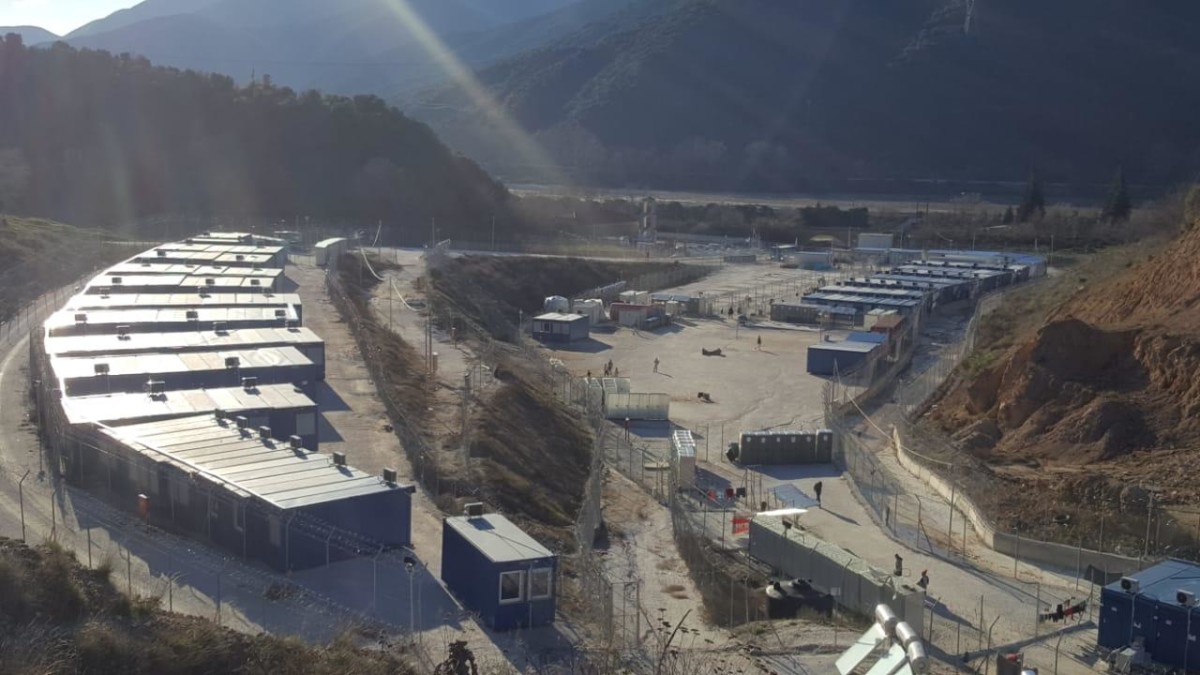
This is the picture emerging from the closed migrant detention facility at Kleidi, in Sintiki, Serres, according to testimony given to TPP by an Egyptian man who has been detained there for almost a year and photographs obtained by TPP.
The poor conditions are also confirmed by Ioannis Kounios, president of the Serres Police Officers’ Union, who told TPP that the underlying problem is prolonged detention. A facility never designed to operate as a long-term prison has, he said, effectively become one.
The union has repeatedly raised concerns with the relevant ministries but says it has received no substantive response.
Migration and Asylum Minister Thanos Plevris, meanwhile, responded to TPP by saying that the people held at Sintiki have had their asylum claims rejected and that ‘the only thing we have to do for Greek citizens is to deport them’.
Hellenic Police spokesperson Konstantina Dimoglidou acknowledged that the allegations were extremely serious, particularly given that some are also being made by police officers themselves, and said they should be investigated by the competent service.
Around 450 rejected applicants for international protection from Egypt and Bangladesh are currently being held under administrative detention at Sintiki.
Administrative detention is not a criminal sentence. A person held administratively has not been imprisoned following conviction for an offence. Their liberty is restricted because their removal or deportation from the country is pending.
The legislation introduced under Plevris – a package framed by the ministry as promoting legal immigration policies but condemned by opposition parties as a ‘war on immigrants’ and a ‘politics of death’ – together with the implementation of the EU Pact on Migration and Asylum, has resulted in asylum claims being rejected for applicants from countries designated as ‘safe’ because they are not at war.
Lawyers working on asylum and refugee cases have repeatedly challenged the use of such blanket classifications, stressing that refugee law requires each application for international protection to be assessed individually.
The same lawyers recently confronted another element of the new system: a scheme under which lawyers providing group ‘legal guidance’ to asylum seekers receive an additional €250 if, following the session, an applicant ultimately agrees to return to their country.
Lawyers opposing that measure have described the role assigned to them as that of an administrator of the government’s ‘return or prison’ doctrine.
The consequences of the wider migration policy are already visible.
Migrants and refugees are being held under administrative detention, either in closed facilities or, in some cases, for months in police stations, while awaiting deportation or transfer to a closed facility elsewhere in the country.
Yet while the government has moved rapidly to implement the new migration framework and impose severe penalties for unlawful entry and residence, Greece lacks infrastructure capable of accommodating the growing number of people whose asylum applications have been rejected.
Facilities originally designed to operate as open reception centres are consequently being transformed into sites of prolonged detention.
Sintiki is one such facility.
For almost a year, it has become what one detainee describes as a place where people are simply left to endure.
More than ten people to a container, without air conditioning
M. is from Egypt. TPP is withholding his identity for his protection; the initial used in this report bears no relation to his real name.
He has been detained at Sintiki since September 2025.
‘The facility here is completely inhumane,’ he told TPP.
Dozens of people, he says, are crowded into containers, many without functioning air conditioning despite periods of extreme heat.
He shares his own space with ten other people.
‘There is only enough room for us to sleep. Most people sleep on the floor, and the heat is unbearable.’
For months, M.’s bed was a cardboard box.
The photograph below shows where he says he slept.
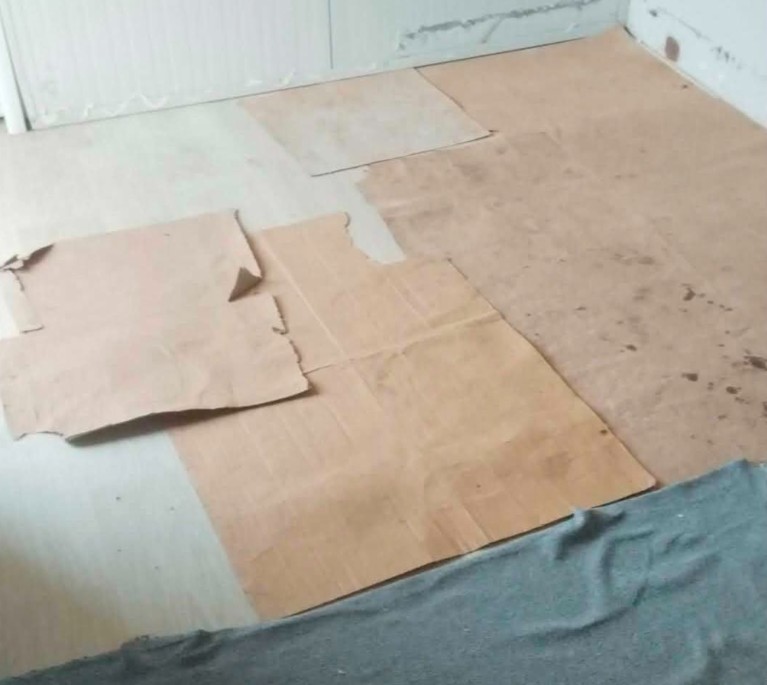
‘Recently, a guy was transferred to another container and I took his mattress. We are better off here because in other containers two people sleep on a single mattress.’
Scabies, skin conditions, bedbugs and sewage
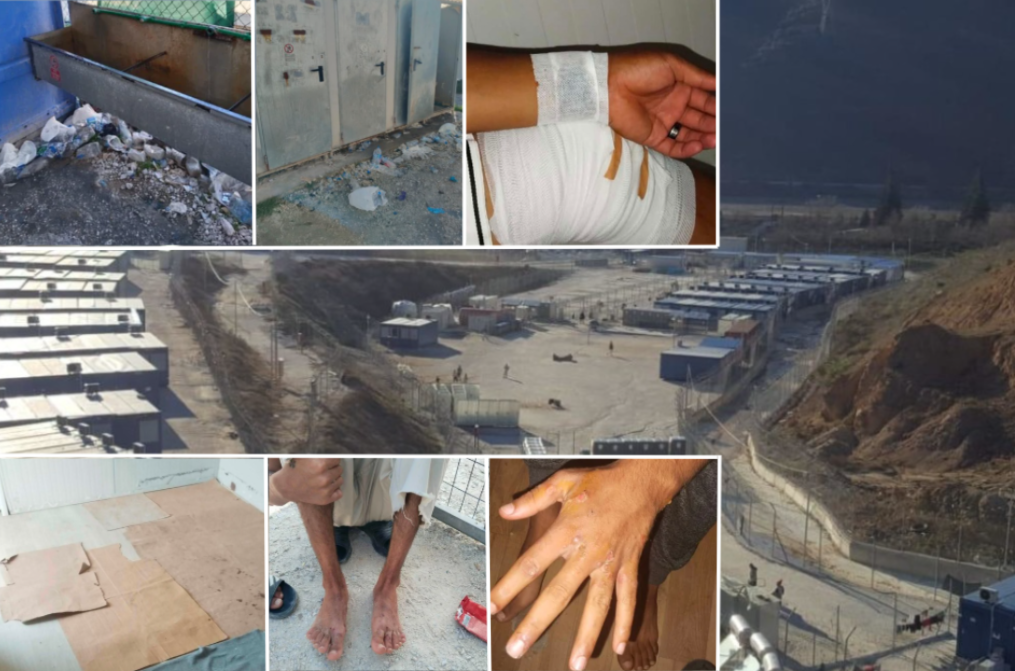
Outside the containers, M. describes an environment overgrown with weeds and littered with rubbish.
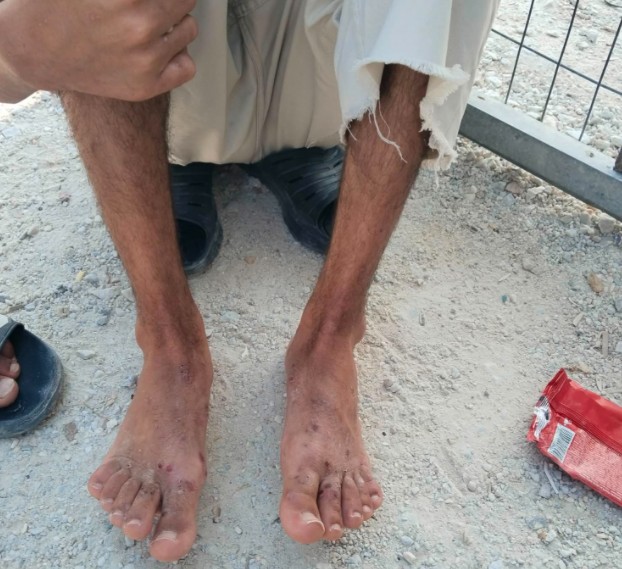
‘Sewage and rainwater flood the place where we live. There are insects, cockroaches, rats, bedbugs, snakes and other disgusting things. And then there are the illnesses that have spread. We suffer from scabies and skin allergies. My friends have been suffering for a long time, but there is no real medical care.’
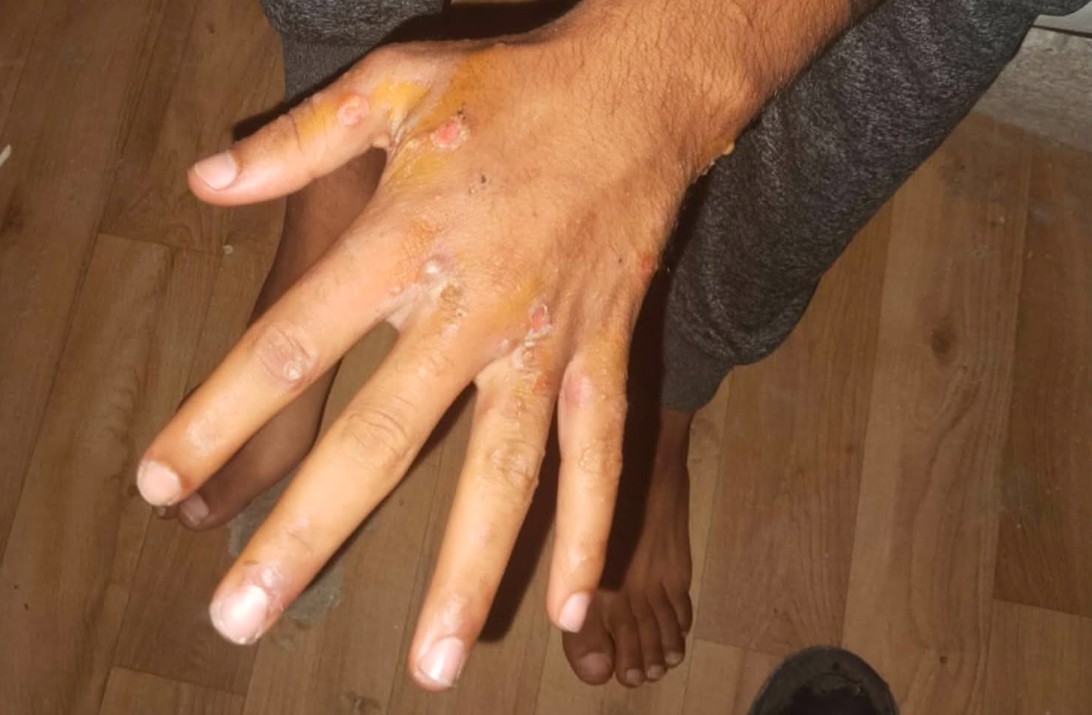
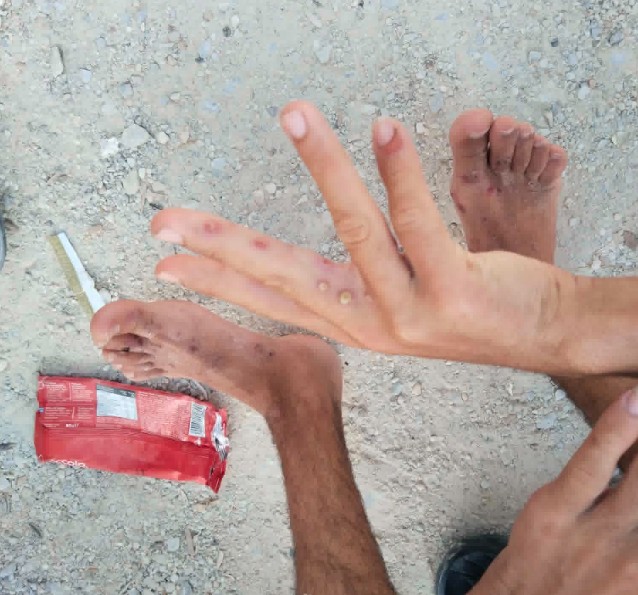
Photographs seen by TPP show rubbish scattered around the facility, including discarded food and plastic waste.
‘The bins are completely full. There is nowhere left to throw anything away,’ M. said.
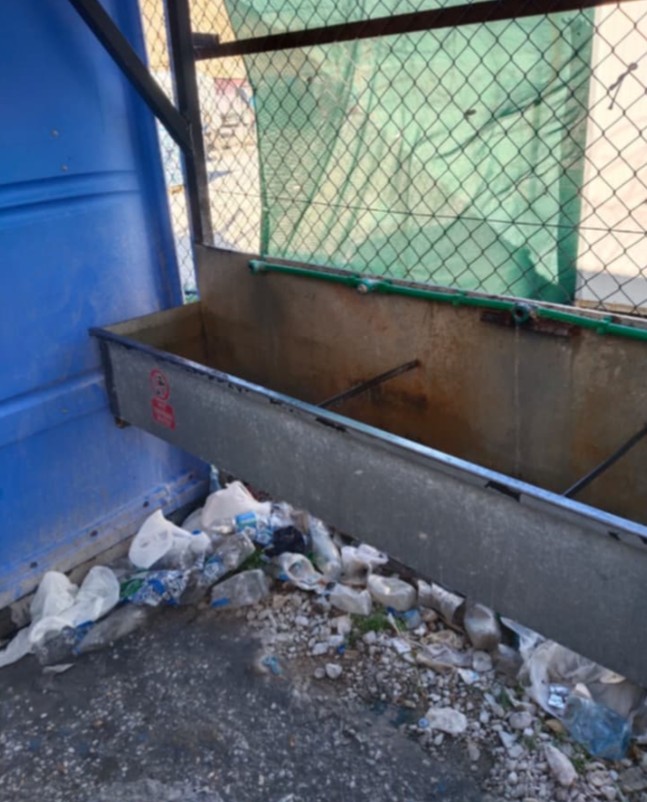
His description is one of an environment in which poor sanitation, overcrowding and prolonged confinement reinforce one another, with detainees unable to escape the conditions even when they become ill.
‘Some attempted suicide. Others went on hunger strike until they looked like skeletons’
Most disturbing are M.’s accounts of repeated suicide attempts and self-harm.
He says people have tried to hang themselves, cut themselves or escape from the facility, while others have gone on hunger strike.
‘Many people have tried to escape or commit suicide because of what is happening here. But we save them. I will not let anyone end their life. There have been so many incidents.
‘Someone tried to hang himself. He made a noose from a rope and stood on a bucket. Another fell from a container. Another tried to cut his veins with barbed wire.
‘Others tried to change something by going on hunger strike, but nobody paid attention to them until they looked like skeletons.’
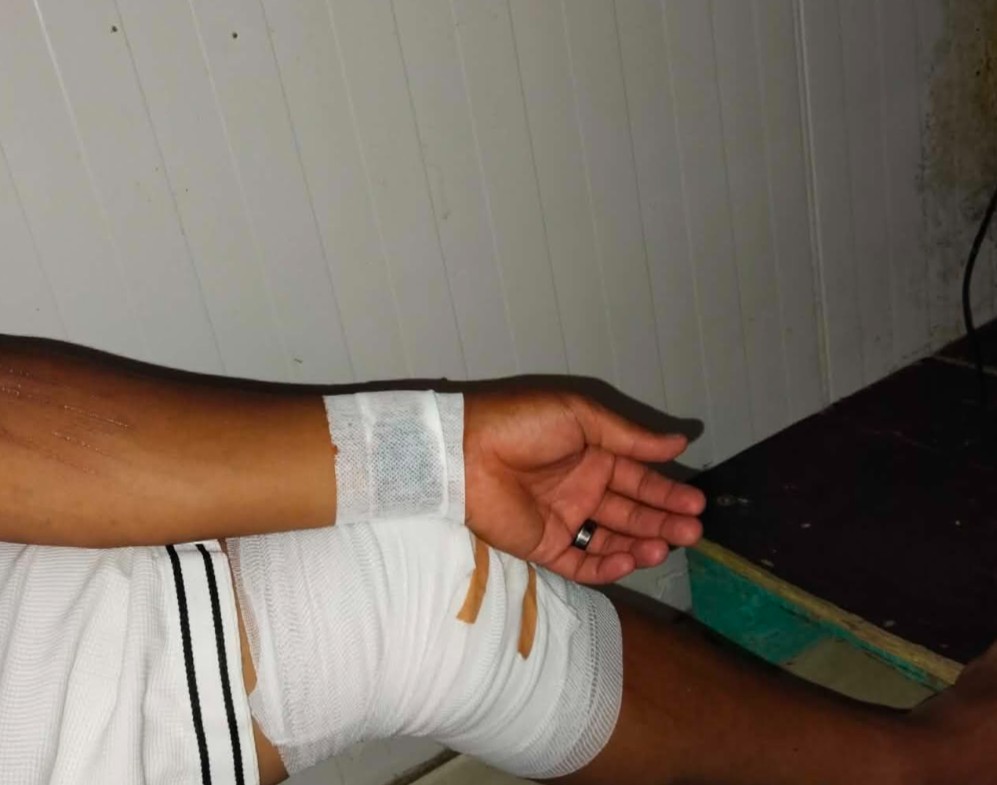
M. also made a serious allegation concerning the response of some police officers to one incident.
‘A young guy who hanged himself was lying unconscious on the ground for 40 minutes and some police officers were standing in front of him laughing. It was as though they were happy that one of us was going to die.’
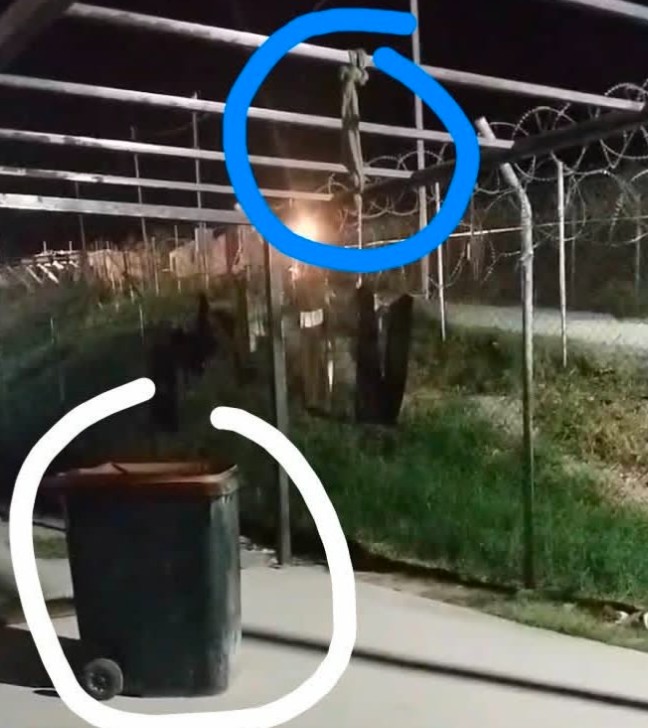
M. says people involved in serious incidents or suicide attempts are generally taken to a hospital in Serres.
But, he says, they are subsequently returned to precisely the same conditions.
‘When they are asked why they did it, they answer honestly: “Death is preferable to this situation.” Then they receive treatment and are returned to the same place where they are suffering. Many people know what is happening in here. And?’
The existence of suicide attempts at the facility was independently confirmed to TPP by Kounios, the police union president, who said case files had been opened and that a number of detainees had been transferred to hospital and psychiatric care following attempts to take their own lives.
‘In September I weighed 85kg. Now I am about 60’
M. says his own physical health has deteriorated substantially during his detention.
He has suffered from persistent toothache and skin conditions.
‘I have had toothache for a long time. I get dizzy frequently. I suffered intense itching, ulcers and sores on my genitals. I developed haemorrhoids because the food they give us is not good at all, almost raw, and I had prolonged constipation.’
He says the treatment he received did little to resolve his symptoms.
‘The doctors did nothing in particular. They gave me broad-spectrum medication. Even when I asked what exactly I had and how I could get the right medicine, they told me either to take whatever was available or not to come back.’
Eventually, he says, he found medication himself and paid for it.
‘Fortunately, I am better.’
When he arrived at Sintiki in September 2025, M. says he weighed 85kg.
‘Now I am about 60. Most of the food gets thrown away. There is no way I can eat it.’
Two functioning showers for approximately 450 people
Even when health problems are treated, M. says the conditions make him fear becoming ill again.
‘I am constantly afraid something will happen to me because the water we wash with is not clean. It is yellow and has dirt in it. When I shower, I boil it first because I am afraid to use it as it is. I am tired of suffering from skin diseases.’
According to his account, only two showers are currently functioning for hundreds of detainees.
‘The bathrooms are extremely dirty and only two work for so many people. The toilets are disgusting. There are only chemical toilets here.’
Many of the doors are broken, he adds.
‘There is no privacy.’
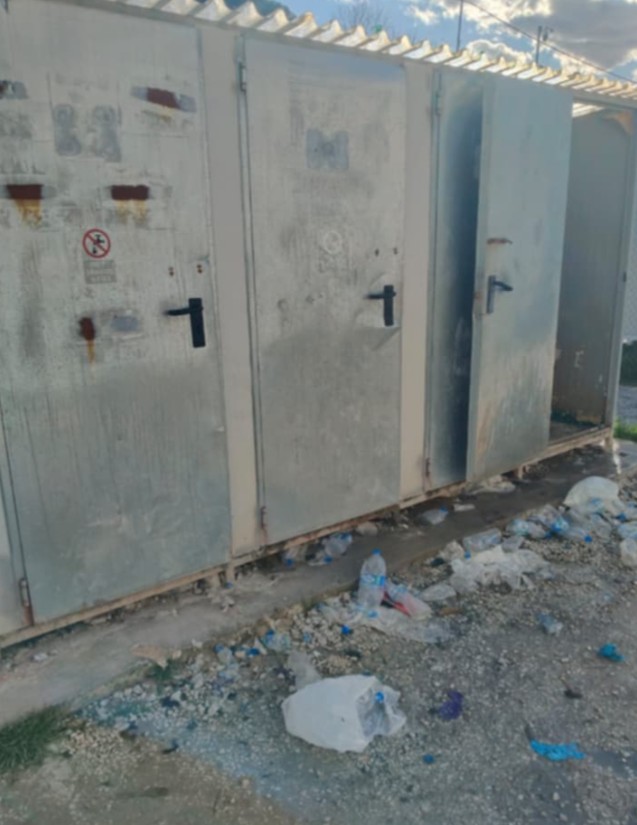
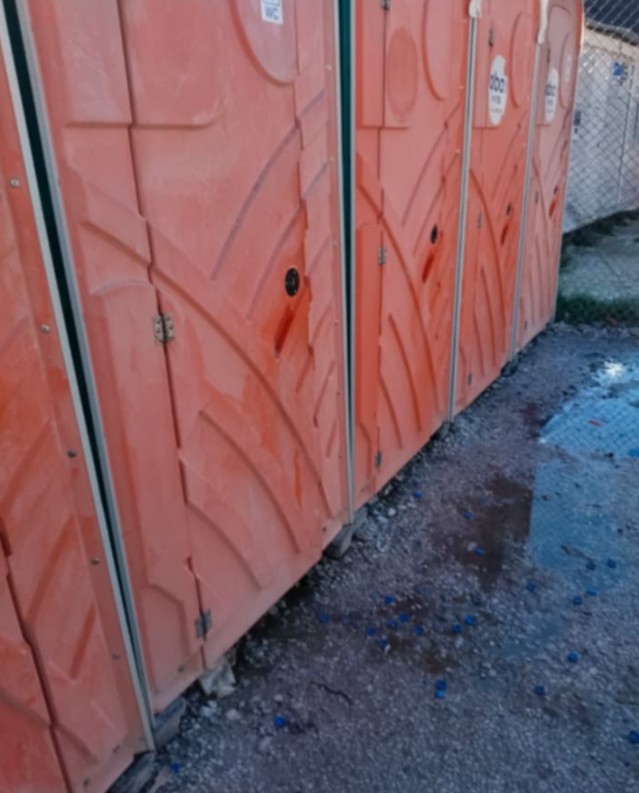
Basic cleaning products and personal hygiene items are also in short supply, he says.
‘I wash my clothes in the sink. They put one bar of soap in the food bag once every three months.’
Other necessities can be bought inside the facility, but at prices he says many detainees cannot afford.
‘They sell soap and everything else we need here, but it is very expensive. My father has to support my mother, my sister and my brother. I have a friend abroad from whom I borrow money.
‘But I swear to you, I only borrow for medical care and personal hygiene.’
He said this almost apologetically.
No lawyer, no explanation and a decision in Greek
Nearly a year after arriving at Sintiki, M. says he still does not fully understand why he is being held or what options remain available to him.
He applied for asylum without a lawyer and underwent his interview by video call without legal guidance.
When his application was rejected, he appealed, again without a lawyer, receiving help from an interpreter at the facility.
His appeal was also rejected.
What he eventually received was a document written in Greek, a language he cannot read. It informed him, he says, that his claim had been rejected for a second and final time and that he could remain in administrative detention for up to two years unless he agreed to leave Greece voluntarily.
He hears stories from other migrants about people staying in better facilities, receiving asylum and eventually being released.
He does not understand whether his experience is particular to Sintiki, the result of his nationality or simply the outcome of a system whose rules nobody has properly explained to him.
He asks whoever he can.
‘When I asked the interpreter why all this was happening to us here, why they keep us for so long when in other centres people are released and conditions are more humane, he told me he did not know and that the police were responsible.
‘When I ask the police, they tell me that the facility administration is responsible and that only they can transfer us or get us out of here.
‘I do not know who controls my fate. But I know it is in God’s hands. He will get me out of this situation with the help of good people.’
‘Those arrested asked to go to prison rather than come back here’
Prolonged detention and deteriorating living conditions have repeatedly led to protests and unrest at the facility.
Some detainees have been arrested and charged during these incidents.
‘I always speak respectfully at protests. I have not spoken rudely to anyone throughout the entire time I have been here,’ M. said.
‘At one protest, four people were arrested, but it was not the last. There were many afterwards, and each time two or three people would be taken to the police station and then brought back here.
‘Think about it: those who were taken to the police station asked to be imprisoned rather than sent back here.’
The most recent protest, he says, took place approximately two weeks before he spoke to TPP. Three people were arrested.
But the protests themselves are becoming less frequent, not because conditions have improved but because, M. says, detainees are exhausted.
‘We are tired of talking and protesting. We are literally exhausted. We no longer have the energy for slogans or speeches or anything else.
‘At first we all protested together. Then there were fewer and fewer of us.’
What remains is uncertainty.
‘I heard that other people stay here for six to 18 months. But here they tell me two years. Will I stay here for two years?’
‘Go back to your country if Greece is not good’
Asked about his treatment by the authorities, M. was careful to distinguish between individual police officers.
‘There are police officers who do not like what is happening and feel sorry for us. But some others are racist. They do not care about our requests. They do not even bother to answer us.’
When detainees complain that they are ill, he says, some officers respond: ‘Go and get treated in Egypt. Go back to your country if Greece is not good.’
Much of the hostility, he adds, is expressed not through words but through indifference.
‘There was a boy who was suffering from severe stomach pain. When we took him to the gate, they asked what was wrong and told us, “We are all suffering. Go back inside and see the doctor tomorrow.”
‘They did not even try to give him a painkiller.’
Police union confirms poor conditions and suicide attempts
Ioannis Kounios, president of the Serres Police Officers’ Union, confirmed to TPP that conditions inside Sintiki are poor.
He also confirmed repeated unrest and documented suicide attempts.
‘These are indisputable incidents. Many migrants have been transferred to hospital and to the psychiatric clinic after the attempts,’ he said.
According to Kounios, approximately 450 people are currently detained in the closed section of Sintiki. Roughly half are Egyptian and half Bangladeshi.
Only approximately 30 people remain in the open section of the facility.
‘The conditions are not good. During the heatwave we have frequent breakdowns in the air-conditioning systems. There are no shaded areas for either the migrants or the police. There are many complaints.
‘The toilets are chemical, and the bathrooms are indeed constantly breaking down. Of course, there is also the counterargument that when they are repaired, the migrants damage them again.’
Kounios also confirmed that detainees suffer from illnesses and skin conditions, although he disputed M.’s claim that medical care is inadequate.
‘I think it is satisfactory,’ he said.
The police union, he added, has repeatedly written to Citizen Protection Minister Michalis Chrysochoidis, Migration and Asylum Minister Thanos Plevris and the leadership of the Hellenic Police about the facility’s infrastructure and the risks created by repeated unrest.
According to Kounios, facility director Vassilis Nikiforos has responded to complaints from both officers and detainees by saying that the solutions required are beyond his authority.
‘It is essentially a prison without the infrastructure’
For Kounios, however, poor infrastructure is only part of the problem.
The central issue is time.
‘The first migrants transferred to Sintiki have now been detained for a year. The problems are caused by prolonged detention.
‘Everything else, from doctors to infrastructure, is dealt with in a makeshift way. But people have been locked inside for a year.’
The combination of indefinite uncertainty and poor living conditions, he said, is driving people into extreme psychological distress.
‘This uncertainty, combined with the poor conditions of detention, has led people to try to end their lives, to be transferred to psychiatric institutions and to riot regularly.’
That pressure also falls on the officers stationed there, he said.
‘All this tension is then directed at us, and we as police officers are forced to absorb it and control it. That is the problem.
‘Colleagues go there to perform a service. They do not go there to do something bad.’
But the facility itself, he said, is fundamentally unsuited to what it has become.
‘The facility is not suitable for long-term detention. It is essentially a prison without the infrastructure.’
Kounios said repeated approaches to the Migration and Asylum Ministry, Plevris personally, Chrysochoidis and the Chief of the Hellenic Police had produced no concrete answers.
‘We are waiting to see how things develop, but we probably need to do something more drastic.’
‘We must not reach the point where a police officer or migrant is injured’
Kounios warned that the situation could escalate if the underlying problem is not addressed.
‘You understand that this is not a situation we can solve ourselves. What can we do? We are trying to highlight the problem because it exists and at any moment it could get out of control.
‘We must not reach the point where either a police officer or a migrant is injured.’
He stressed that the union’s concern extended to both detainees and officers.
‘We put both sides in the same category. We do not distinguish between them. If there is tension, it would be a shame for either migrants or police officers to be injured.
‘Yes, we defend the rights of police officers, but other people have rights too.’
For Kounios, the immediate answer is to reduce the number of people held at Sintiki.
‘At the moment, the best solution is one thing: decongest the facility. Either return those whose applications have been rejected or transfer them to other facilities that have the conditions and infrastructure, so that these people can also calm down.’
Plevris: ‘The only thing we have to do for Greek citizens is to deport them’
TPP contacted the Ministry of Migration and Asylum seeking answers to the allegations made by both detainees and police officers.
Ministry sources said the physical conditions and infrastructure at Sintiki did not fall within the ministry’s responsibility. Because Sintiki operates as a closed detention facility, ‘like a prison’, they said, ultimate responsibility lies with the Ministry of Citizen Protection.
Migration minister Plevris nevertheless sent TPP a statement.
‘The migrants who are in Sintiki have had their asylum applications rejected at second instance, and the only thing we have to do for Greek citizens is to deport them.’
The statement did not address the allegations concerning sanitation, overcrowding, medical treatment, suicide attempts or prolonged confinement.
Instead, Plevris framed deportation as the only obligation relevant to Greek citizens.
For TPP, the response is consistent with the deterrent logic that has characterised the minister’s wider anti-migration policy: conditions endured by migrants are treated not as an issue requiring remedy but as secondary to the objective of removal, continuing a political rhetoric directed towards a far-right audience while disregarding the rights of those held in state custody.
Hellenic Police: ‘Very serious allegations that must be investigated’
TPP also contacted Hellenic Police spokesperson Konstantina Dimoglidou and presented her with the allegations gathered during the reporting.
Dimoglidou said the complaints were extremely serious.
Given that some of them were also being raised by serving police officers, she said, they should be referred to the competent service so that an investigation could be initiated.
She asked TPP to submit the findings in writing so they could be forwarded to the appropriate authorities.
TPP has sent the material gathered during this investigation and will follow up with the Hellenic Police’s response and any measures it intends to take.
______________________________________________
Are you seeking news from Greece presented from a progressive, non-mainstream perspective? Subscribe monthly or annually to support TPP International in delivering independent reporting in English. Don’t let Greek progressive voices fade.
Make sure to reference “TPP International” and your order number as the reason for payment.