When you live in a safe home, every season has its beauty. When you live in exile in a settlement, the seasons bring trials and danger.
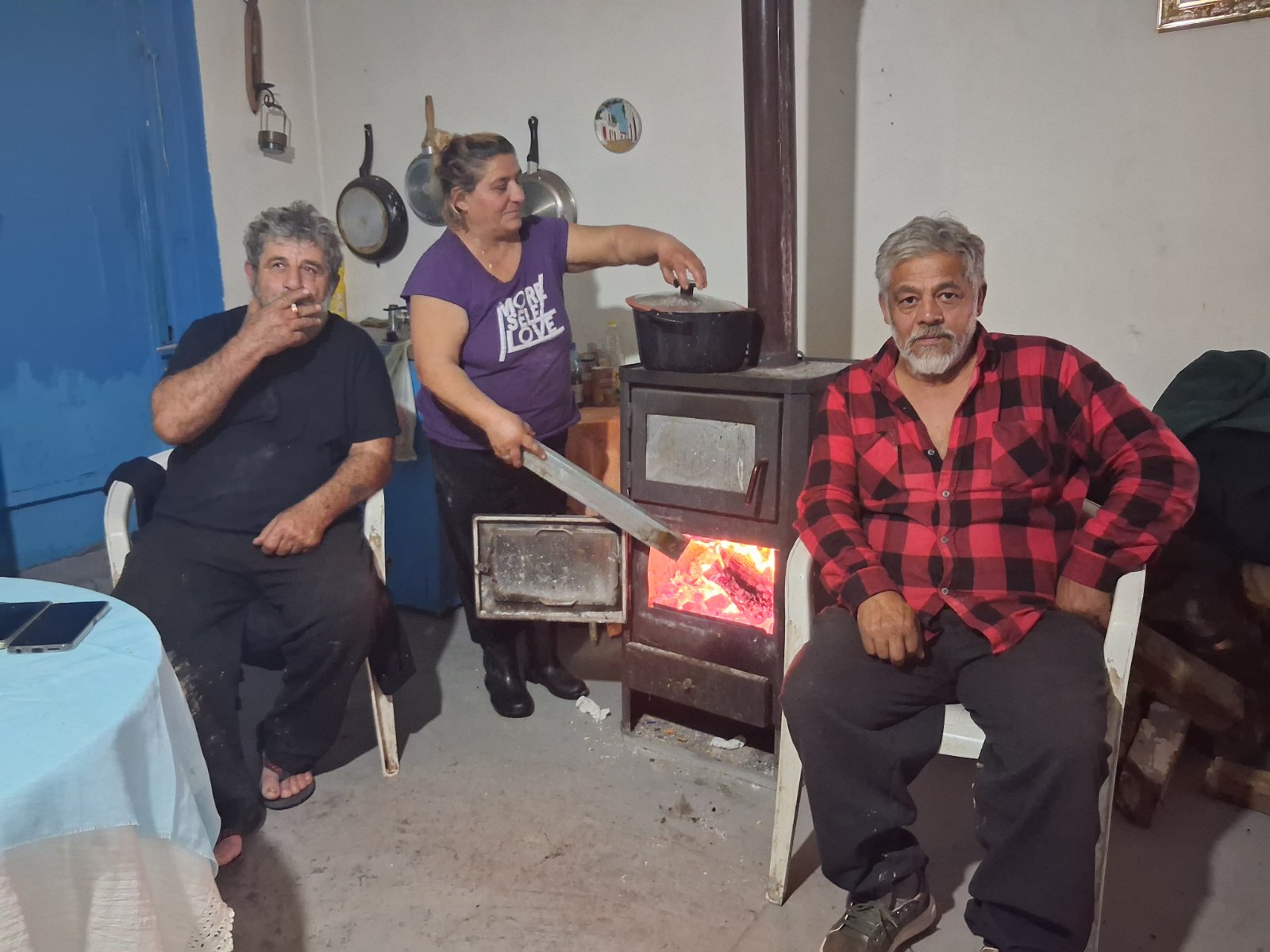
Kostas Kamperis is a Greek Roma man who has lived in Lefkada with his family for 30 years. He, like the entire Roma community in Palies Alykes, has survived without electricity for two decades. They draw water through a shared hose connected to a public tap. The pressure is barely adequate.
They have no refrigerator. Everything they buy must be consumed within a day. Children’s food and milk, particularly in summer, spoil daily because there is no way to store them safely.
‘Our life is very difficult,’ says Kamperis. ‘In the summer we do not even have cold water to drink.’
And school inclusion, he says, begins with the basics: water and electricity.
‘Our children can’t study after sunset. I went to secondary school, and most of us here went to school. My daughters used to go, but because we don’t have electricity, they had to stop. Without water and electricity, we can’t even run a washing machine so our children can have clean clothes like the rest of their classmates.’
‘It’s already been rented’: the constant denial of housing
The settlement at Palies Alykes is currently home to eight families, around 50 people in total, most of them originally from Lefkada. Until 2006, the community lived in a central part of the town, but the mayor at the time forced them to move to the current plot. The authorities tarmacked the area, fenced it off and provided them with wood to build makeshift huts.
The site lies next to the town landfill.
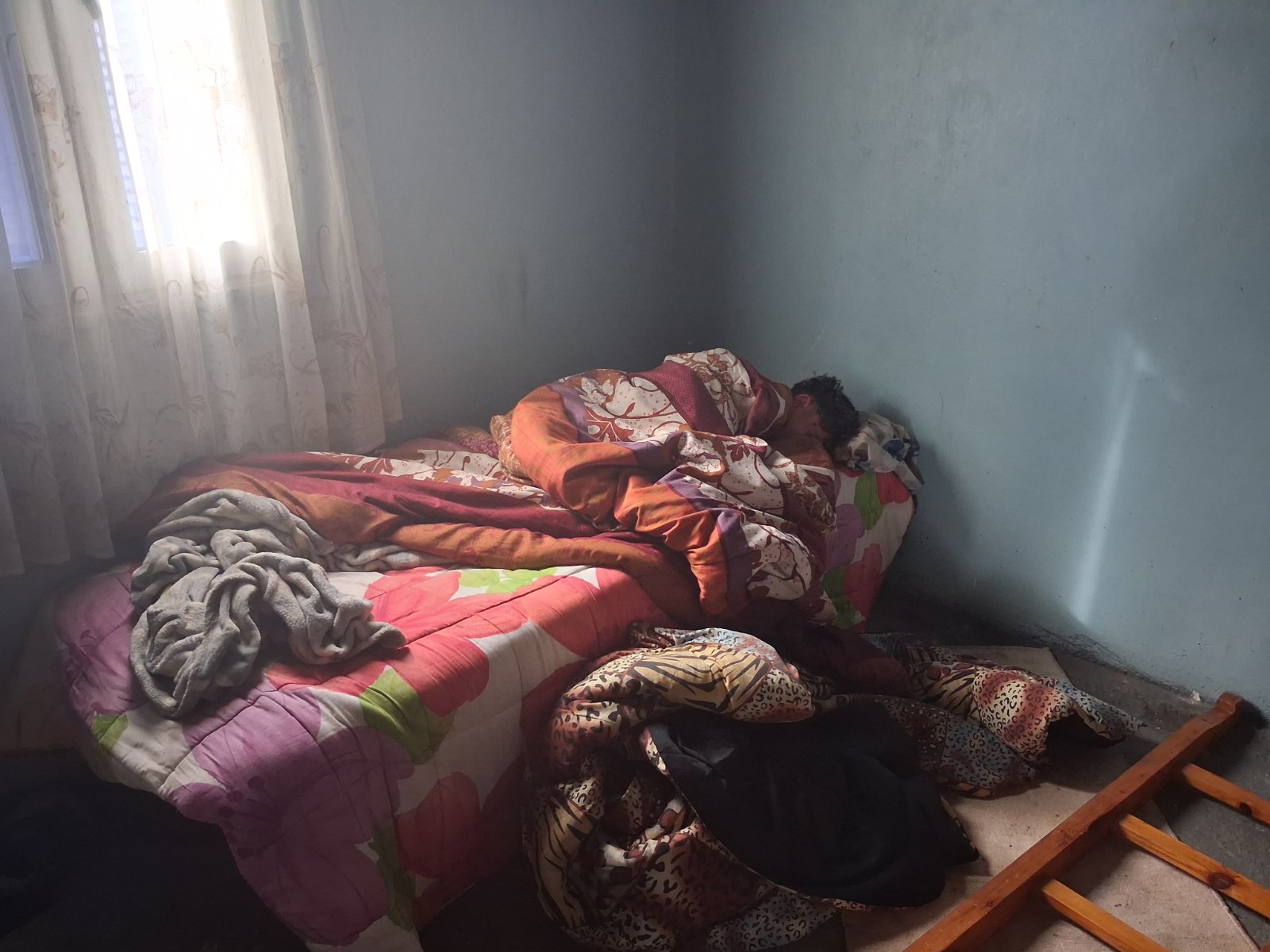
‘One metre from my shack is the dump. It’s the worst thing that can happen to a person. We live next to rats and the stench. In the summer it’s unbearable,’ says Kamperis.
‘They forced us to come here. Who would choose to live like this? We have tried many times to rent a house for €250 to €300. Landlords would arrange to meet us on the phone and, as soon as they saw we were Roma, the excuse was always the same: “It’s already been rented.” Some told us openly: “I don’t rent to Roma.”’
In Greece, according to research by the EU Agency for Fundamental Rights (FRA), three in five Roma face discrimination in housing because of their background. At least 60 per cent experience broader discrimination in everyday life, yet only 7 per cent report it to the police, often for fear of being treated as perpetrators rather than victims.
Anti-Gypsyism, racism directed against Roma, remains one of the most widespread forms of discrimination across the European Union. Some 65 per cent of respondents say they would not want a Roma person as a neighbour, colleague, classmate or romantic partner.
An eviction order with no plan
In January 2025, the Roma families in Lefkada received a notice from the land registry. The decision ordered them to leave the settlement at Palies Alykes because the land, which belongs to the state through the Ministry of Finance, had been earmarked for a waste pretreatment and composting unit and a photovoltaic park, both funded by the EU.
The Municipality of Lefkada, however, had made no provision for relocation or alternative housing, despite its legal obligations.
Under Greek law, municipalities are responsible for supporting local communities and implementing policies that improve living conditions and strengthen the social inclusion of residents, especially vulnerable groups such as Roma and homeless people.
That raises an obvious question: can an EU-funded project that leads to the forced removal of vulnerable people without alternative housing be reconciled with the EU’s own Charter of Fundamental Rights?
‘There was no concern at all about where these people would go or about the danger to their lives. Among them are elderly people, disabled people, a pregnant woman and a one-year-old baby with an 80 per cent disability,’ says Giorgos Tsiakalos, the lawyer representing the Roma families in Palies Alykes.
According to reports, when Lefkada’s mayor, Xenophon Verginis, was asked at a municipal council meeting what would happen to the families, he replied: ‘They can go to Messolonghi or Vonitsa.’ Both are mainland municipalities removed from the island, where the families have no ties and no support network.
The municipality then intervened in court in support of the eviction.
‘They themselves want to leave, but in an organised way,’ the lawyer explains. ‘They live in inhumane conditions, but at least there they have built a system of mutual aid among themselves and with non-Roma residents of Lefkada who support them. If they are evicted without a plan, their lives are put at risk and the vicious cycle of “not in my back yard” is reproduced.’
In the end, no effective legal remedy was available in the Greek courts.
‘The domestic courts took the view that Roma work because they collect and sell scrap metal, and that they receive benefits. This is a sweeping generalisation and a stereotype, since they are not entitled to any benefits beyond those available to any other citizen in Greece,’ Tsiakalos says. ‘Based on this assessment, the courts argued that they have the ability to rent housing by themselves. But that bears no relation to the lived reality of the racism they face.’
Perhaps the most damning aspect of the Roma crisis across Europe, according to the Council of Europe and the Commissioner for Human Rights, is that dedicated funding exists to help states and municipalities improve living conditions for Roma communities, yet it remains unspent. Municipalities are either indifferent or afraid of the political cost.
This is also true in Lefkada, according to Tsiakalos:
‘There were sources of funding available for improving living conditions or for relocation. The municipality could have applied and secured money but it did not.’
The refusal is not new. Under a previous administration, the municipal council had unanimously agreed to provide welfare support to the Roma community, electrify the camp and create laundry and hygiene facilities. None of those promises was ever kept.
The case reaches Strasbourg
The failure of the Greek authorities to protect this vulnerable group eventually had legal consequences that reached Strasbourg. The Lefkada case was brought before the European Court of Human Rights in November 2025.
‘The court immediately granted the request for interim measures on an urgent basis. That is extremely rare. The ECtHR only indicates interim measures to a member state when it considers that the applicant faces a serious risk of irreparable harm. The vast majority of such decisions concern asylum seekers who, if deported to their countries, would face torture or threats to their lives,’ Tsiakalos says.
Before the ECtHR, the opposing party is not the municipality but the Hellenic Republic. Interim measures are binding, and failure to comply exposes the state internationally and gives rise to accountability.
The court’s key question to the Greek government was whether immediately available alternative housing existed and what concrete steps had been taken to secure it.
‘The government’s position was that Roma are Greek citizens and can find housing on their own,’ says Tsiakalos. ‘However, this reasoning is self-defeating. How can Greece officially declare to the EU that it has a serious racism problem, invoke the National Strategy for Roma, claim the relevant EU structural funds, but then argue before the ECtHR that Roma are not vulnerable?’
‘The burden of responsibility cannot be shifted to suit the occasion: when the system benefits, it invokes Roma vulnerability to extract EU funds, but when a project needs to be implemented or their existence is politically instrumentalised, they are treated as equal citizens. We presented the recent state budgets to the ECtHR, where it is clear that the Roma are officially prioritised as a particularly vulnerable group.’
In January 2026, the court blocked the eviction until a substantive solution is found. For now, the Municipality of Lefkada is prohibited from expelling the Roma families, and responsibility passes back to local government, which is obliged to secure relocation and care for residents living in degrading conditions.
ThePressProject sent questions to the Municipality of Lefkada but received no response by the time of publication. The municipality has not announced any intention to find alternative housing.
‘The fight is for a decent home and a chance in life’
Michalis Maragakis is a retired physics teacher. He lives 22 kilometres from the camp, but travels there regularly to visit, share a coffee and offer help. On this day, he accompanied a Roma man to an accountant to settle pending paperwork.
Several of the people in the camp had once been his pupils at secondary school.
‘Many local residents have relationships with the Roma. They help each other with recycling, they work together, but the Roma are forced to live in isolation. That separation prevents relationships from being built. Locals are wary. Racism is not always openly expressed, but it shows itself, for example, in landlords refusing to rent to them,’ he says.
‘Because of illiteracy, Roma are often left powerless to defend themselves, even though they are citizens with equal rights.’
Employment is one area that has improved in recent years, as more Roma find work in tourism.
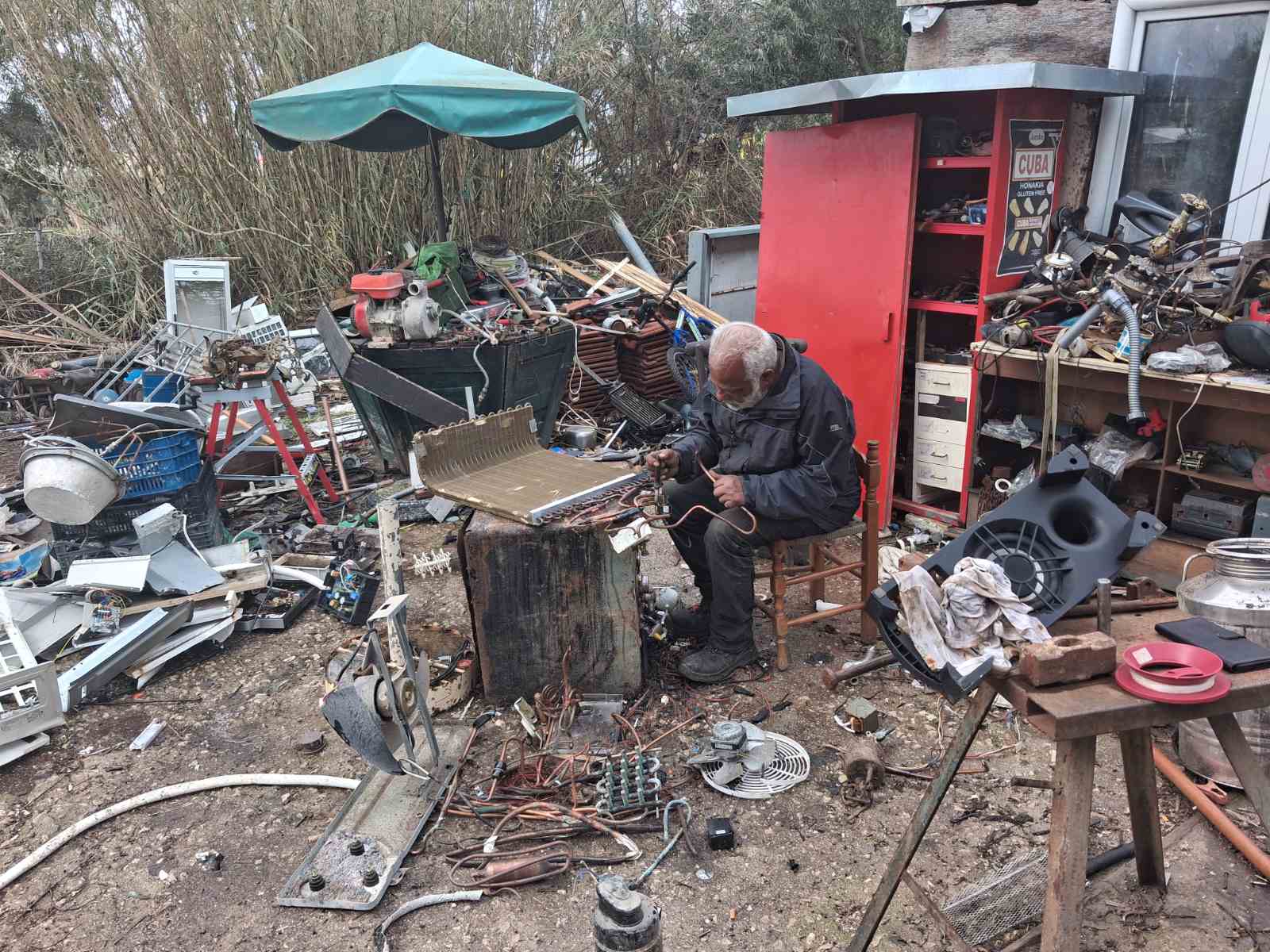
‘They cannot find enough seasonal workers, and that works in our favour. My wife worked as a cleaner and I worked as a waiter,’ says Kostas Kamperis. ‘In winter, I collect scrap metal.’
The cold is biting, and the rain is growing heavier. The nylon sheeting that serves as a wall on the outdoor toilet is beginning to peel away.
Indignation, exhaustion and sadness now dominate life in the Palies Alykes community. Despite the ECtHR ruling, the fear of ending up on the street remains real.
‘They say we Roma do not want to live in houses. But what kind of person does not want a normal life? I want to live in a clean home, to have hot water to wash, to switch on the lights and the television at night. I want what everyone else wants,’ says the 40-year-old father of four.
‘What they are demanding is dignity and normality. They have never had the means to secure housing, especially on a tourist island where homes are overwhelmingly diverted into short-term rentals,’ says Tsiakalos.
‘Their struggle is not about wanting to move from settlement to settlement. They live there because they have no other choice. The struggle is for decent housing and a chance in life, at least for the younger generation. They do not want handouts. They want exclusion to end, and they want access to work and housing.’
Relocation, if it comes, should open pathways to inclusion and participation in social life, not simply move marginalisation somewhere else.
Experience from other European countries shows that stereotypes begin to shift only when long-term, comprehensive Roma inclusion programmes are implemented in neighbourhoods, schools and workplaces, with Roma themselves actively involved.
The photographs are by Kostas Kamperis.
______________________________________________
Are you seeking news from Greece presented from a progressive, non-mainstream perspective? Subscribe monthly or annually to support TPP International in delivering independent reporting in English. Don’t let Greek progressive voices fade.
Make sure to reference “TPP International” and your order number as the reason for payment.