The announcement came just one day after Eurostat published preliminary data on GDP per capita in purchasing power standards, placing Greece joint last in the EU alongside Bulgaria.
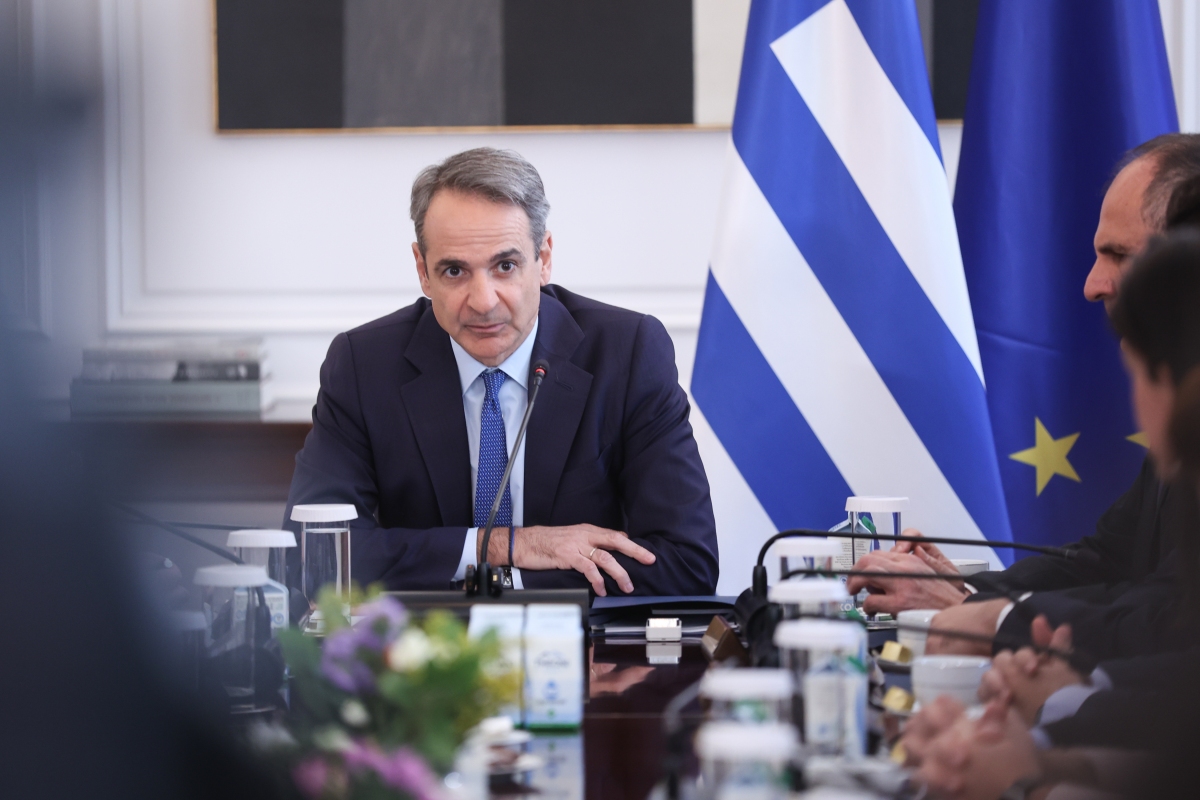
Referring to the cabinet agenda, Mitsotakis said:
‘And now we come to the agenda of the cabinet, because in the measures to support society, today we will jointly decide on the new increase in the minimum wage, the basic wage, from 1 April. I want to remind you that this is the sixth consecutive increase in the minimum wage, which we received in 2019 at €650. The minister’s proposal, and she will then explain in detail the reasoning behind this proposal, is for the minimum wage to rise to €920. It is a monthly increase of €40 from last year. In other words, the cumulative increase in the minimum wage since 2019 exceeds 41%. It is more than €3,780 per year.’
He added that the increase would also affect other parts of the wage structure and social benefits.
‘And of course, let us remember that the increase in the minimum wage does not only concern our fellow citizens who are at this wage level, it also pulls upwards the three-year increments, the grades in the public sector and of course many benefits,’ he said.
Mitsotakis also pointed to employment figures.
‘It is always worth remembering that in 2019 our central commitment was to reduce unemployment and create many new jobs. Today, taking stock, in the last six years 563,000 new jobs have been added to our country. I repeat: 563,000 new jobs. We took unemployment at 18%, in January it was 7.7%,’ he said.
He also praised the government’s digital work card scheme, claiming it protects workers’ rights and has led to a significant increase in declared overtime.
‘We are expanding it to five more sectors, from private health to telecommunications and cleaning companies. Its scope will now exceed 2.3 million employees. I think that this initiative has also been justified by the real data we see, with the significant increase in declared overtime and with much better protection of the employee against any potential employer arbitrariness. However, we will talk about these in more detail later in our meeting.’
The prime minister made no mention of soaring prices for essential goods such as bread, olive oil and meat, nor of the dramatic increase in rents since 2019. According to a recent Reuters report, rents in Athens rose by more than 50% between 2019 and 2024, compared with 26% in Madrid and 14% in Paris. Over the same period, average wages in Greece rose by around 27%.
Home ownership in Greece fell below 70% in 2024, the lowest rate ever recorded. Despite rent subsidies for low-income households, more than 83% of Greeks say they are unable to save, while 40% have cut back on spending on eating out and entertainment.
At the same time, preliminary Eurostat data released on 25 March showed Greece and Bulgaria in last place among EU member states in GDP per capita measured in purchasing power standards, at 32% below the EU average.
In last year’s ranking, Greece was second from bottom. But Bulgaria rose from 66% to 68% of the EU average, while Greece fell from 69% to 68%.
______________________________________________
Are you seeking news from Greece presented from a progressive, non-mainstream perspective? Subscribe monthly or annually to support TPP International in delivering independent reporting in English. Don’t let Greek progressive voices fade.
Make sure to reference “TPP International” and your order number as the reason for payment.