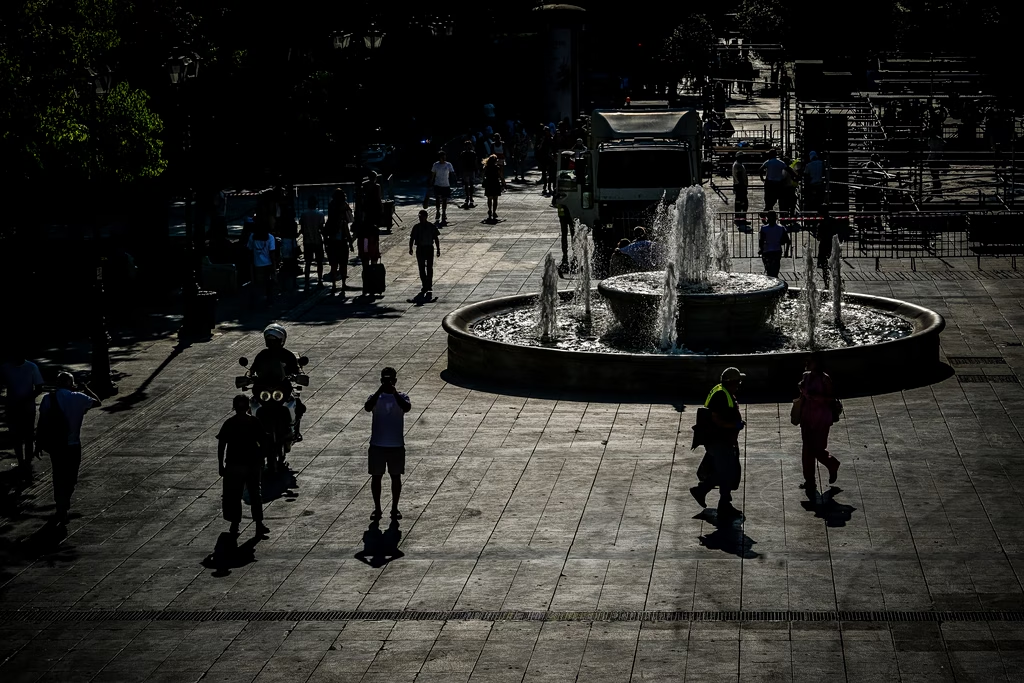
Under emergency measures outlined by the General Confederation of Greek Workers (GSEE), outdoor manual work must be suspended from noon to 5pm when specified temperature thresholds are reached. Employers are also advised to allow workers in vulnerable groups to work remotely where the nature of their job permits.
Special measures apply to construction sites, delivery workers, shipbuilding and repair zones, mines and quarries. Employers must provide drinking water, shade, regular breaks, suitable rest areas and safe working conditions.
‘These temperatures are measured in the shade. For someone walking in the sun at noon, the heat stress is far greater. On Wednesday, maximum temperatures from Thessaly southwards are expected to range between 40°C and 42°C,’ a meteorologist told Star television.
On Tuesday, the highest temperatures are expected in western Attica and the Thriasio Plain, where areas including Elefsina and Mandra may reach or locally exceed 40°C.
Emergency workplace measures
According to GSEE, employees in high-risk groups should be offered the option of remote working where feasible.
Vulnerable workers include:
- people with heart or lung conditions
- people with chronic illnesses, including diabetes, chronic kidney failure and blood pressure disorders
- people taking medications including insulin, antidiabetic drugs, diuretics and anticholinergics
- pregnant workers
- workers aged over 60
- people working in particularly hot environments.
Membership of a vulnerable group must be certified by a doctor or the company’s occupational physician.
Outdoor manual work must be suspended from noon to 5pm when any of the following conditions apply:
- the temperature exceeds 40°C and humidity is at least 20%
- the temperature exceeds 42°C and humidity is at least 14%
- the wet-bulb globe temperature index exceeds 32.2.
Sector-specific measures
Construction sites
Work must stop from noon to 5pm at outdoor construction sites, where heat stress is intensified by the lack of natural shade, strenuous physical labour and heat retained by materials such as concrete, asphalt and metal.
Delivery workers and digital platforms
The mandatory suspension applies to all workers delivering goods by motorcycle or other two-wheeled vehicles, including those employed through digital platforms, regardless of the type of employment contract.
Delivery work must therefore stop between noon and 5pm.
Shipbuilding and repair zones
Under sector-specific regulations, working hours are limited to 7am to 1pm when temperatures reach 38°C, followed by a break until 7pm without any reduction in pay.
At temperatures of 36°C or 37°C, work must stop between 2pm and 6pm.
Mines and quarries
Outdoor work must be suspended when temperature limits are exceeded, in order to prevent workers from being exposed to direct sunlight under dangerous conditions.
Employer obligations
Employers must identify shaded areas and provide suitable shelters where work and breaks can take place.
Workers must be supplied with appropriate head coverings where safety helmets are not required. Sunscreen and neck protection should also be provided where recommended by the occupational physician and safety officer.
Workers must have access to ample cool drinking water at a temperature of between 10°C and 15°C.
Technical measures may also be required, including changes to buildings, production processes and the workplace microclimate.
Working hours should be organised so that regular breaks are provided and physically demanding tasks are carried out outside periods of peak heat. Work should be reduced or suspended in areas experiencing severe heat stress between noon and 5pm.
Suitable shaded or air-conditioned rest areas must be available during breaks.
Air-conditioning systems must be properly maintained and operated in accordance with public health requirements to prevent them from becoming sources of infection.
Employers must also consider individual and environmental risk factors, including dehydration, a lack of acclimatisation, strenuous physical labour and heavy or impermeable clothing.
Health ministry guidance
The Ministry of Health has issued instructions on preventing heat-related illness, warning that exposure to temperatures beyond the body’s tolerance may result in conditions of varying severity.
Mild or moderate symptoms include:
- severe headache
- lethargy and exhaustion
- feeling faint
- low blood pressure
- nausea and vomiting
- rapid heartbeat.
Symptoms of heatstroke include:
- a body temperature above 40.5°C
- dry, red and hot skin without sweating
- a dry and swollen tongue
- dizziness, confusion or delirium
- rapid breathing and convulsions
- loss of consciousness.
Those at greater risk include older people, babies, young children, pregnant and breastfeeding women, and people who are overweight or obese.
The risk is also higher for people working or exercising intensively in hot environments, as well as those with cardiovascular disease, hypertension, diabetes, lung conditions, haemoglobin disorders, kidney or liver disease, mental illness, dementia, alcoholism or substance dependence.
People with fever or gastroenteritis are also more vulnerable.
Those taking diuretics, anticholinergic medication, psychotropic drugs, insulin, antidiabetic tablets or other hormonal medication are advised to contact their doctor to determine whether their dosage needs to be adjusted.
General precautions
People are advised to remain in cool, well-ventilated or air-conditioned spaces and to wear light, pale-coloured clothing and a hat.
Direct sunlight and strenuous physical activity should be avoided between 11am and 5pm.
Frequent cool showers, light meals and plenty of fluids are recommended. Alcohol should be avoided. Additional salt should be consumed after heavy sweating only on medical advice.
Older people should be contacted and supported daily. Care facilities housing newborns, children, disabled people or older people must provide adequate cooling and air-conditioning.
First aid for heatstroke
Anyone experiencing heatstroke should immediately be moved to a cool, shaded, well-ventilated or air-conditioned space.
Unnecessary clothing should be removed, and ice packs or cool compresses placed on the neck, armpits and groin. The person may also be placed in a cool bath, given a cool shower or sprayed with water.
Cool fluids may be given in small sips only if the person is conscious.
Medical assistance must be called immediately and the affected person taken to hospital.
Citizens are also advised to avoid outdoor activities involving heat or sparks that could start a fire.
______________________________________________
Are you seeking news from Greece presented from a progressive, non-mainstream perspective? Subscribe monthly or annually to support TPP International in delivering independent reporting in English. Don’t let Greek progressive voices fade.
Make sure to reference “TPP International” and your order number as the reason for payment.