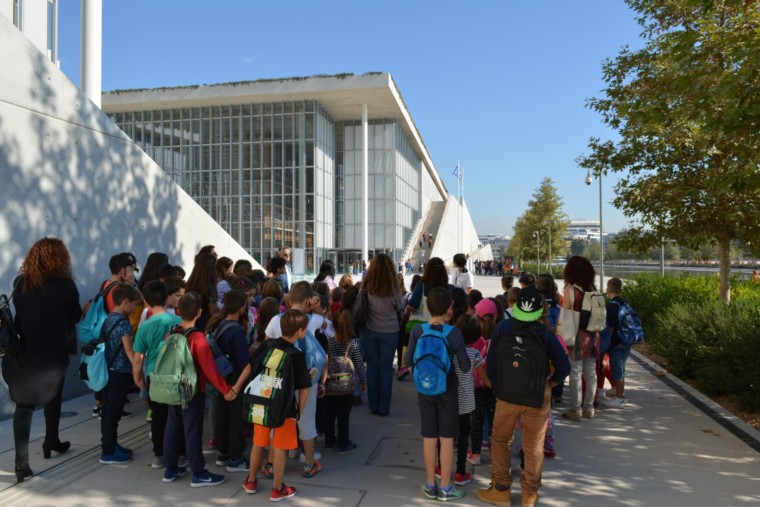
The decision was published in the Government Gazette on 31 August 2026 and established a new institutional framework for planning and organising educational activities outside schools. DOE, however, has accused the Ministry of Education of introducing the framework ‘unilaterally’.
According to the federation, the creation of three-member committees, mandatory evaluation reports, registrations on the mySchool platform and tight approval deadlines impose a ‘huge administrative burden’ on teachers.
At the same time, DOE argues that insufficient provision has been made for families in financial difficulty, creating a risk that pupils will be excluded from educational activities.
The federation also points to responsibilities which, it says, are being placed on accompanying teachers regarding the suitability of vehicles, compliance with speed limits and the suitability of the facilities visited by pupils.
According to DOE, this transfer of responsibility ‘leaves teachers exposed to checks for matters that are exclusively the responsibility of the Traffic Police and/or other competent bodies’.
The federation is calling for the ministerial decision to be withdrawn and for talks to begin with education federations on a new framework that would reduce bureaucracy and remove responsibilities which, it argues, fall outside teachers’ educational duties.
Among other measures, it is calling for full legal protection for accompanying teachers, with simplified procedures and a clear definition of their responsibilities within their teaching and pedagogical role; a central register of certified transport providers, with all safety inspections conducted exclusively by the competent public authorities; and state financial support to ensure that all pupils can participate in educational activities free of charge and that none are excluded.
DOE stresses that it recognises the pedagogical value of school visits and activities outside school premises, as well as their contribution to learning outcomes and pupils’ emotional and psychological development.
‘As educators, we recognise the great pedagogical value of school visits and activities that take place outside the school premises, their reinforcing role in the final learning outcomes and their substantial contribution to the psycho-emotional development of our students. We firmly integrate them into school life, knowing in practice that meaningful learning goes beyond the boundaries of the classroom. However, there is a deep contradiction between the proclaimed pedagogical goal of the new Ministerial Decision for an “open, extroverted school” and the reality that it is shaping: an unprecedented administrative and bureaucratic mess that shifts other responsibilities onto teachers’, the federation said.
______________________________________________
Are you seeking news from Greece presented from a progressive, non-mainstream perspective? Subscribe monthly or annually to support TPP International in delivering independent reporting in English. Don’t let Greek progressive voices fade.
Make sure to reference “TPP International” and your order number as the reason for payment.