Council of Europe Commissioner slams Greece over pushbacks and abuse of refugees
A memorandum by the Council of Europe's Commissioner for Human Rights, Michael O’Flaherty, following his visit to Greece, highlights ongoing pushback practices by Greek authorities both on land and at sea. O’Flaherty calls on the Greek government to take immediate action to end these practices and strengthen accountability. The report also documents allegations of physical and sexual violence against refugees by law enforcement, as well as inhumane detention conditions –particularly for unaccompanied minors. It stresses that complaints of human rights violations rarely lead to investigations, and accountability mechanisms are seen as unreliable, as was the case with the Pylos shipwreck. The Commissioner also criticises Greece’s vague legal definition of migrant smuggling, which has led to the criminalisation of humanitarian groups and migrants themselves. Notably, he underscores the persistent denial of pushbacks by Georgia Adeilini, Greece’s Chief Prosecutor, despite rulings from the European Court of Human Rights.
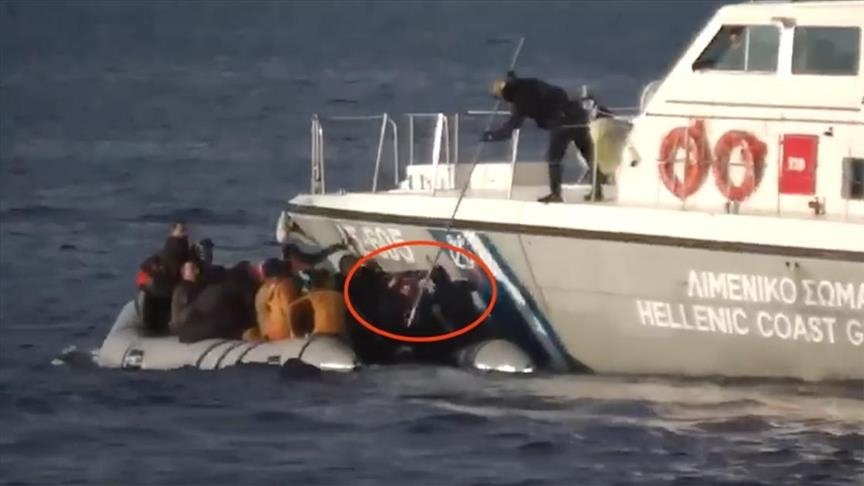
The Council of Europe Commissioner for Human Rights, Michael O’Flaherty, published a memorandum on migration and border control in Greece, following his visit to the country from 3 to 7 February 2025.
“During the visit, the Commissioner discussed migration-related issues with the then Minister of Migration and Asylum, Nikolaos Panagiotopoulos; the then Minister of Maritime Affairs and Insular Policy, Christos Stylianides; the Deputy Minister of Foreign Affairs, Alexandra Papadopoulou; the Greek delegation to the Parliamentary Assembly of the Council of Europe; the General Prosecutor of the Supreme Court, Georgia Adeilini, and her Deputy; the Greek Ombudsman, Andreas Pottakis; and the National Commission for Human Rights. He also met with representatives of UNHCR, the European Commission, and Frontex, as well as with a number of experts, legal professionals, and civil society organisations. The Commissioner also met with several survivors of the Pylos shipwreck of June 2023 and victims of other human rights violations at Greek borders and listened to their testimonies.
On 10 February, the Commissioner also met online with the Minister of Citizen Protection, Michális Chryssohoïdis. On 18 February, his team received data via email from the Commandant’s Office of the Hellenic Coast Guard. On 28 February, his team met online with the Fundamental Rights Officer at the Ministry of Migration and Asylum.
The Commissioner notes that Greece has been particularly affected by irregular arrivals, including for the purpose of seeking asylum. He also acknowledges that law enforcement agencies operating at land and maritime borders face a complex and challenging environment. Nevertheless, the Commissioner is concerned about consistent reports of persisting practices of summary returns at both land and maritime borders.”
Pushbacks, mistreatment, physical and sexual violence
“Despite a reported recent decrease in summary returns, especially from the Aegean islands of Lesvos and Samos, the Commissioner heard from legal professionals as well as representatives of civil society organisations, national human rights structures and international organisations that summary returns to Türkiye continue to take place. The Commissioner also met with third-country nationals who shared their experience, some of them having been summarily returned multiple times, including after having reached Greek territory. Several of them eventually succeeded in lodging an asylum request in Greece, while others could not. The Commissioner also heard allegations of unnecessary or excessive use of force and of sexual violence by members of law enforcement forces in the context of such operations.
The Recording Mechanism of Incidents of Informal Forced Returns, established in 2021, recorded 50 incidents in 2022 and 45 in 2023. The Commissioner understands that these figures do not provide a full picture as those receiving allegations of summary returns, especially civil society organisations, do not always have the capacity and resources to document these incidents consistently and thoroughly enough to be recorded by this Mechanism. According to data shared with the Commissioner by UNHCR, the agency received information about 248 summary returns incidents which reportedly occurred in the first half of 2024 and has assessed and documented 166 of them as substantiated (38 at land borders and 128 at sea borders). These affected at least 4 229 persons, mainly originating from Afghanistan, Syria, Palestine, Türkiye, and Iraq, and including unaccompanied and separated children, single parent families, persons with medical needs, and pregnant women
At the time of the Commissioner’s visit to Greece, nearly 50 applications containing allegations of summary returns had been communicated to the Greek government by the ECHR.
In a judgment delivered on 7 January 2025 in the case of A.R.E. v. Greece, the Court stated that there were strong indications to suggest that there had existed, at the time of the events alleged, a systematic practice of ‘pushbacks’ of third-country nationals by the Greek authorities, from the Evros region to Türkiye. The Court considered that the Government had not successfully refuted the evidence in question by providing a satisfactory and convincing alternative explanation. As regards the maritime borders, the Court also found, in a separate decision, that there were strong indications to suggest that there had existed, at the time of the events alleged, a systematic practice of summary returns from the Greek islands to Türkiye.”
The memorandum underscores that “returning people without carrying out an individual identification procedure prevents member states from establishing whether they may be sending people back to human rights abuses and from assessing the risk of onward refoulement. This in turn may lead to violations of Article 3 ECHR and Article 33 of the UN Refugee Convention, as well as other rules of international and EU law which are binding on Greece.”
Inadequate conditions for children
“While during the visit the Commissioner did not specifically focus on the detention and reception conditions of asylum seekers and migrants, relevant information and updates were shared with him by multiple stakeholders about the situation of unaccompanied children being held for prolonged periods in de facto detention in inadequate and overcrowded facilities, particularly in Samos, and about increased numbers of people arriving in Rhodes and Crete and unable to receive dignified assistance there, due to the lack of reception facilities.”
Calls for immediate and comprehensive action
The Commissioner called on the Greek government to uphold a zero-tolerance policy towards pushbacks, mistreatment, arbitrary detention, and other serious human rights violations.
Greek aythirities should “ensure that border control actions are carried out at all times in full compliance with obligations arising from the European Convention on Human Rights and other relevant sources of human rights law. To this end, the Greek government should:
- Adopt a zero-tolerance approach to summary returns, ill-treatment, arbitrary detention and other serious human rights violations, ensuring that such violations are immediately and effectively halted, while acknowledging their long-standing prevalence at Greece’s sea and land borders and the need to provide adequate remedy to victims.
- Ensure that arguable allegations of summary returns, ill-treatment and other related abuses are promptly, impartially, thoroughly and effectively investigated, in compliance with the case-law of the European Court of Human Rights, by bodies that have a sufficient degree of independence from the authorities that are the subject of the investigation; that relevant authorities promptly proceed to the determination of all the relevant facts and to the identification and, if appropriate, punishment of all those responsible; and that victims and relatives can participate in relevant procedures and have access to adequate compensation.
- Ensure that all persons being subjected to border control operations have adequate access to individualised procedures to raise protection needs, as well as to effective remedies.
- Where suitable facilities are not available at the place of arrival, take swift action to provide for transfers to other locations where adequate facilities are in place, exercising particular urgency in the case of unaccompanied minors and other people with specific needs.”
Review of accountability mechanisms
“The Commissioner acknowledges that steps have been taken to foster accountability, including the addition of layers of scrutiny by various stakeholders. Nevertheless, the persisting practices, and the rare identification and punishment of those responsible for these violations, point to a persistent accountability gap.”
He referenced the case of the 2014 Farmakonisi tragedy:
“Following the drowning of 11 migrant children and women near the Greek island of Farmakonisi in the context of an operation managed by the Hellenic Coast Guard in 2014, the European Court of Human Rights found that there had been shortcomings in the proceedings and concluded that the national authorities had not carried out a thorough and effective investigation capable of shedding light on the circumstances in which the boat had sunk.”
“When this issue was raised with officials during the visit, it was dismissed as an old and isolated incident. Authorities outlined the types of investigations now carried out in response to such complaints, including:
- internal administrative investigations by the Hellenic Police Force Internal Affairs Directorate and the Hellenic Coast Guard General Inspectorate into allegations of misconduct by the members of their respective forces. In the context of internal administrative mechanisms, the authorities also underlined the role of the Fundamental Rights Officer at the Ministry of Migration and Asylum, established by Law 4960/2022 in December 2022 to examine, at a preliminary stage, complaints from foreign nationals for alleged violations of fundamental rights during access to territory and/or reception and/or asylum procedures in Greece. Moreover, the Commissioner notes that a Special Committee on Fundamental Rights Compliance appointed within the Ministry of Migration and Asylum, holds the responsibility of monitoring the procedures and implementation of national, EU and international legislation in the areas of border protection and the granting of international protection.
- external non-judicial inquiry by the National Transparency Authority (NTA) and/or the Greek Ombudsman. In addition, a Recording Mechanism of Informal Forced Returns, established in 2021 by the Greek National Commission for Human Rights and civil society organisations, monitors, records and reports summary return incidents of third country nationals from Greece to other countries based on a standardised, transparent, and scientific recording methodology.
- and judicial investigation into the causes of the incident and those responsible, launched by the local public prosecutor of the competent jurisdiction and/or by the prosecutor of the Naval Court of Piraeus – having exclusive jurisdiction over coastguards – in case of alleged involvement of members of the Hellenic Coast Guard.”
“Allegations of human rights violations rarely give rise to internal investigations by the Hellenic Coast Guard General Inspectorate”
“Regarding internal investigations, it appears that allegations of human rights violations at the maritime borders involving coastguards rarely give rise to internal investigations by the Hellenic Coast Guard General Inspectorate, and that when they do, investigations systematically lead to findings clearing the relevant personnel of any responsibility. The Commissioner notes that the Greek Ombudsman identified deficiencies in the internal administrative investigations, including “failure to examine the alleged victim and important witnesses, judgements as to the role of state authorities or the reports of foreigners infringing upon the arms’ length principle, failure to record the arrest of the victims mentioned above (often used as evidence of non-refoulement) etc.”The setting-up of a complaint mechanism by the FRO at the Ministry of Migration and Asylum may represent a positive step, but the Commissioner understands that the FRO is neither mandated nor equipped to conduct proper investigations, and that none of the 139 complaints lodged at the time of the Commissioner’s visit concerned allegations of summary returns.
At external non-judicial level, the Commissioner observes that, at the time of his visit, the National Transparency Authority (NTA) had published one report on allegations of summary returns from Greece, concerning a limited number of events, and that this report denied any involvement of public officials in summary return operations.”
The Commissioner also observes that the lack of effective independence of the NTA was underlined by civil society organisations and the UN Human Rights Committee, while the UN Special Rapporteur on Human Rights Defenders considered that the NTA is not “equipped to conduct independent investigations into the management of migration flows.”
General Prosecutor of the Greek Supreme Court categorically denies the systemic practice of pushbacks, which contradicts the judgments of the European Court of Human Rights
“At judicial level, the Commissioner observes that prosecutors have a crucial role to play to ensure effective accountability. However, many of his interlocutors reported that the reluctance of prosecutors to conduct effective investigations is an obstacle to ensuring accountability for human rights violations at borders. Rapid dismissal of complaints, and closure of preliminary investigations without having heard victims or key witnesses nor collected crucial evidence were cited as factors hindering the establishment of facts and the fight against impunity for these human rights violations.
The Commissioner discussed this issue with the General Prosecutor of the Supreme Court [Georgia Adeilini] and her Deputy, who highlighted that prosecutors are instructed to ensure that human rights are always respected and that all allegations of human rights violations at borders are adequately investigated. While welcoming the instructions given to prosecutors, the Commissioner notes the General Prosecutor’s categorical denial of systematic practices of summary returns from Greece, which contradicts the judgments of the European Court of Human Rights. The Commissioner notes that the lack of effective investigation into allegations of summary returns may lead to further applications lodged with the European Court of Human Rights.”
Need to “ensure that cooperation of EU actors for border control does not contribute directly or indirectly to human rights violations”
“The Commissioner notes that European Union (EU) institutions and agencies play a significant role in supporting migration management and border control in Greece, including through the deployment of EU funding and personnel. This enhances the responsibility of relevant EU actors to also deploy accountability mechanisms available to them, to ensure that their cooperation does not contribute directly or indirectly to human rights violations.
The Commissioner acknowledges that the European Commission has made significant investments in Greece over the years, that it has long attempted to persuade Greek authorities to comply with relevant standards, and that some improvements recorded over time can be attributed to such interventions. At the same time, notwithstanding the continuing prevalence of serious human rights violations in the country, no infringement proceedings on the implementation of relevant obligations at borders or in detention centres by Greek authorities have been launched , and border management operations that appear not to fulfil the conditions set by relevant EU law have continued to be supported. In this regard, an inquiry by the European Ombudsman, concluded in February 2025, recommended ways for the European Commission to improve the way it monitors the use of EU funds to ensure compliance with fundamental rights in the context of border control operations. These include putting in place guidelines for assessing compliance with fundamental rights, establishing transparent criteria to determine under what circumstances the European Commission will withhold or suspend EU funds for non-compliance with fundamental rights, and assessing whether that threshold has been reached in Greece, in view of credible complaints about fundamental rights violations by Greek authorities.
The Commissioner recommends that the Greek authorities:
- Undertake a thorough review of existing accountability mechanisms competent for investigating and responding to human rights violations against refugees and migrants and take resolute action to address the systemic shortcomings affecting their effectiveness and independence.
- Ensure that national human rights bodies have the capacity to monitor and report on the situation of asylum seekers and migrants at borders and that their recommendations are promptly implemented.
- Ensure that new mechanisms set up under the EU Pact on Asylum and Migration are effective, and in particular that their independence and scope of action are in line with guidance issued by the Council of Europe Committee for the Prevention of Torture and the Fundamental Rights Agency of the European Union.”
Accountability for the Pylos shipwreck
“The shipwreck of an overcrowded fishing boat that was carrying an estimated 750 people in international waters off the coastal Greek town of Pylos on 14 June 2023 represented one of the deadliest boat disasters in the Mediterranean Sea to date. The exact death toll of this disaster remains unknown, as many of the victims’ bodies are believed to have sunk with the boat, but it is estimated at around 560. Only 104 people survived and just 82 bodies were recovered. The Commissioner considers that conducting investigations capable of shedding light on the circumstances of the event and leading to the establishment of the facts and, where appropriate, the punishment of those responsible is indispensable to serve justice to the survivors, those who perished and their relatives. The Commissioner acknowledges that several steps have been made in this direction, while observing that many of the shortcomings identified in Section II also come into play in this case.
The Commissioner notes that the Hellenic Coast Guard General Inspectorate did not conduct any investigation into possible wrongdoings by members of the coast guard in spite of the survivors’ allegations that an attempt to tow the boat by the coast guard – which had monitored the ship for several hours before and during the sinking – caused the boat to sink, and notwithstanding investigative media reports supporting and substantiating these allegations.
At external non-judicial level, the Commissioner observes that the case has not been referred to the National Transparency Authority. However, following the explicit refusal of the Hellenic Coast Guard to conduct an internal disciplinary inquiry, which the Greek Ombudsman had requested since June 2023, the Ombudsman decided in November 2023 to launch his own investigation, under the special competence of the National Mechanism for the Investigation of Arbitrary Incidents. The Commissioner welcomes the initiative taken by this independent authority and the recent completion of the inquiry report, which was shared with the government and relevant judicial authorities.”
Unjustified obstacles to the independent investigation by the Greek Ombudsman – Unfortunate response from the Minister of Shipping.
“While authorities did not make the report public, a press release issued by the Ombudsman on 3 February 2025 indicates that “the report finds that the actions and omissions of the implicated officers during the handling of the incident on 13 and 14 June 2023 constitute the offences of deadly exposure to danger, as well as exposure to endangering the life, health and physical integrity of those on board the Adriana fishing vessel, punishable under article 306 of the Criminal Code.” The Commissioner is concerned by these findings, as well as by the fact that some relevant evidence was not disclosed to the Ombudsman, despite repeated requests. Such lack of cooperation generates undue obstacles to the Ombudsman’s inquiry. The reported reaction to the Ombudsman’s inquiry report by the Ministry of Shipping and Insular Policy is unfortunate.
The Commissioner notes that the Ombudsman’s report has been submitted to the Minister of Shipping and Insular Policy for the exercise of disciplinary jurisdiction, as well as to the competent Prosecution Authority of the Piraeus Maritime Court, for its consideration of the relevant criminal offences identified.
At judicial level, two parallel investigations were initiated on the Pylos shipwreck. A first investigation, launched by the Public Prosecutor of Kalamata shortly after the disaster, led to nine Egyptian survivors being charged with smuggling, illegal entry, membership of a criminal organisation and causing the shipwreck. These charges were eventually dropped by the Public Prosecutor and the Criminal Court of Kalamata in May 2024, with those accused being cleared of any wrongdoing.”
Lawyers and organisations representing the shipwreck survivors express their concern over the closing of the preliminary investigation by the Naval Court of Piraeus
“The Commissioner was informed that another judicial investigation was conducted by the Deputy Prosecutor of the Naval Court of Piraeus, who decided to close its preliminary phase in December 2024. The lawyers and organisations representing and supporting the victims of the shipwreck shared their concerns with the Commissioner about this decision, as they consider that no thorough investigation into the responsibilities of the competent search and rescue bodies and the leadership of the Hellenic Coast Guard has been conducted. They stressed in particular that “the competent Public Prosecutor’s Office did not summon for written explanations those legally responsible for the failures and omissions of the Search & Rescue Operation, namely, the competent bodies of the National Search and Rescue Coordination Centre, the Operations Centre and their hierarchical superiors, i.e. the leadership of the Coast Guard.”
The Commissioner notes that the Adriana was monitored by authorities for 13 hours before sinking without receiving adequate assistance in spite of various sources of information, including air footage and messages sent by passengers, documenting the distress situation of the ship and its overcrowding. He understands that the Deputy Prosecutor of the Naval Court of Piraeus decided to open a ‘supplementary preliminary investigation,’ in the context of which the respective roles and responsibilities of all those involved may be further explored.”
“The Greek authorities must ensure that accountability is upheld”
The Commissioner recommends that Greek authorities:
- Ensure that any responsibilities for any act or omission that may have contributed to the Pylos shipwreck are established, in line with the standards set out in the Safi judgement, through prompt, independent, impartial, thorough and effective investigations and prosecutions, conducted with the adequate participation of victims and relatives, and able to lead to the identification and, if appropriate, punishment of those responsible, at all levels. – Refrain from using a rhetoric undermining the office of the Ombudsman.
- Follow up promptly and adequately to the report of the Greek Ombudsman on the Pylos shipwreck, including through the adoption of appropriate disciplinary measures in relation to those found responsible for wrongdoing, at all levels.
- Conduct a thorough review of plans of operation and arrangements currently in place for responding to maritime emergencies, in view of the need to promptly identify situations of distress and adequately coordinate search and rescue operations. This entails, inter alia, immediately dispatching suitable search and rescue units to provide assistance to people in distress at sea – regardless of nationality or status or the circumstances in which they are found – and instructing on-scene units to take all appropriate measures to ensure the safety of the persons concerned and to avoid taking any act
Criminalisation of human rights activists and migrants – The legal definition of smuggling is problematic and loose
“Many of his non-state interlocutors described a worrying combination of cumbersome administrative procedures, judicial charges pressed against human rights defenders and civil society organisations’ staff members and volunteers, negative rhetoric connoting NGOs as criminal organisations, and declining coverage of human rights issues by the main Greek media.
The Commissioner discussed the issue of criminalisation of migrants and alleged judicial harassment of human rights defenders with the authorities, who expressed concern about the alleged proximity of certain civil society actors with smuggling networks. The Commissioner recognises that the crimes committed by criminal networks making profit out of the suffering of other humans should be countered with the full force of the law. However, he stresses that asylum seekers and migrants and human rights defenders assisting them should not be confused with smugglers.
As he stressed at the 2nd International Conference on Migrant Smuggling, the prosecution of humanitarian actors and human rights defenders raises issues of how smuggling is defined. The prosecution of people, including migrant and asylum-seeking people, who had not committed a crime has been enabled by loose definitions of smuggling, that do not include as elements of the crime such matters as financial or other material gain, which are a central feature of the definition of smuggling provided by the Palermo Protocol.
In March 2023, the UN Special Rapporteur on human rights defenders, following her visit to Greece in June 2022, concluded that “[h]uman rights defenders promoting and protecting the rights of migrants, asylum-seekers and refugees, including human rights lawyers, humanitarian workers, volunteers and journalists, have been subjected to smear campaigns, a changing regulatory environment, threats and attacks and the misuse of criminal law against them to a shocking degree”.
The targeting of journalists covering refugee and migration issues in Greece was indeed brought to the Commissioner’s attention by media professionals who highlighted that several of them had been receiving insults, smears and harassment on social media because of their reports, including on summary returns.
The Commissioner recommends that Greek authorities:
- Acknowledge the role and work of civil society and media and support human rights defenders protecting the rights of asylum seekers and migrants, including by creating an enabling environment where journalists, activists and other members of civil society can carry out their work free and unhindered.
- Ensure that civil society organisations, and particularly those with first-hand knowledge of the situation of asylum seekers and migrants and related human rights concerns, are adequately involved in relevant monitoring and accountability processes.
- End any form of criminalisation or repression of human rights defenders assisting asylum seekers and migrants, refrain from inflammatory or stigmatising rhetoric about their role, and publicly communicate that challenging government policies, including through advocacy, public campaigning and litigation, represents an entirely legitimate activity in a democratic society.
- End any form of criminalisation of asylum seekers and migrants, including by adopting a definition of smuggling compliant with the Palermo Protocol.
- Ensure the effective protection of media freedom, prevent misuse of judicial proceedings to intimidate or silence media professionals, and engage in open dialogue with media in full respect of their independence.”
______________________________________________
Are you seeking news from Greece presented from a progressive, non-mainstream perspective? Subscribe monthly or annually to support TPP International in delivering independent reporting in English. Don’t let Greek progressive voices fade.
Make sure to reference “TPP International” and your order number as the reason for payment.
Σε χρειαζόμαστε
Το ThePressProject είναι το μοναδικό μέσο ανεξάρτητης, ερευνητικής και αποκαλυπτικής δημοσιογραφίας που στηρίζεται αποκλειστικά στις μικρο-δωρεές των επισκεπτών του. Πιστεύουμε ότι η πληροφορία πρέπει να είναι διαθέσιμη σε όλους και για αυτό δεν κλειδώνουμε κανένα κομμάτι της ύλης αλλά για να παραχθεί το πρωτογενές υλικό που θα βρείτε εδώ χρειαζόμαστε την υποστήριξή σου. Αν δεν πληρώσουμε εμείς για την ενημέρωσή μας, θα την πληρώσει κάποιος άλλος (και αν δεν είσαι ο Μαρινάκης μάλλον δεν έχεις τα ίδια συμφέροντα). Μάθε πώς
- Κάνε κλικ για να σχολιάσεις
Πολιτική Σχολιασμού