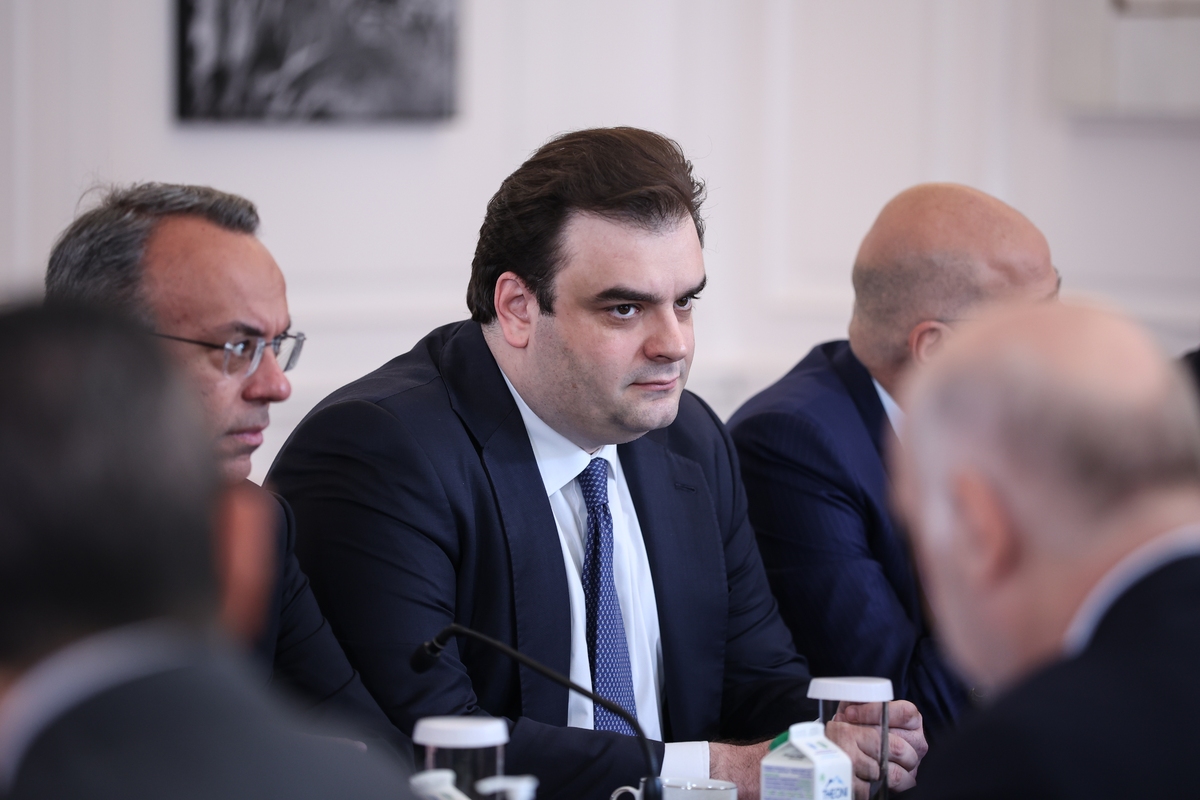
‘We should not create a new crisis, a fiscal one this time, by trying to deal with the current one. The measures being taken are part of the existing fiscal framework. There are different views among the member states, but the right balance must be achieved,’ Pierrakakis said after the Eurogroup meeting, responding to a question from ERT about activating the escape clause.
Valdis Dombrovskis, the EU Commissioner for Economy and Productivity, said that ‘for the escape clause to be activated, the condition is that there is a severe economic recession’ and stressed that ‘we are not there at the moment. There is a slowdown but there is no economic recession’.
Pierrakakis also acknowledged that ‘it is clear that the crisis seems to be lasting longer than initially expected. We are not in the best-case scenario and we need to closely monitor developments, especially in terms of the impact on supply chains’.
Dombrovskis said discussions were focused on proposals the Commission is expected to present in the coming days. These include:
- reducing taxation on electricity, with the aim of easing the burden relative to fossil fuels such as oil and natural gas
- improving the efficiency of electricity networks, in other words how energy is transported and distributed from generation units to consumers
- updating benchmarks for free allocations and strengthening the market stability reserve in order to maintain price stability when supply and demand shift.
The new framework is based on a net expenditure indicator, meaning reduced revenues during periods of economic slowdown would not need to be offset. The indicator does not include increases in interest expenditure and also excludes the cyclical part of unemployment benefit spending.
In addition, the Commission is expected to work closely with member states on national policy interventions aimed at limiting the impact of rising energy prices.
As officials pointed out, given the limited fiscal space, any measures adopted should be temporary and strictly targeted, while avoiding any overall boost in demand for fossil fuels such as oil and natural gas. In the same context, they stressed that the new EU fiscal framework already includes flexibilities that can be used to absorb negative economic developments such as those being recorded in the current period.
According to the commissioner, consultations showed that member states had put forward different approaches, including proposals on fuel taxation. However, it became clear that, under current budget constraints, any intervention should be tightly targeted and fiscally prudent.
______________________________________________
Are you seeking news from Greece presented from a progressive, non-mainstream perspective? Subscribe monthly or annually to support TPP International in delivering independent reporting in English. Don’t let Greek progressive voices fade.
Make sure to reference “TPP International” and your order number as the reason for payment.