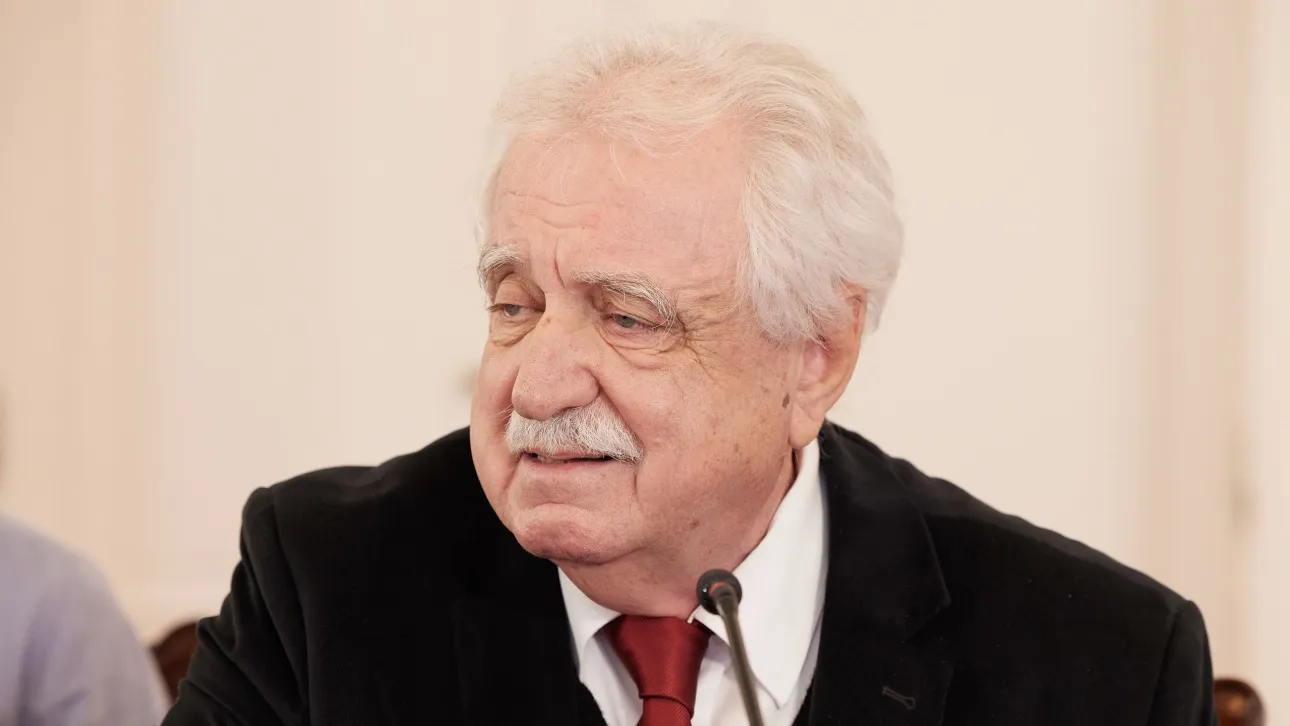
Benos, who has also been involved in the reconstruction of northern Evia, announced his definitive withdrawal from the committee at an emergency press conference in Soufli. The president of the DIAZOMA association criticised changes introduced by the government, saying they fundamentally altered the philosophy of the masterplan.
Speaking in an emotional atmosphere, Benos said his departure was the only responsible course towards both his own record and the citizens of Evros.
‘It is no longer a political or emotional issue. It is primarily a matter of personal dignity,’ he said.
The former minister clarified that he was resigning in his personal capacity, while DIAZOMA would remain active in the region as an independent body, without state or European funding. He also noted that he had worked for five years entirely on a voluntary basis, while the association had invested more than €2.5 million of its own resources in northern Evia and Evros.
At the heart of his criticism was the risk that available funding would be wasted through a fragmented approach. Benos argued that the central problem was not securing resources, as €3 billion had already been allocated, but the absence of a unified strategy.
‘If the regional programme remains as it is, it will end up as an empty shirt, as the poet says of Helen,’ he said.
According to Benos, the traditional clientelist state continues to prioritise individual projects, disregarding European requirements for Integrated Spatial Investments (ISI). Without a single coordinating centre, he warned, the programme of 238 projects would completely deteriorate over the next three years.
During the presentation, several specific points of disagreement with government policy were highlighted:
- The absence of the railway: Benos criticised the removal of the electrification and modernisation of the Evros railway network from the immediate priorities, contrasting this with northern Evia, where a €500 million road project was incorporated from the outset.
- The freezing of Democritus University of Thrace studies: It was reported that, three years after the disaster, not even €1 million had been disbursed to Democritus University of Thrace, leaving six strategic studies concerning the future of the regional unit stalled.
- The administrative structure: Benos described the appointment of a government secretary in the region as unnecessary and as diminishing the role of local government, which, he argued, has the institutional authority to lead under the principle of subsidiarity.
Concluding, Benos made a final appeal to the government to reconsider its approach and return the projects to the unified framework of the masterplan. He stressed that the citizens of Evros were now the only ones capable of preventing the region from being allowed to decline.
______________________________________________
Are you seeking news from Greece presented from a progressive, non-mainstream perspective? Subscribe monthly or annually to support TPP International in delivering independent reporting in English. Don’t let Greek progressive voices fade.
Make sure to reference “TPP International” and your order number as the reason for payment.