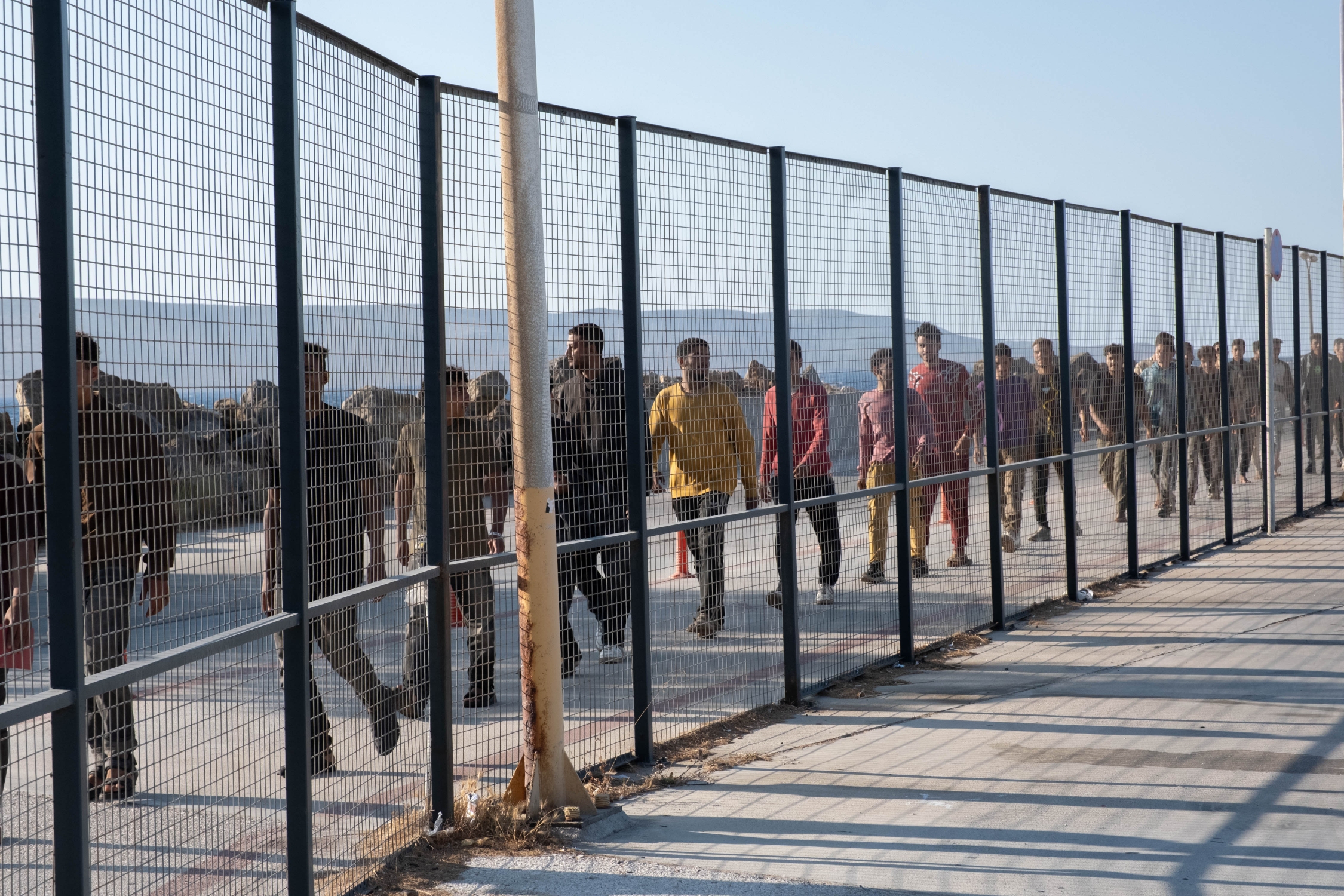
They argue that these plans require “sufficient funding”, technical expertise, implementation capacity and a “coherent diplomatic approach”.
According to the letter, “the conclusion of negotiations on the recent legislative proposals submitted by the Commission in the area of asylum and returns is an important step in addressing the internal challenges of the EU asylum and migration system”. The foreign ministers addressed their appeal to Migration Commissioner Magnus Brunner, the EU’s High Representative Kaja Kallas, and Commissioners Dubravka Suica, Josef Sikella and Marta Kos.
Presenting detention centres outside the EU as an “innovation”, the ministers state that, alongside internal reforms, the Union must strengthen the “external dimension” of migration policy. They claim that “important steps are being taken to strengthen EU asylum and migration legislation, which provides for innovative solutions such as safe third country arrangements and return hubs. The EU is also strengthening legal pathways.”
They further argue that the EU must work “closely with countries along migratory routes, within the framework of a whole-of-the-route approach”, in order to address the causes of irregular migration, manage population movements, and facilitate returns.
Setting out their central demand, the nineteen governments write: “This includes adequate available funding, provision of expertise and capacity for development and implementation, and the definition of a coherent diplomatic approach. We, the undersigned ministers, declare our readiness to actively support this objective.”
According to Politico, the ministers’ reference to “recent proposals” concerns the package agreed on 8 December, which introduces new mechanisms to “reform the way the EU deals with migration”, including asylum processing centres in non-EU states. Although the letter avoids naming specific models, it points to tools already incorporated into EU law, such as “safe third country agreements and return centres”, and calls for their implementation through partnerships along migration routes.
The far-right model of “return hubs”, strongly promoted by Italy, is cited as a precedent. Italy has already built and begun operating two such centres in Albania under a separate legal framework, with the first transfers expected in mid-2026.
The nineteen governments argue that these “innovative solutions” will not materialise without clear financing pathways. “Efficient use of financial resources is necessary for the creation and operation of innovative forms of cooperation,” the letter states, calling on the Commission to set out guidance on how existing and future EU funds can be mobilised.
The ministers also call for a larger role for EU agencies, including a possible expansion of Frontex’s mandate. They ask the Commission and the agencies to examine “necessary legislative and policy changes”, including “where appropriate, a review of Frontex’s mandate and responsibilities, to ensure effective support and sufficient capacity” in cooperation with non-EU countries.
______________________________________________
Are you seeking news from Greece presented from a progressive, non-mainstream perspective? Subscribe monthly or annually to support TPP International in delivering independent reporting in English. Don’t let Greek progressive voices fade.
Make sure to reference “TPP International” and your order number as the reason for payment.