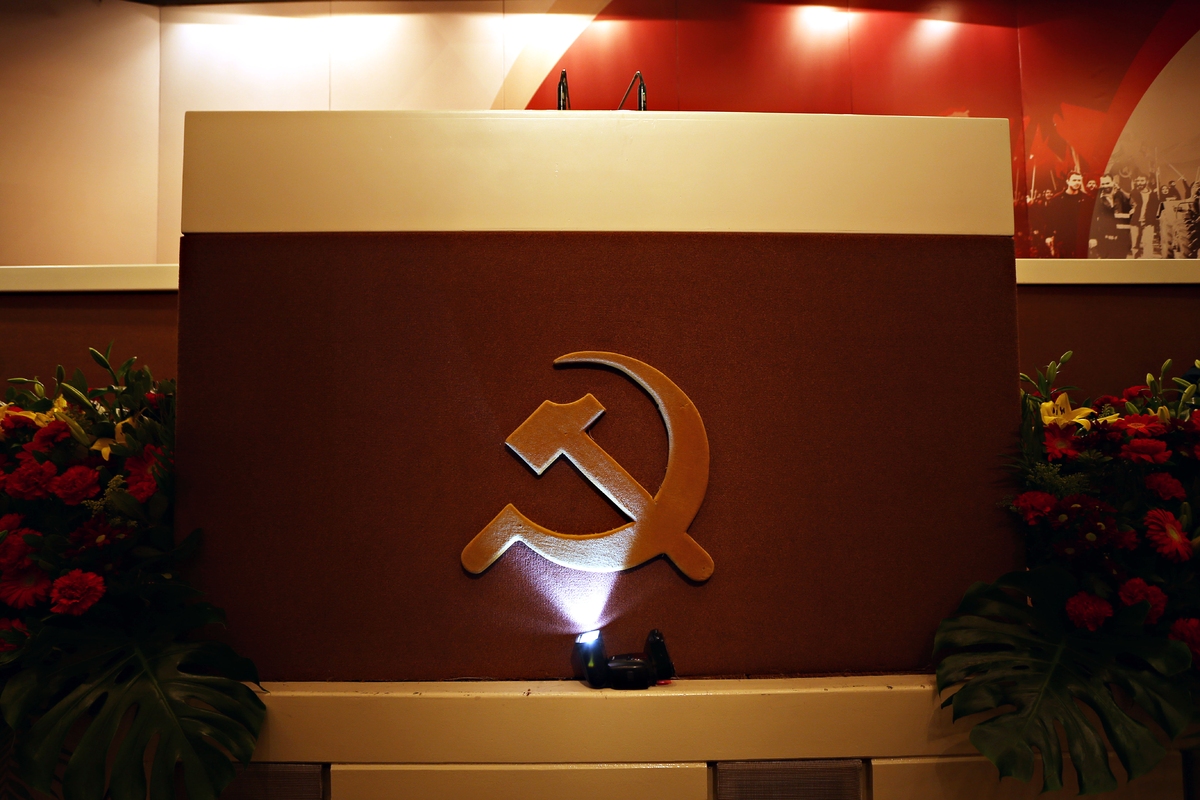
In a statement, the Education and Research Department of the Central Committee of the KKE says the government is already under pressure from the consequences of its education policies and from opposition expressed by teachers, students and parents, particularly in relation to the National Baccalaureate. According to the party, this explains the repeated postponement of substantive discussion on changes to the Lyceum, as the government seeks to manage reactions and politically repackage reforms it describes as necessary.
The KKE argues that the government is once again resorting to a so-called “national dialogue”, which it describes as a parody process with predetermined outcomes and procedural formalities. It notes that similar dialogues have taken place repeatedly since 2010, producing what it calls intensification of schooling, degradation of knowledge, increased filters and inequalities, and the categorisation of schools and students.
According to the statement, the current state of the Lyceum is not accidental or the result of systemic malfunctions, but the conscious outcome of policy choices over recent years. Responsibility is attributed not only to New Democracy, but also to PASOK and SYRIZA, which the KKE says share a common strategic orientation that has transformed the Lyceum into a continuous examination process detached from general education and young people’s real needs.
The party claims that, aside from the KKE, opposition parties are open to supporting new legislation that would introduce additional class-based barriers to completing secondary education and accessing public universities, thereby creating a clientele for private higher education institutions. It argues that this is the real substance behind calls for political consensus.
Referring to statements by the Prime Minister that reforms would increase the number of examinations so that the Lyceum, and not only the university entrance exams, gains importance, the KKE describes this position as an admission of failure. It maintains that examinations have never given meaning to knowledge or fostered interest in learning, but instead function as mechanisms of selection, exclusion and early social classification.
The KKE further argues that the proposed National Baccalaureate would not upgrade the Lyceum but would turn it into an examination centre, with nationwide exams from the first year of upper secondary education. According to the party, this would subordinate education to grades, teaching to exam-oriented material and knowledge to market logic and individual responsibility.
On the issue of mobile phone and social media addiction, the statement accuses the government of responding only with penalties and repression, without developing meaningful prevention policies or strengthening public support structures. It links the problem to broader social conditions, including limited free time, pressure to succeed and economic insecurity.
Concluding, the KKE states that there is no need for further dialogue on how to implement what it calls a reactionary direction in education policy. Instead, it calls for conflict and collective struggle for a Lyceum without examination barriers, class discrimination and constant evaluation stress. The party says it will support opposition to the National Baccalaureate, the revision of Article 16 of the Constitution and any restructuring it considers anti-popular, arguing that the fight for education is inseparable from the struggle for broader social change.
______________________________________________
Are you seeking news from Greece presented from a progressive, non-mainstream perspective? Subscribe monthly or annually to support TPP International in delivering independent reporting in English. Don’t let Greek progressive voices fade.
Make sure to reference “TPP International” and your order number as the reason for payment.