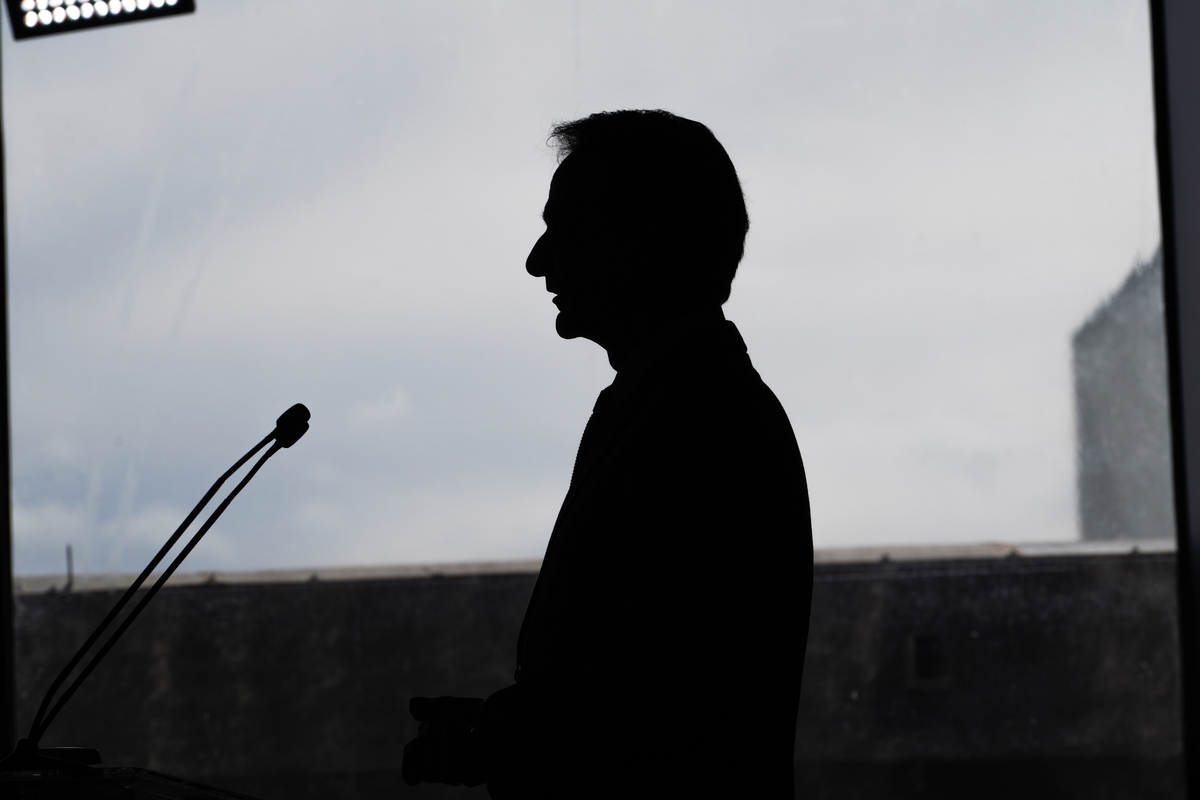
The prime minister placed particular emphasis on the government’s decision to proceed with another early debt repayment of €6.9bn, covering part of the first bailout loans received by Greece from European countries. He argued that reducing public debt strengthens economic stability and the country’s ability to support citizens and businesses, saying the government’s goal is for Greece to no longer have the highest debt-to-GDP ratio in Europe by 2027.
He also referred to debt settlements through the extrajudicial mechanism, saying that 2,172 new arrangements were completed in April, covering initial debts of €588m. Since the platform was launched, he said, 60,388 arrangements have been completed, corresponding to initial debts of €18.64bn.
Mitsotakis also highlighted new regulations by the Ministry of Environment and Energy, which he said aim to increase energy storage capacity from renewable energy sources to 700MW by the end of the year and 1GW in 2027. He presented the measures as part of Greece’s shift from energy importer to energy exporter.
On foreign policy, he referred to his meetings with the president of the United Arab Emirates, Sheikh Mohammed bin Zayed Al Nahyan, and King Abdullah II of Jordan, focusing on regional security, the crisis in Iran and the Middle East, and Greece’s role as a bridge between the region and the EU. He also announced a strategic cooperation agreement with the UAE in artificial intelligence, new technologies and digital infrastructure.
In education, Mitsotakis cited the introduction of a framework for the use of AI in secondary schools and the second phase of the ‘Marietta Giannakou’ school renovation programme, with new interventions planned in more than 200 schools.
He also referred to the restoration of the Thessaloniki–Florina railway connection after more than three years, the addition of 13 areas to the list of ‘untouched beaches’, the upgrading of the Panepirotiko National Sports Centre in Ioannina, and the inauguration of the new ‘Metropolis of Thessalonians’ Museum in the former Pavlos Melas camp in western Thessaloniki.
Finally, he highlighted the launch of six new Greek microsatellites, bringing the total number in orbit to 17, including satellites designed for near-real-time fire detection and monitoring. He also referred to the second five-year ‘Greece on Screen’ action plan for audiovisual production, amounting to €750m.
Mitsotakis said there would be no weekly review next Sunday, as he will be attending the New Democracy conference.
______________________________________________
Are you seeking news from Greece presented from a progressive, non-mainstream perspective? Subscribe monthly or annually to support TPP International in delivering independent reporting in English. Don’t let Greek progressive voices fade.
Make sure to reference “TPP International” and your order number as the reason for payment.