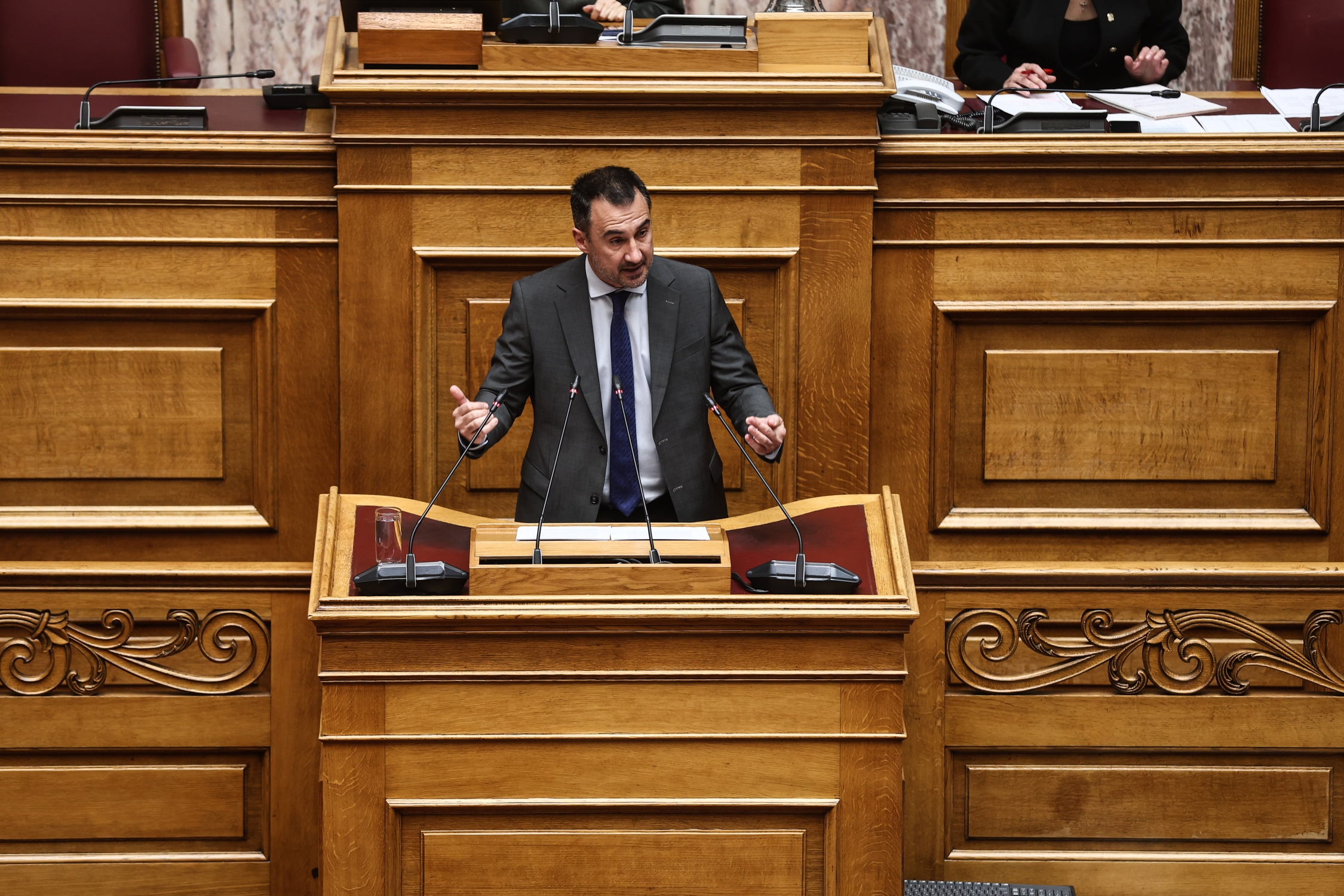
On the OPEKEPE scandal specifically, Charitsis said: ‘OPEKEPE reflects the power structure under Mitsotakis: a structured network that set up a system of subsidies at the expense of farmers. A pyramid of corruption at the top of which sits the Maximos Mansion.’
He accused the government of turning OPEKEPE into ‘a vehicle for the destruction of the agricultural sector’, and linked the scandal to the looming cost-of-living crisis triggered by the war in Iran, demanding to know what the government intended to do. ‘Will you refuse to crack down on speculation? Will you cut special taxes, or will you hand out vouchers again?’ he asked. ‘What interests you is declaring servitude to the US and peddling false patriotism.’
Charitsis was scathing about the conduct of the Investigation Committee, accusing the majority of rigging the process from the outset. ‘The investigation began as a consequence of the majority using a postal vote to shield its ministers from accountability, a parliamentary coup that constitutes a dark chapter in our parliamentary history,’ he said. He alleged that the committee had excluded crucial witnesses, including senior civil servants who served under the current government, calling only officials from before 2019, and that transcripts of lawfully intercepted communications had been withheld from the inquiry despite the New Left having requested them since last summer.
‘Are we here today to continue this disgrace and to show Greek citizens that parliament operates like a washing machine?’ he asked, before turning directly to New Democracy MPs: ‘I want to believe that some of you do not identify with this. How will you face farmers, your own voters, after everything that has come to light?’
Summarising the majority’s conclusions, Charitsis said they amounted to a finding that ‘everything in OPEKEPE was well done’, which he described as a deliberate act of concealment. He accused Mitsotakis of orchestrating the parliamentary manoeuvre to prevent his ministers from being subjected to scrutiny, while simultaneously presenting himself publicly as an advocate for reforming Article 86 of the constitution, which governs ministerial criminal liability. ‘Mr Mitsotakis’ hypocrisy knows no bounds,’ he said. ‘He is responsible for the cover-up, hiding behind Article 86 while running a mechanism for producing scandals and burying them.’
Charitsis rejected the narrative of collective and therefore diffuse responsibility that New Democracy has sought to advance. ‘New Democracy is resorting to the theory that “we all ate it together”, so that no one is held responsible,’ he said. ‘But the New Democracy government is one of the best clients of the European Public Prosecutor’s Office, which is currently investigating 175 cases with estimated losses of €2.68 billion. This is yet more fiscal space that New Democracy is depriving citizens of. The client state was invented by some, implemented by some and exploited by others. We are not the same.’
Translator’s note: ‘Post-junta period’ (μεταπολίτευση) refers to the era of Greek parliamentary democracy that followed the collapse of the military dictatorship in 1974. Article 86 of the Greek constitution sets out the conditions under which ministers may face criminal prosecution; it requires a parliamentary vote to proceed, giving the governing majority effective power to block such proceedings. The references to ‘Butchers’ and ‘Frapedes’ in the source text refers to specific individuals’ nicknames associated with the scandal.
______________________________________________
Are you seeking news from Greece presented from a progressive, non-mainstream perspective? Subscribe monthly or annually to support TPP International in delivering independent reporting in English. Don’t let Greek progressive voices fade.
Make sure to reference “TPP International” and your order number as the reason for payment.