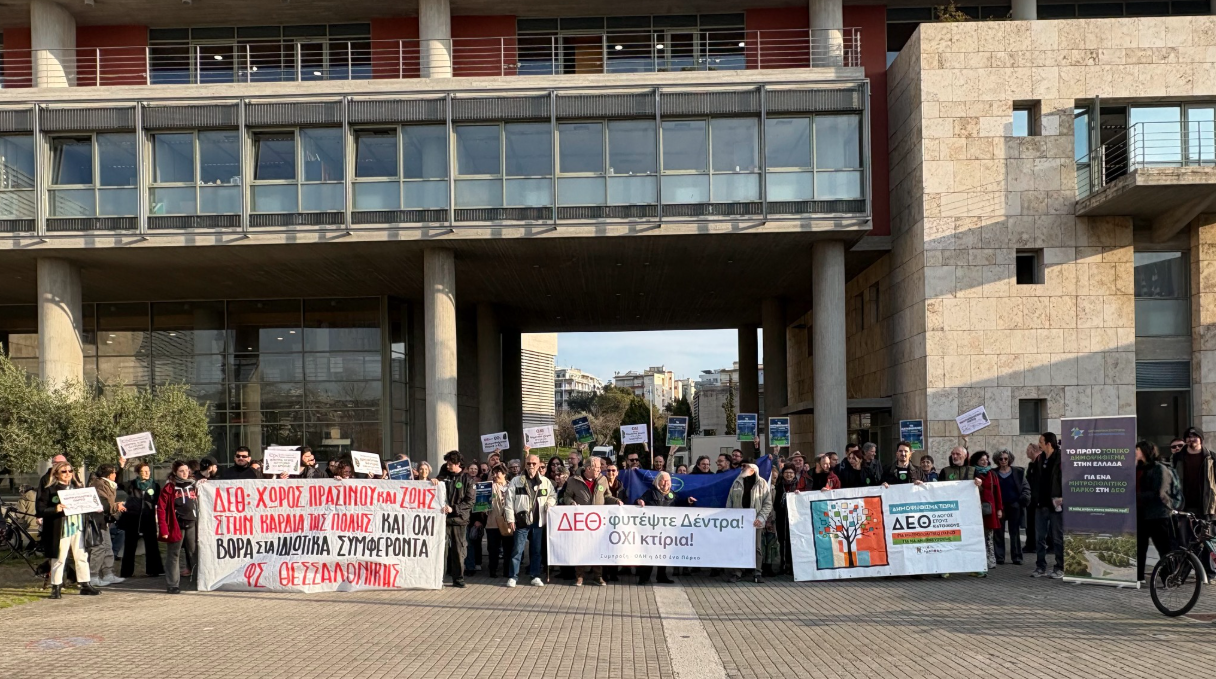
In a letter to the municipal administration, the committee’s representative, Maria Keki, criticised the municipality’s services for exceeding their legal powers and attempting to prevent the referendum despite the collection of the required signatures.
‘We were particularly surprised to find that the Municipality’s services, exceeding the powers granted to them by law, proceeded with arbitrary interpretative constructions in order to prevent the holding of the referendum and the free expression of the will of the citizens of Thessaloniki on a crucial issue for the city,’ the letter states.
The dispute follows a decision by the municipality’s Legal Service, which argued that the application submitted by citizens contained an ‘absence of legal signatures’. The Legal Service claimed that although the law on municipal referendums requires the support of 10% of voters without specifying a particular form, the provisions of article 3 of the Code of Administrative Procedure should apply additionally in order to determine the completeness and validity of the application.
‘In the absence of a valid application, we consider that further processing and verification of the data is not possible,’ the Legal Service concluded.
The municipality’s announcement was immediately challenged by three constitutional law experts who have been advising the referendum’s organising committee: Ifigenia Kamtsidou, Akritas Kaidazis and Charalambos Kouroundis. The lawyers argued that the municipality’s haste to reject the request had led to serious legal errors.
According to their statement, the declaration of a referendum does not constitute an administrative act, as established by the case law of the Council of State (OlStE 2787/2015). As a result, article 3 of the Code of Administrative Procedure does not apply in this case.
In response, the organising committee sent a detailed letter to the Municipality of Thessaloniki requesting that ‘the illegality be lifted’, so that the referendum process can proceed with the verification of the legal requirements and the discussion of the request by the municipal council.
The committee stressed that the municipality’s claim regarding the alleged absence of valid signatures is incorrect. It states that the request was signed by 23,214 citizens, either on paper copies of the application or electronically. In the case of electronic submissions, signatories included their personal details beneath the referendum question and submitted a solemn declaration confirming their identity and intent.
The committee also argues that the right of citizens to call for a local referendum is a political and participatory right, not an administrative procedure. Law 4555/2018 regulates municipal and regional referendums as mechanisms intended ‘to strengthen institutions of participation in local government’.
According to the organisers, the municipality’s demand that it itself verify the signatures introduces requirements not provided for by law and effectively restricts constitutionally protected rights, including the right to petition public authorities (article 10 of the constitution) and participation in the information society (article 5A).
For these reasons, the committee calls on the municipality to withdraw its position and allow the procedure for holding the referendum to continue, including verification of the legal conditions and discussion of the request by the municipal council.
______________________________________________
Are you seeking news from Greece presented from a progressive, non-mainstream perspective? Subscribe monthly or annually to support TPP International in delivering independent reporting in English. Don’t let Greek progressive voices fade.
Make sure to reference “TPP International” and your order number as the reason for payment.