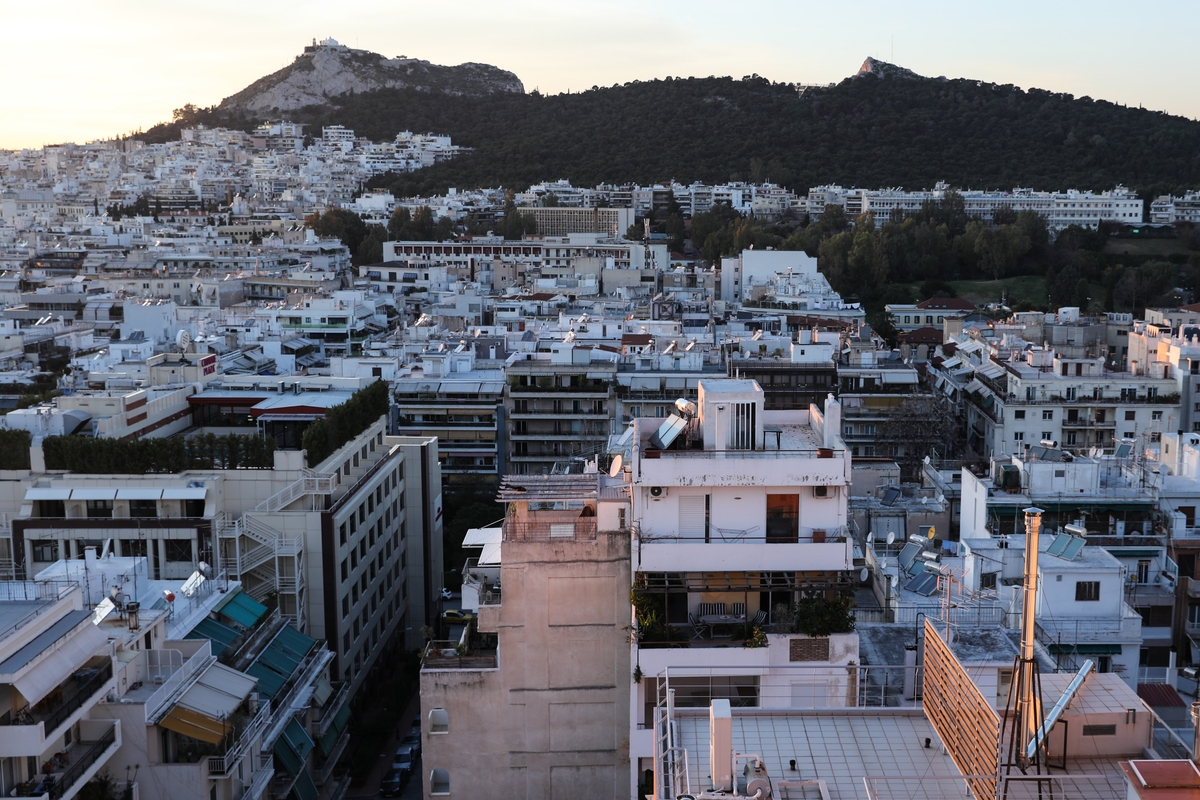
Reuters points to a central contradiction in the Greek economy: growth rates above the European average, early debt repayments and record tourism figures, alongside large numbers of people unable to meet housing costs. Rising rent burdens are forcing many households to cut back on basic expenses such as heating, food and entertainment, while also driving an increase in private debt. Reuters reports that this is acting as a brake on economic recovery.
According to research by the Small Business Institute (SME), ‘income adequacy is at a historically low level, with six out of ten households stating that their monthly income does not reach the end of the month’. It adds that financial pressures are no longer confined to low earners, but are extending to the middle classes.
The report includes the experience of 28-year-old criminologist Irini Syntichaki, who said she was forced to leave her rented flat in central Athens after the owners increased the rent by €700, an amount that already accounted for almost her entire income. ‘With a pain in my heart, I am leaving a house that I truly love… I knew I had to leave in order to survive,’ she said.
Ioanna Tzaka, a 52-year-old kindergarten teacher, said she felt ‘uprooted’ after being forced to leave her home in a central Athens neighbourhood when the property was bought by foreign owners. With rents in the area now starting at €2,000, she moved to the suburbs, paying €1,500 a month.
A Piraeus Bank report cited by Reuters estimates a shortage of around 180,000 homes for rent or sale in major cities, a situation linked to the collapse in construction activity during the crisis years.
Reuters says the Golden Visa programme, introduced in 2014 and offering residency permits to foreign property investors, has worsened the situation. Around 20,000 properties have been sold to foreign buyers, while another 150,000 have been converted into short-term rentals.
The president of the E-Real Estate Network, Themistoklis Bakas, described scenes of mass attendance at property presentations, likening them to ‘queues at grocery stores in the 1940s’.
While rent increases are a wider European trend, Reuters reports that Greece has seen a sharper rise. In Athens, rents increased by more than 50% between 2019 and 2024, compared with 26% in Madrid and 14% in Paris. Over the same period, average wages in Greece rose by about 27%.
Homeownership fell below 70% in 2024, the lowest rate on record. Despite rental subsidies for low-wage earners, more than 83% of people in Greece say they cannot save, while 40% report cutting back on spending on food and entertainment. As Professor Nikos Kourachanis said, ‘the situation is already very bad and is expected to get worse’.
______________________________________________
Are you seeking news from Greece presented from a progressive, non-mainstream perspective? Subscribe monthly or annually to support TPP International in delivering independent reporting in English. Don’t let Greek progressive voices fade.
Make sure to reference “TPP International” and your order number as the reason for payment.