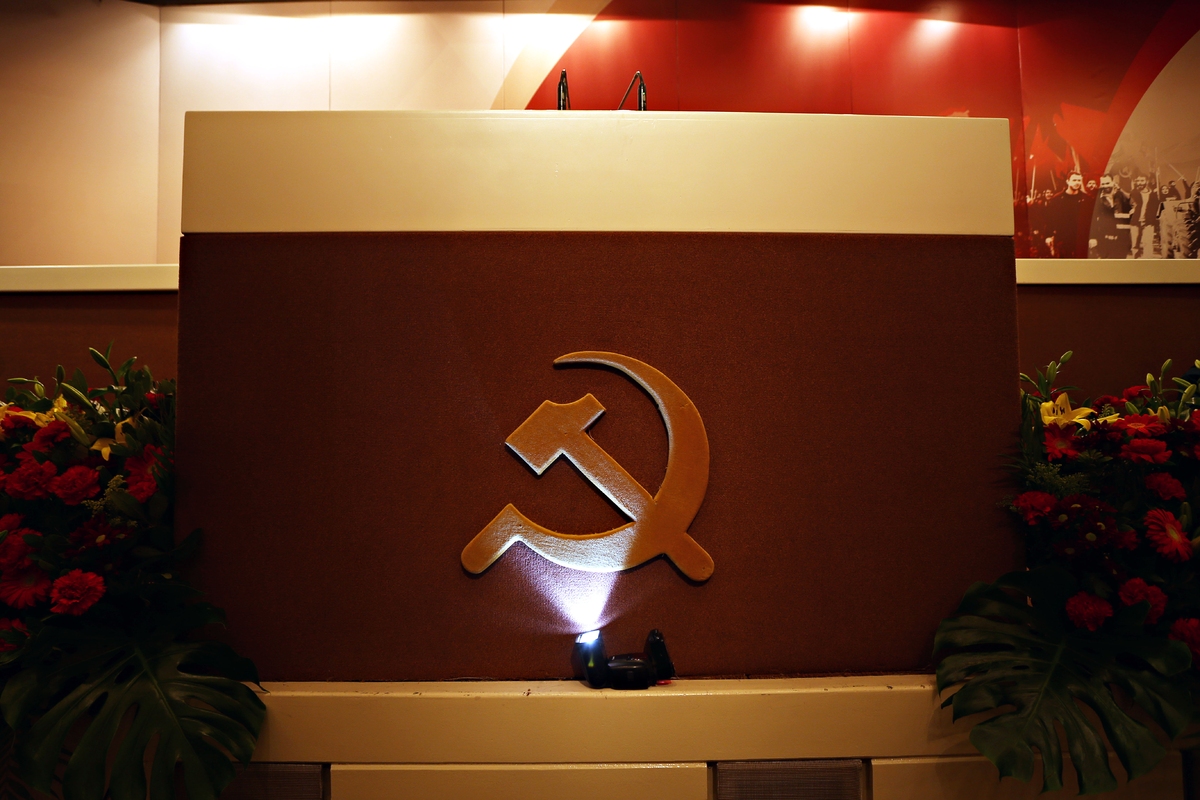
In a question submitted to the European Commission by Greek Communist Party (KKE) MEP Lefteris Nikolaou-Alavanos, KKE seeks answers on the severe impact of the war on the energy crisis, as well as on the role and responsibilities of the EU and the Greek government.
According to KKE, the escalation of war in the Middle East includes successive attacks on energy infrastructure, oil and gas fields and refineries, with the result that energy and fuel prices have soared, burdening working-class households while energy groups and shipowners reap the benefits. It says that the US-Israeli attack on Iran has opened a new cycle of war in the Middle East and, together with the Israeli invasion of Lebanon, has brought the prospect of a generalised war closer than ever. It adds that, from the first days of the war, there have been sharp increases in the prices of electricity, petrol and other goods, driving continuous rises in the cost of basic necessities.
KKE says that while the EU and governments express concern about major fuel shortages and prepare public opinion with propaganda around a ‘fuel pass’, they are simultaneously adopting pretextual measures. It argues that the New Democracy government’s ‘fuel pass’ is a drop in the ocean for working-class families, especially when taxes account for as much as 60% of the retail price of fuel.
It also argues that the new round of measures at EU level, including the forthcoming Accelerate EU package, is accompanied by attempts to blame ordinary people for ‘energy-intensive’ and ‘wasteful’ consumption, while energy-intensive industrial groups are handed new subsidy packages, including €700m in Greece.
According to KKE, these measures effectively subsidise profiteering and high prices, while funnelling public money to business groups. At the same time, it says, plans worth €1.2tn are being advanced for energy networks and ‘energy corridors’, with priority given to ‘energy highways’ from which large groups will once again benefit.
The party says these rapid increases are taking place within the framework of the European Energy Exchange, which sets the price of electricity on the basis of the most expensive production unit. In practice, it argues, that means natural gas, whose cost has risen by 50% to 60% since the start of the war. With energy uncertainty deepening because of the war and dependence on US and Qatari liquefied natural gas, IPTO must keep natural gas units on standby so they can intervene at any time. This ‘readiness cost’, it says, is extremely high and is passed on through electricity bills, pushing ‘war prices’ even higher.
KKE describes the policy of the New Democracy government as provocative, arguing that it hypocritically insists taxes must be maintained. As a result, it says, the government not only fails to provide substantial relief but also burdens ordinary households further, since rising fuel prices also drive up indirect taxes and further swell already excessive surpluses.
It adds that the responsibilities of the New Democracy government and the other bourgeois parties that have shaped this policy are serious, both in co-formulating and advancing the EU’s anti-popular energy strategy and in involving the country in what it describes as this crime, through the granting of military bases to US-NATO forces, strategic cooperation agreements with the US and the strategic alliance with Israel.
Based on the above, the KKE MEP submitted the following questions:
‘What is the European Commission’s position on:
– the fact that the Commission, within the framework of the so-called toolbox of measures for fuel and energy, is even considering fuel rationing for ordinary households, restrictions on travel and other anti-popular measures, confirming that the EU is targeting and blaming the needs of people who have long been condemned to energy poverty, while at the same time its policy supports the profitability of energy groups and refineries?
– “fuel passes” and other forms of vouchers, which amount to a cynical distraction, since they boost the profitability of energy and fuel groups by keeping prices high, instead of real relief measures such as abolishing special consumption taxes on fuel and energy, imposing caps on fuel prices and on the wholesale energy market, abolishing VAT on consumer goods and introducing substantial wage increases with the full restoration of collective labour agreements?
– the demand for the abolition of the European Union’s institutional framework that turns energy into a stock market product and a gamble for business groups, such as the adjustment clause, the energy exchange and the special tax for the reduction of gas emissions?’
______________________________________________
Are you seeking news from Greece presented from a progressive, non-mainstream perspective? Subscribe monthly or annually to support TPP International in delivering independent reporting in English. Don’t let Greek progressive voices fade.
Make sure to reference “TPP International” and your order number as the reason for payment.