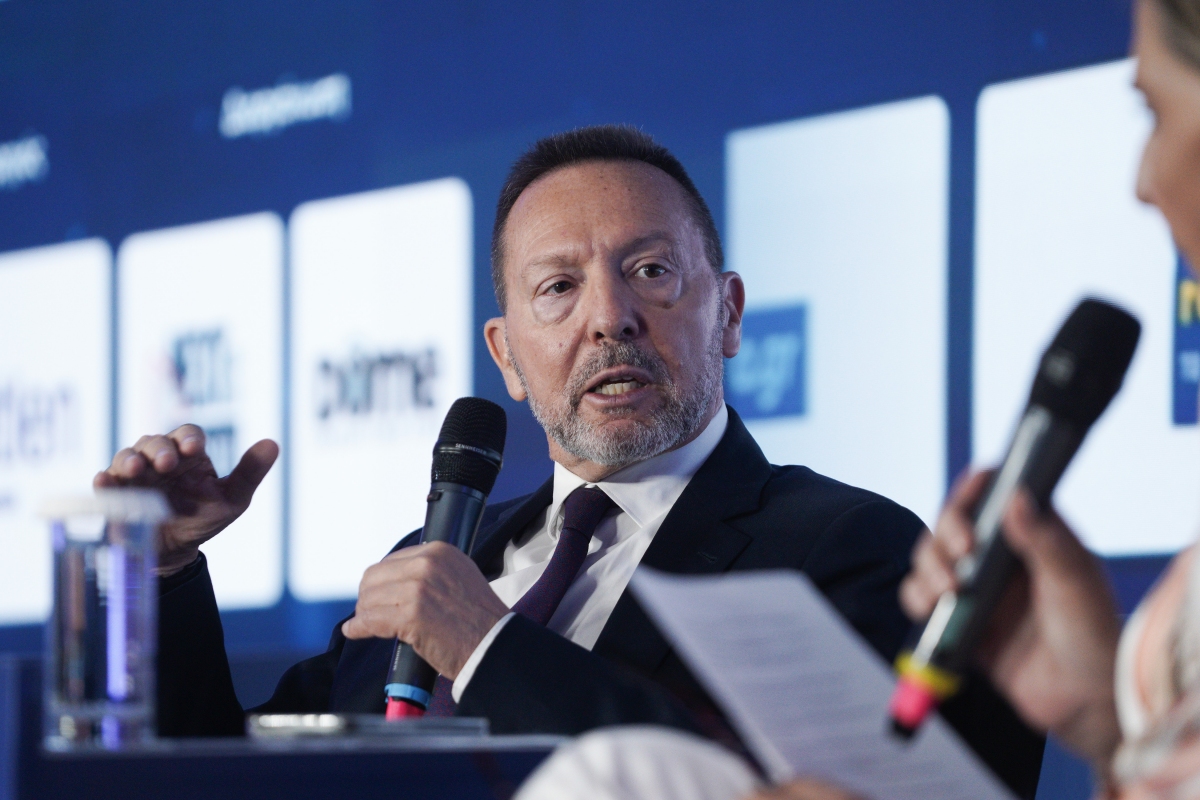
Speaking at the 7th Occupational Insurance Conference, titled ‘Occupational insurance at the heart of the European strategy for savings and investments’, the governor of the Bank of Greece noted that employee participation remains limited. He also argued that the insurance and investment culture in Greece ‘has not yet developed to the extent required’, omitting the fact that most citizens are not in a position to save.
According to a recent survey by the Foundation for Economic and Industrial Research (IOBE), 65% of respondents say they are barely making ends meet, up from 63% the previous month, while only 18% say they save a little or a lot. Data from the Deposit and Investment Guarantee Fund (TEKE) also show that 71% of depositors have balances of up to €1,000 in their bank accounts.
At the same time, the small size of many funds makes it difficult to achieve economies of scale and increases operating costs. For this reason, Stournaras said, a coordinated effort is needed from all stakeholders, with the aim of strengthening the confidence of employers and insured people in the institution.
‘With only 27 Occupational Insurance Funds and approximately 55,000 members at the end of 2025, it is clear that the institution is still in an early stage of development, despite the significant prospects and momentum presented by the occupational insurance pillar,’ he said.
He added that, although both assets and technical provisions recorded increases of more than 20% compared with 2024, the overall figures remain limited, with assets standing at €621m and technical provisions at approximately €550m for 2025.
Stournaras predicted that Occupational Insurance Funds will acquire a much greater role in the coming years, both as a pension institution and as an investment pillar, in Greece and at European level.