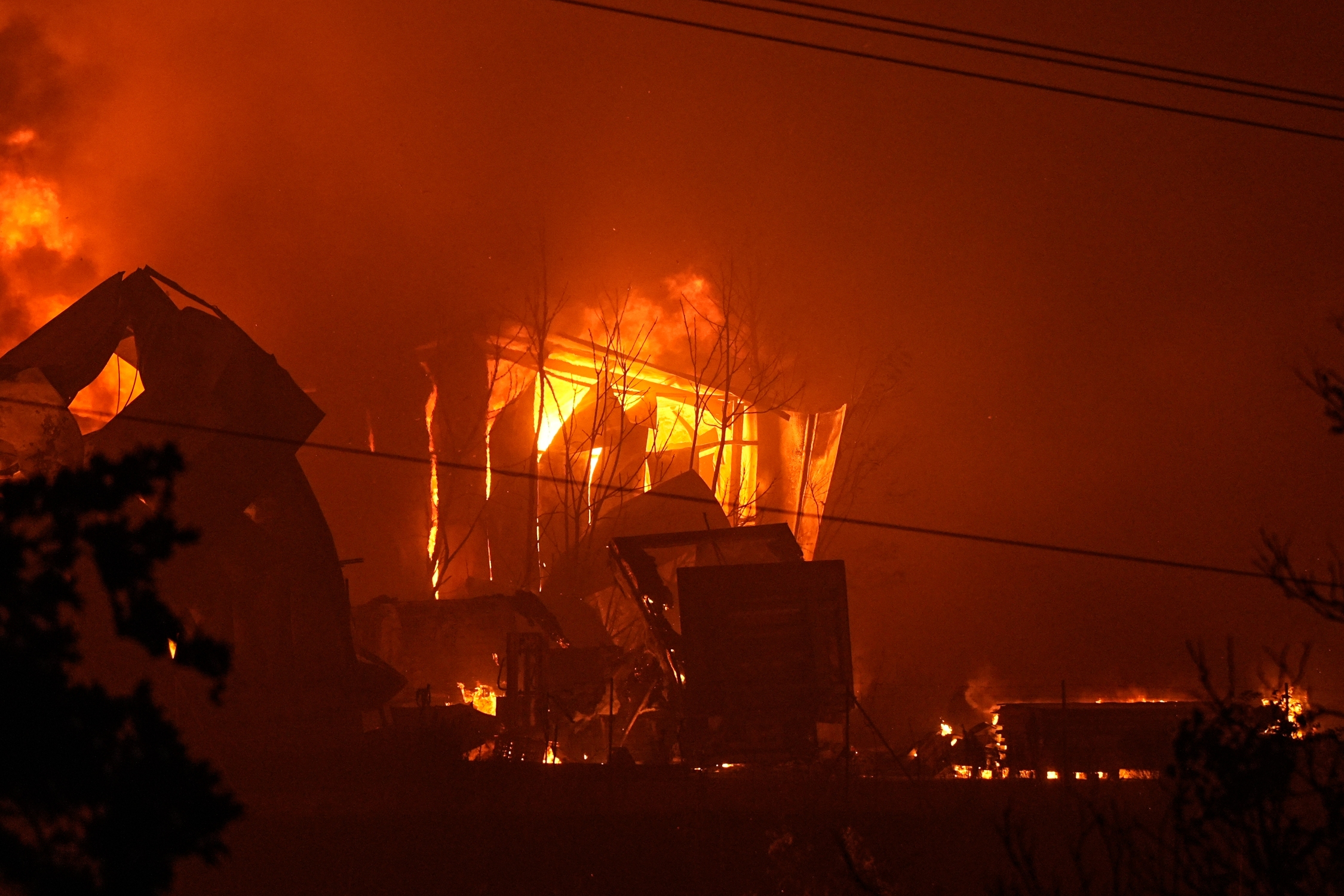
According to the Hellenic Broadcasting Corporation (ERT), huge quantities of flammable recyclable materials were stored at the site, keeping the fire alive because water cannot penetrate the piles. For this reason, in addition to using water jets, firefighters are creating embankments to deprive the flames of oxygen.
The fire broke out at around 8.30pm on Saturday and the extinguishing operation is continuing at full intensity. Attention is focused on two factories, one recycling plant and one oil processing facility, where the flames remain uncontrolled. Until last light on Sunday, three helicopters were making continuous water drops over the recycling plant, while earthmoving machines managed to enter the area and begin backfilling.
According to ERT, the fire at the recycling plant is expected to burn for several more days. Authorities estimate, however, that there is no longer a risk of it spreading. This allowed residents to return to their homes after the evacuation order was lifted, finding that they had been saved following an all-night battle by firefighters and volunteers.
At the oil processing plant, excavators demolished what was left, levelling walls and infrastructure in order to bury the ruins and fully extinguish the fire.
Reuters news agency recorded dramatic images from the devastating fire in Oreokastro, Thessaloniki, with footage showing flames engulfing businesses, firefighters’ efforts and testimonies from residents who experienced the blaze at close range.
According to the initial assessment, three businesses have been completely destroyed, while three others suffered damage. Limited damage was also recorded to the exteriors of two homes. The Fire Service is continuing to assess the damage across the wider area. The process of recording the damage to both businesses and homes is expected to begin tomorrow.
Toxic smoke over western Thessaloniki
Meanwhile, thick toxic smoke caused by burning materials continues to cover much of western Thessaloniki, with authorities advising residents to avoid unnecessary travel and keep their windows closed. According to scientists, the smoke contains thousands of chemicals, many of them toxic or carcinogenic.
Nikos Thomaidis, professor of analytical chemistry at the University of Athens, described the dangerous dimensions of the cloud created by the fire in Oreokastro in comments to ERT. He explained that the combustion of plastics and other organic materials releases thousands of chemical compounds, many of them highly toxic or even carcinogenic. The mixture includes polycyclic aromatic hydrocarbons, dioxins, volatile organic compounds and heavy metals.
Of particular concern are suspended PM2.5 particles, which, Thomaidis said, are inhaled and constitute the first and most significant burden on health.
Thomaidis stressed that vulnerable groups and people with respiratory problems should avoid any exposure to the smog. He recommended staying indoors with windows closed and placed particular emphasis on the proper use of air conditioners: they should operate only by recirculating indoor air, not by drawing air from outside, otherwise polluted air can enter homes.
The professor noted that the smog is not limited to Thessaloniki, as it is carried through the atmosphere over long distances. ‘Particles have also been detected in Attica,’ he said, adding that the pollutants are expected to disperse over a large part of the Aegean, central and southern Greece, with concentrations gradually decreasing.
______________________________________________
Are you seeking news from Greece presented from a progressive, non-mainstream perspective? Subscribe monthly or annually to support TPP International in delivering independent reporting in English. Don’t let Greek progressive voices fade.
Make sure to reference “TPP International” and your order number as the reason for payment.